
Growth Rate & Physical Development

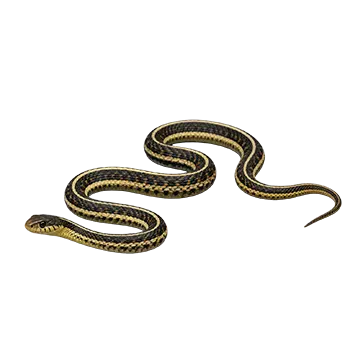
The juvenile phase of the Eastern Garter Snake (Thamnophis sirtalis sirtalis) spans roughly from three months of age through the attainment of sexual maturity, which typically occurs between eighteen and twenty-four months in captivity under optimal conditions. This period is characterized by the most sustained and visible growth the animal will experience in its lifetime. A well-fed juvenile that measured six to eight inches at three months of age can reach twelve to sixteen inches by the time it is nine months old, and many individuals approach or exceed twenty inches before their second year. Growth rate varies significantly between individuals, influenced by genetics, sex, feeding frequency, and thermal management.

Physical changes during the juvenile stage extend well beyond simple length increases. The body diameter thickens proportionally as muscle mass develops along the dorsal and lateral surfaces, transforming the slender, almost fragile appearance of a neonate into the robust, well-muscled profile characteristic of a healthy sub-adult. The head becomes more clearly differentiated from the neck, and the jaw musculature develops to accommodate progressively larger prey items. The keeled dorsal scales — a defining feature of the genus Thamnophis — become more pronounced and give the juvenile's skin a textured, matte appearance that distinguishes it from the smooth-scaled colubrids it superficially resembles.

Color and pattern intensify through the juvenile period. The three longitudinal stripes — one dorsal and two lateral — become more vibrant and sharply defined against the darker interstitial scales. Depending on the animal's geographic origin, the dorsal stripe may range from bright yellow to greenish or even bluish, while the lateral stripes tend toward pale yellow or cream. The checkered pattern between the stripes, formed by alternating dark and light spots on individual scales, becomes more complex and defined with each successive shed. Observing these color changes over time is one of the more rewarding aspects of raising Eastern Garter Snakes from birth, as each individual develops a subtly unique pattern variation.

Shed frequency during the juvenile stage is noticeably higher than in adults, reflecting the rapid pace of growth. Juveniles typically shed every three to five weeks, compared to the six-to-eight-week cycle common in fully grown adults. Each shed cycle follows a predictable pattern: the skin dulls, the eyes cloud to a milky blue-gray, the snake becomes reclusive and may refuse food for several days, and then the eyes clear before the shed occurs one to three days later. Monitoring shed quality at every cycle is a reliable and low-effort method of assessing overall health — complete, intact sheds indicate proper humidity and hydration, while fragmented or retained shed pieces flag conditions that need correction.

Diet Progression & Feeding Strategy

Dietary management during the juvenile stage requires a thoughtful transition from the small, frequent meals of the neonatal period toward a more varied and nutritionally complete diet that will sustain the animal through its most intensive growth. By the time an Eastern Garter Snake reaches three to four months of age, it should be large enough to consume whole small earthworms, appropriately sized strips of thiaminase-free fish, and pinky mice without difficulty. The goal during this period is to establish a feeding rotation that provides balanced nutrition from multiple prey sources rather than relying on a single food type.

A well-structured juvenile diet rotates between three primary food categories on a roughly weekly cycle: whole earthworms or nightcrawler segments, pinky or fuzzy mice, and strips of thiaminase-free fish such as tilapia, trout, or salmon. This rotation ensures that the juvenile receives the complete amino acid profile, calcium, and fat content available from whole vertebrate prey alongside the trace minerals and moisture content provided by invertebrate and fish items. Earthworms remain a dietary staple throughout the juvenile phase and are the most consistently accepted food item across individual animals. Fish should always be sourced from thiaminase-free species — common feeder fish such as goldfish and rosy red minnows contain thiaminase and must be avoided entirely to prevent vitamin B1 deficiency.

Feeding frequency should transition from the every-three-to-four-day schedule of the neonatal period to an every-five-to-seven-day schedule as the juvenile approaches the six-month mark. This shift reflects the natural slowing of metabolic rate as the animal grows and prevents the obesity and hepatic lipidosis that can result from overfeeding fast-growing colubrids. Each meal should produce a modest visible lump in the snake's midsection that resolves within twenty-four to thirty-six hours. If the lump persists beyond forty-eight hours or the snake appears lethargic after feeding, the prey item was too large and the keeper should reduce portion size at the next feeding.

Calcium supplementation continues to be important for juveniles that consume a significant proportion of invertebrate prey. Dusting earthworms with a calcium-plus-D3 powder every second or third feeding bridges the nutritional gap between invertebrate and whole-vertebrate prey. As the juvenile grows large enough to accept fuzzy or hopper mice regularly, the calcium supplementation on invertebrate meals can be gradually reduced, since whole rodent prey provides a naturally balanced calcium-to-phosphorus ratio. Fresh, clean water must be available at all times in a dish large enough for the juvenile to soak in, as garter snakes frequently immerse themselves and absorb water both orally and through cloacal drinking.

Enclosure Upgrades & Habitat Design

As a juvenile Eastern Garter Snake grows through its first year, the neonate container that served adequately for the first two to three months will need to be replaced with a larger enclosure that accommodates the animal's increasing size and activity level. A single juvenile between four and twelve months of age thrives in an enclosure measuring approximately 20 by 12 by 12 inches, which provides enough floor space for meaningful thermoregulation and exploration while remaining small enough that the snake feels secure. Glass terrariums, front-opening acrylic enclosures, and appropriately ventilated plastic tub systems are all viable options, each with distinct advantages in terms of visibility, ease of cleaning, and humidity management.

The thermal gradient established during the neonate phase remains appropriate for juveniles: a warm zone of 82 to 85 degrees Fahrenheit and a cool zone of 72 to 75 degrees, with no nighttime drop below 68 degrees. As the enclosure size increases, maintaining this gradient may require repositioning or upgrading the heat source. Under-tank heat mats remain effective for smaller enclosures, but larger setups may benefit from overhead ceramic heat emitters or low-wattage radiant heat panels that warm the air within the enclosure more evenly. Regardless of the heat source, a quality thermostat is essential — never rely on the unregulated output of any heating device, as temperature spikes are a leading cause of thermal burns and heat stress in captive reptiles.

Habitat enrichment becomes increasingly important during the juvenile stage as the snake's behavioral repertoire expands beyond the simple hide-and-eat pattern of a neonate. Provide at least two hides — one on the warm end and one on the cool end — so the juvenile can thermoregulate without sacrificing the security of being concealed. Climbing opportunities such as cork bark flats propped at angles, low branches, or commercially available reptile ledges are well-utilized by juvenile garter snakes, which are more arboreal in their habits than many keepers realize. A water dish large enough for full-body soaking remains essential and should be positioned away from the primary heat source to prevent rapid evaporation and excessive humidity spikes.

Substrate choice can be expanded beyond the paper towels of the neonate phase once the juvenile is feeding reliably on appropriately sized prey. Aspen shavings are a popular and functional choice that allows burrowing behavior, controls odor, and maintains a dry environment that resists mold growth. Cypress mulch is an alternative that retains more moisture and may be preferable in drier climates or heated rooms where maintaining adequate humidity is challenging. Avoid cedar and pine shavings, which contain aromatic oils that are toxic to reptiles, and avoid any substrate fine enough to be accidentally ingested during feeding. Spot-clean the enclosure after every defecation and urate deposit, and perform a complete substrate change and enclosure disinfection every three to four weeks.

Behavioral Maturation & Socialization

The juvenile period marks a significant expansion in the behavioral complexity of Eastern Garter Snakes, and keepers who invest time in regular interaction during this stage are rewarded with a notably calmer and more handleable adult animal. Juvenile garter snakes are among the most inquisitive and exploratory of commonly kept colubrid species. Once settled into their enclosure and feeding reliably, they frequently emerge during daylight hours to bask, investigate substrate textures, tongue-flick along enclosure walls, and observe activity in the room around them. This active, diurnal temperament is one of the features that makes the species appealing to both novice and experienced keepers alike.

Defensive musking, which is nearly universal in neonates, typically decreases in frequency and intensity through the juvenile stage as the animal becomes accustomed to the sights, sounds, and smells of its captive environment. Most juveniles that are handled consistently two to three times per week will largely cease musking by four to six months of age, though individual variation exists and some animals retain the behavior well into their first year. The key to reducing musking is consistency and calm: short, gentle handling sessions conducted on a predictable schedule are far more effective than infrequent, prolonged sessions that overwhelm the animal and reinforce its perception of handling as a threatening event.

Juvenile Eastern Garter Snakes are one of the few snake species that can be successfully maintained in small communal groups, though this practice requires careful management to avoid problems. Group housing is most successful when animals are of similar size, are fed individually in separate containers to prevent accidental ingestion of a cagemate during competitive feeding, and have adequate space and multiple hides to minimize territorial stress. Keepers should monitor communal enclosures closely for signs of dominance behavior, including one individual consistently occupying the basking spot while others are excluded, or one snake repeatedly attempting to swallow a cagemate's prey item — or the cagemate itself. If any animal in a communal setup shows stagnant growth, chronic stress behaviors, or bite injuries, it should be separated immediately.

As juveniles approach the sub-adult stage, typically between eight and fourteen months of age, keepers may notice the emergence of subtle sex-based behavioral differences. Males tend to be more active, more exploratory, and more prone to pacing along enclosure walls, particularly during seasonal transitions when hormonal cycling begins. Females, while still active by colubrid standards, may begin to display slightly more sedentary behavior and may show increased interest in basking as their metabolism shifts to support the early stages of reproductive maturation. These behavioral differences are subtle and are not reliable indicators of sex — probing or popping by an experienced herpetologist remains the only definitive sexing method at this stage.

Common Juvenile Health Concerns

Juvenile Eastern Garter Snakes are generally hardy when maintained under appropriate conditions, but the rapid growth phase introduces specific health risks that keepers must understand and monitor for. Parasitic infections remain one of the most prevalent health issues in juvenile garter snakes, particularly in animals that were born to wild-caught mothers or that are fed prey items collected from the wild. Internal parasites including nematodes, cestodes, and coccidia can suppress appetite, inhibit growth, and cause gastrointestinal distress that manifests as loose or bloody stools, regurgitation, and progressive weight loss despite apparently normal feeding behavior.

Metabolic bone disease is a particular risk for juvenile garter snakes fed diets that rely heavily on invertebrate prey without adequate calcium supplementation. The condition develops when the calcium-to-phosphorus ratio in the diet is chronically inverted, forcing the body to mobilize calcium from the skeletal system to maintain critical blood calcium levels. Early signs include reluctance to move, a rubbery or pliable quality to the jaw and skull when gently palpated, and subtle kinking or curvature of the spine. Advanced cases present with pathological fractures, severe spinal deformities, and inability to constrict or swallow prey. Metabolic bone disease is far easier to prevent than to treat, and once skeletal deformities have occurred, they are permanent even with corrective supplementation.

Regurgitation syndrome is another condition that demands immediate attention in juvenile garter snakes. Occasional regurgitation can occur when a prey item is too large, when the snake is handled too soon after feeding, or when enclosure temperatures are too low for proper digestion. A single regurgitation event, while undesirable, is not cause for alarm — simply skip the next scheduled feeding, verify that temperatures are within the appropriate range, and offer a smaller prey item at the following feeding interval. However, repeated regurgitation across multiple feedings suggests a more serious underlying problem such as a gastrointestinal infection, parasitic burden, or chronic environmental stress, and warrants a veterinary examination including fecal analysis and potentially diagnostic imaging.

Skin and scale conditions round out the most common juvenile health concerns. Scale rot, presenting as discolored, softened, or necrotic scales on the ventral surface, is almost always the result of chronically damp substrate or inadequate enclosure hygiene. Treatment involves improving substrate management, applying a dilute chlorhexidine or betadine solution to affected scales under veterinary guidance, and ensuring the enclosure dries adequately between cleanings. Retained shed — patches of old skin that remain adhered to the snake after a shed cycle — is typically a humidity management issue and can be resolved by placing the juvenile in a damp container lined with moistened paper towels for thirty to sixty minutes to soften the retained skin for gentle manual removal.

Preparing for the Transition to Adulthood

As a juvenile Eastern Garter Snake approaches the twelve-to-eighteen-month mark, the transition toward adult care becomes a practical reality that keepers should plan for in advance. Enclosure size must increase again — a single adult Eastern Garter Snake requires a minimum of a 20-gallon long terrarium or equivalent floor space, approximately 30 by 12 by 12 inches, though larger enclosures are always preferable for this active species. Planning this upgrade before it becomes necessary, rather than waiting until the juvenile has clearly outgrown its current home, reduces the stress associated with sudden environmental changes and allows the keeper to establish the new enclosure's thermal gradient and humidity levels before introducing the animal.

Feeding frequency should be gradually reduced during the late juvenile period to match the slower metabolic rate of an approaching adult. By twelve months of age, most Eastern Garter Snakes can transition from a feeding schedule of every five to seven days to one of every seven to ten days without negative impact on body condition. Prey size should continue to scale with the animal's growth — a large juvenile may accept adult mice, large nightcrawlers, or appropriately sized fish fillets. The dietary rotation established during the juvenile phase should continue into adulthood, as variety remains the best insurance against nutritional deficiency in a species that is not a strict rodent specialist.

The late juvenile period is also the appropriate time to consider whether brumation — the reptilian equivalent of hibernation, characterized by a sustained period of reduced temperature and metabolic activity — will be incorporated into the animal's annual cycle. In the wild, Eastern Garter Snakes brumate for several months during winter, and many keepers replicate this cycle in captivity to promote natural hormonal cycling, improved long-term health, and reproductive readiness. If brumation is planned, the juvenile should be in excellent body condition with no signs of illness, parasitic burden, or nutritional deficiency before the cooling period begins. A veterinary wellness check before the first brumation provides additional peace of mind.

Finally, the late juvenile stage is an opportunity to solidify handling habits and social tolerance before the animal reaches its adult size and full defensive capability. While adult Eastern Garter Snakes are among the least dangerous of commonly kept species, a well-socialized adult that tolerates handling without musking, striking, or excessive stress is a far more enjoyable companion than one that remained unsocialized through its formative months. Keepers who have maintained consistent, gentle handling through the juvenile period will find that their sub-adult garter snake is already remarkably calm and tractable, setting the stage for years of positive interaction throughout the animal's adult life.

Always consult a qualified professional before making any health-related decisions. This content is provided for informational reference only and should not replace professional guidance specific to your animal.