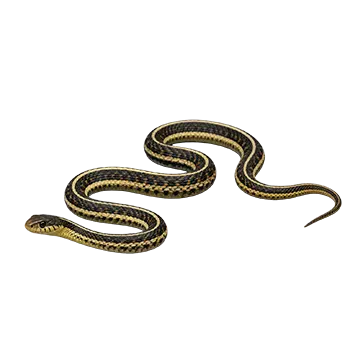

Eastern Garter Snakes (Thamnophis sirtalis sirtalis) reach physical maturity between eighteen and twenty-four months of age in captivity, at which point growth slows dramatically but never fully ceases. A typical adult measures eighteen to twenty-six inches in total length, with exceptional females occasionally reaching thirty inches or slightly beyond. Sexual dimorphism is moderate in this species — females tend to be longer and heavier-bodied than males, with broader heads relative to their neck diameter. Males are generally more slender, with proportionally longer tails that taper more gradually from the cloaca to the tip, a difference that reflects the space required for the hemipenes housed at the tail base.
The adult color pattern is fully developed and stable by this stage, though subtle seasonal variation may occur. The three characteristic longitudinal stripes — one dorsal and two lateral — stand out prominently against a background of dark olive, brown, or nearly black interstitial scales. Between and below the lateral stripes, a distinctive checkerboard pattern of dark and light spots gives each individual a unique appearance that experienced keepers can use to distinguish between animals in a collection without the need for physical markings or identification tags. The ventral surface ranges from pale cream to greenish yellow and is typically unmarked, though some individuals display faint dark stippling along the lateral edges of the ventral scales.
Body condition in a healthy adult Eastern Garter Snake should present a well-rounded cross-section without visible spine or rib outlines when viewed from above. The body should feel firm and muscular when handled, not soft or flaccid. Obesity, while less common in garter snakes than in more sedentary species such as ball pythons, can develop in adult animals that are fed too frequently or offered disproportionately large meals. An obese garter snake displays visible fat deposits along the sides of the body that create a triangular cross-section when viewed from the front, with the spine appearing as a pronounced ridge between two lateral bulges. Maintaining proper body condition through appropriate feeding frequency and portion control is one of the most impactful long-term health management strategies available to the keeper.
Adult Eastern Garter Snakes continue to shed their skin throughout their lives, though the frequency decreases compared to the juvenile growth phase. A healthy adult typically sheds every six to ten weeks, with some variation based on nutritional status, reproductive condition in females, and seasonal metabolic cycling. Each shed provides a snapshot of the animal's health — a smooth, complete shed in one piece indicates proper hydration and humidity, while fragmented, dull, or partially retained sheds may signal environmental deficiencies or early signs of illness.