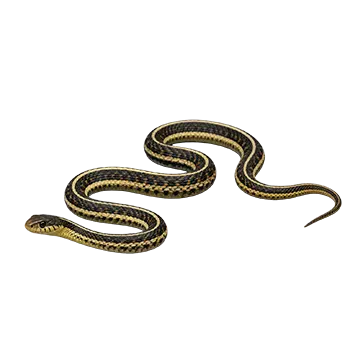

Sexual Maturity & Breeding Readiness

Eastern Garter Snakes (Thamnophis sirtalis sirtalis) reach sexual maturity at different rates depending on sex, nutritional history, and husbandry conditions. Males typically become reproductively capable between twelve and eighteen months of age, signaled by increased restlessness during the spring emergence period, persistent crawling along enclosure walls, and visible interest in female pheromone trails. Females generally mature slightly later, reaching reproductive readiness between eighteen and twenty-four months, though some well-fed individuals may be physiologically capable of reproduction by their first spring following the juvenile phase. The onset of maturity alone does not mean an animal should be bred — responsible breeders evaluate multiple factors beyond simple age before pairing animals.

Body condition is the single most important criterion for determining whether a female Eastern Garter Snake is ready for her first breeding season. A breeding-ready female should be well-muscled, have a rounded body cross-section without visible spine or rib outlines, and should weigh at the upper end of the healthy range for her length. Breeding imposes substantial physiological demands on the female, including the metabolic cost of gestating and nourishing developing embryos, the physical strain of carrying a litter that may represent thirty to fifty percent of her pre-gravid body weight, and the nutritional depletion associated with supporting live birth. A female that enters the breeding season underweight, parasitized, or in marginal health is at significantly elevated risk for dystocia, stillbirth, and post-partum complications.

Males require less intensive pre-breeding conditioning than females but should still be in robust health and good body weight before pairing. A male in poor condition may lack the energy reserves to sustain the vigorous courtship behavior characteristic of the species, or his sperm quality may be compromised. Both breeding candidates should be screened by a reptile veterinarian for parasitic infections, respiratory illness, and any underlying health conditions before the breeding season begins. Breeding animals that are carrying parasites or subclinical infections risk transmitting these conditions to their mate through the intimate physical contact involved in copulation, and a gravid female's immune system is already under additional strain.

Genetic considerations are an essential but often neglected component of breeding readiness. Responsible captive breeding programs avoid pairing closely related animals — siblings, parents and offspring, or half-siblings — to minimize the expression of deleterious recessive genes and maintain genetic diversity within captive populations. Detailed records of each animal's parentage, acquisition source, and geographic origin should be maintained and consulted before any pairing is made. Wild-type Eastern Garter Snakes from different geographic populations may exhibit subtle differences in stripe color, background pattern, and adult size, and preserving these locality-specific traits through informed pairing decisions contributes to the long-term health and authenticity of captive lines.

Brumation & Pre-Breeding Conditioning

Brumation is the hormonal trigger that synchronizes the reproductive systems of both male and female Eastern Garter Snakes and is considered essential for consistent breeding success in captivity. Without a period of sustained cold exposure lasting at least eight to twelve weeks, most captive garter snakes will fail to develop viable gametes or exhibit the behavioral cues necessary for successful courtship and copulation. The brumation period also aligns the reproductive timing of paired animals, ensuring that males produce mature sperm and display courtship behavior precisely when females are ovulating and receptive.

Pre-brumation preparation begins in early to mid-autumn with a gradual increase in feeding frequency and prey size over the preceding four to six weeks, allowing breeding candidates to build the fat reserves that will sustain them through the dormancy period. The final meal should be offered approximately two to three weeks before the start of temperature reduction, and no further food should be given until the gut is confirmed empty through passage of a final stool. Brumating a snake with undigested food in its gastrointestinal tract risks fatal bacterial decomposition of the prey item at temperatures too low to support digestive enzyme activity.

The brumation protocol for breeding candidates follows the same temperature and duration guidelines as for non-breeding adults: a gradual reduction over seven to ten days to a target range of 45 to 55 degrees Fahrenheit, maintained for eight to twelve weeks in a dark, quiet location with access to a small water dish that is checked weekly. Males and females should be brumated separately, as the presence of female pheromones during dormancy can prevent males from entering the deep metabolic suppression necessary for proper spermatogenesis. The brumation environment should be stable — temperature fluctuations that cause the snake to cycle repeatedly between dormancy and activity waste energy reserves and disrupt the hormonal processes that brumation is intended to trigger.

Emergence from brumation should be managed carefully, with temperatures raised gradually over seven to ten days back to the normal active range. Males typically emerge from brumation in a state of heightened reproductive drive and may begin displaying courtship behavior — rapid tongue-flicking, chin-rubbing along surfaces, and restless pacing — within days of reaching normal operating temperatures. Females emerge more gradually and often require one to two weeks of active feeding and recovery before they display receptive behavior. The timing mismatch between male eagerness and female readiness is natural and should not prompt the keeper to introduce males to females prematurely. Allow each animal to feed successfully at least two to three times after emergence before attempting any introductions.

Courtship & Mating Behavior

The courtship behavior of Eastern Garter Snakes is among the most intensively studied of any reptile species, thanks in large part to the dramatic communal mating aggregations observed in wild populations across North America. In captivity, the essential elements of courtship are preserved even in one-on-one pairings. When a male is introduced to a receptive female's enclosure — or when both are placed in a neutral breeding enclosure — the male will immediately begin tongue-flicking rapidly along the female's body, moving from tail to head in a behavior known as tactile trailing. This intense chemosensory investigation allows the male to assess the female's reproductive status through the pheromones secreted by her skin glands.

If the female is receptive, the male will align his body alongside hers and begin a series of rhythmic chin-presses along her dorsal surface, accompanied by rapid undulations of his tail. This chin-pressing and body-alignment behavior can continue for minutes to hours before the male positions his tail beneath the female's cloacal region and everts one of his paired hemipenes to achieve intromission. Copulation in Eastern Garter Snakes typically lasts between fifteen minutes and several hours, during which the pair remains relatively still with their tails intertwined. The keeper should not disturb the pair during copulation, as interruption can result in physical injury to either animal if they separate abruptly.

A non-receptive female will signal her disinterest through active avoidance — moving away from the male, flattening her body against the substrate and clamping her cloaca closed, or in some cases turning and striking at the male. If the female displays clear rejection behavior after fifteen to twenty minutes of persistent male courtship, the male should be removed and the pairing attempt postponed for three to five days. Repeated pairing of a non-receptive female with an aggressively courting male creates chronic stress that can suppress ovulation, trigger defensive aggression, and cause physical injury to one or both animals.

Multiple mating sessions are generally recommended to maximize the likelihood of successful fertilization. Introducing the male to the female's enclosure for supervised mating sessions every three to five days over a period of two to three weeks increases the probability that copulation coincides with the female's ovulatory window. Some breeders also employ a technique in which two males are briefly housed near the female before one is selected for pairing, as the competitive pheromone cues released by rival males can intensify courtship vigor and sperm production. This technique requires careful supervision to prevent male-on-male combat, which, while typically ritualized and non-injurious in garter snakes, can occasionally result in bite wounds.

Gestation & Gravid Female Management

Eastern Garter Snakes are viviparous, and the gestation period from successful copulation to parturition typically spans two to three months, with most litters delivered between late June and early September in animals cycling on a natural Northern Hemisphere photoperiod. During this period, the gravid female undergoes profound physiological changes that demand attentive management from the keeper. Her metabolic rate increases substantially to support the developing embryos, her body mass increases progressively as the litter grows, and her behavior shifts toward increased basking, reduced activity, and heightened defensive responses.

Feeding the gravid female requires a balance between meeting her elevated nutritional needs and avoiding meals so large that they compress the developing embryos within the body cavity. Offer smaller prey items more frequently — every four to five days rather than the standard seven-to-ten-day adult schedule — to provide a steady stream of nutrients without the bulk of a single large meal. Earthworms and small fish fillets are particularly well-suited for gravid females because they are soft, easily digestible, and can be consumed quickly. Calcium supplementation should be increased to every feeding during gestation, as the developing embryos draw heavily on maternal calcium stores for skeletal ossification.

The gravid female's enclosure should be adjusted to prioritize thermal access and security. Increase the basking spot temperature slightly, to 90 to 92 degrees Fahrenheit, to support the elevated metabolic demands of embryonic development. Provide a large, snug hide on the warm side of the enclosure where the female can rest in contact with the heated surface while remaining concealed. As parturition approaches — typically signaled by a dramatic increase in restlessness, a visible shift in the position of the litter within the body as neonates orient toward the cloaca, and sometimes a brief cessation of feeding — place a damp moss-filled hide or birthing box in the warm zone. This humid microenvironment supports the birthing process and provides a contained area where neonates can be easily located and collected after delivery.

Monitoring for dystocia — difficulty or inability to deliver the litter — is critical during the final weeks of gestation. Warning signs include prolonged straining without delivery of neonates, delivery of only a partial litter followed by cessation of contractions for more than twenty-four hours, visible distension of the body with no progress, and any discharge of blood or foul-smelling fluid from the cloaca. Dystocia in viviparous snakes is a veterinary emergency that requires immediate professional intervention. Medical management may include calcium and oxytocin injections to stimulate uterine contractions, and in severe cases, surgical delivery of retained neonates. Delaying treatment in a dystocia case risks death of the retained neonates, uterine rupture, and septicemia in the female.

Parturition & Neonatal Management

The delivery of a litter of Eastern Garter Snake neonates is a straightforward process under normal circumstances, though it demands preparation and attentiveness from the keeper. Parturition typically occurs over a period of one to several hours, with individual neonates delivered at irregular intervals. Each neonate emerges enclosed in a thin, translucent amniotic membrane that it must rupture independently within minutes of delivery. Healthy neonates break free of the membrane quickly and begin moving almost immediately, displaying the characteristic wriggling locomotion of newborn Thamnophis species.

Litter size in Eastern Garter Snakes varies considerably based on the female's age, size, body condition, and genetic background. First-time mothers typically produce smaller litters of ten to fifteen neonates, while experienced, well-conditioned females may deliver twenty to forty or more. Neonates range from five to nine inches in length at birth and are fully independent from the moment of membrane emergence — unlike some viviparous reptiles, garter snake neonates require no post-natal parental care and should be separated from the mother within six to twelve hours of the final delivery to prevent accidental injury.

After the delivery appears complete, examine the female carefully for signs of retained neonates or fetal membranes. Gentle palpation along the posterior third of the body can reveal the presence of undeveloped ova, retained stillborn neonates, or incompletely expelled placental tissue. A post-partum veterinary examination within forty-eight to seventy-two hours of delivery is strongly recommended, particularly for first-time mothers or females that delivered unusually large litters. Radiography or ultrasonography can confirm that the reproductive tract is clear and that no retained material is present that could lead to infection.

Neonates should be housed individually or in very small groups of same-size littermates in appropriately sized, secure containers as detailed in the neonatal care protocol. Record the total litter size, the number of live versus stillborn neonates, and any obvious physical abnormalities observed in individual animals. Stillborn neonates and undeveloped ova (commonly called slugs) should be counted and disposed of hygienically. A small number of stillbirths within a large litter is normal and does not indicate a problem with the female's health or the breeding protocol, but a high proportion of stillborn or deformed neonates may suggest genetic incompatibility between the parents, nutritional deficiency during gestation, or exposure to environmental toxins.

Post-Partum Recovery & Breeding Frequency

The post-partum recovery period is one of the most physiologically demanding phases in a female Eastern Garter Snake's life, and the quality of care she receives during this time directly affects her long-term health and future reproductive potential. Immediately after delivering her litter, the female will be noticeably thinner and lighter than her pre-gravid weight, having transferred a substantial portion of her body mass and nutritional reserves to the developing neonates during gestation. Her muscle tone may appear reduced, and she will typically display increased appetite within days of delivery as her body signals the urgent need to replenish depleted energy stores.

Feeding during the post-partum recovery period should be frequent and nutritionally rich. Offer food every four to five days, beginning with small, easily digestible items such as earthworm segments or small fish fillets, and gradually increasing prey size over the following weeks as the female's appetite and digestive capacity recover. Calcium supplementation should continue at the elevated gestational rate for at least four to six weeks after delivery to support the remineralization of bone tissue depleted during embryonic development. Fresh water should be available at all times, as post-partum females often drink and soak more frequently than usual while their bodies rehydrate and rebuild.

The decision about how frequently to breed a female Eastern Garter Snake is one that responsible keepers must make carefully, weighing the female's health and body condition against the desire for offspring. Annual breeding is physiologically possible for healthy, well-conditioned females but imposes cumulative metabolic stress that can shorten lifespan and degrade body condition over time. Many experienced breeders recommend breeding females in alternate years — one breeding season followed by one recovery year — to allow full replenishment of nutritional reserves and complete physiological recovery between reproductive efforts. This approach produces fewer litters over the female's lifetime but consistently yields larger, healthier litters with higher neonatal survival rates.

Females that have experienced reproductive complications — dystocia, prolapse, retained neonates, or significant post-partum weight loss — should be given an extended recovery period of at least two full active seasons before any subsequent breeding attempt. A veterinary examination confirming full recovery and adequate body condition should precede any decision to reintroduce the female to a breeding program. Males, by contrast, can be bred annually without significant health risk, as their physiological investment in reproduction is far less demanding. However, males used intensively during the breeding season may lose weight from the sustained energy expenditure of courtship behavior and should be fed generously throughout the mating period and for several weeks afterward to restore body condition.

Always consult a qualified professional before making any health-related decisions. This content is provided for informational reference only and should not replace professional guidance specific to your animal.