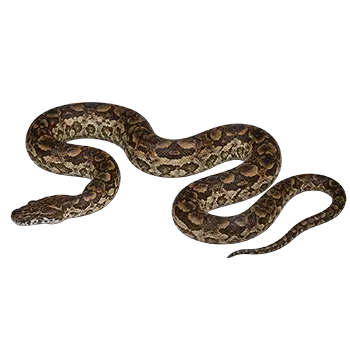

The end of a Dumeril's Boa's life is rarely sudden. Far more often it presents as a cluster of changes that accumulate over weeks to months and that, taken together, describe a trajectory rather than a treatable event. The most consistent indicators are sustained weight loss that continues despite appropriate offered nutrition, complete and prolonged anorexia extending beyond the animal's historical seasonal fasting pattern, progressive loss of muscle tone, and a marked reduction in responsiveness to handling, light, and prey scent. A snake that no longer coils to support its own weight, or that lies loosely extended for days at a time, has undergone a meaningful functional change.
Specific clinical signs frequently accompany terminal decline. Persistent open-mouth breathing with mucus, wheezing, or an extended head-up posture indicates advanced respiratory compromise. Chronic regurgitation of every offered meal, particularly with a palpable mid-body swelling, points toward advanced gastrointestinal disease. Loss of the righting reflex, stargazing, and persistent dorsal inversion indicate central nervous system involvement. Widespread ulceration, non-healing wounds, or extensive fungal lesions indicate that immune function has failed. Deep sunken eyes, tented skin, and thick or absent urates indicate dehydration that the animal can no longer self-correct.
Distinguishing decline from a treatable crisis is the essential judgement, and it is not one a keeper should make alone. Many conditions that look terminal in a snake, including severe dehydration, treatable respiratory infection, impaction, and even some neoplasms, respond to veterinary intervention. What separates the treatable from the terminal is usually diagnostic information rather than appearance: bloodwork showing end-stage renal values, imaging revealing extensive metastatic disease, or a documented progression that has continued through appropriate therapy. Seek a diagnosis before concluding that a decline is irreversible, and be equally willing to accept the diagnosis when it arrives.
Reptiles conceal illness with remarkable effectiveness, a legacy of being both predator and prey, and this has a practical consequence for keepers. By the time a snake displays unmistakable outward signs of terminal illness, the underlying disease is usually far advanced. This is not a failure on the keeper's part. It does mean that the long-maintained log of weights, feeds, sheds, and behaviours becomes uniquely valuable at this stage, because it converts a series of vague impressions into a documented curve that a veterinarian can interpret. Bring that record, in full, to every consultation in this period.