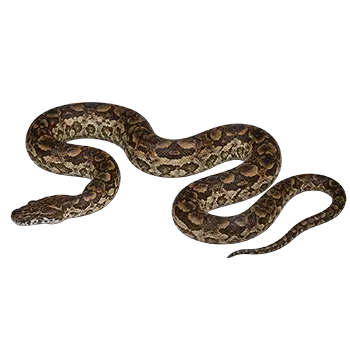

Dumeril's Boa is viviparous, retaining developing embryos internally and delivering live, fully independent neonates. Nutrition during development derives principally from yolk rather than from a mammalian-style placental exchange, and the female's contribution beyond yolk provisioning is chiefly thermal: she selects and maintains body temperatures that regulate the rate and quality of embryonic development. This mode of reproduction shapes everything about breeding management, because the entire developmental period occurs inside an animal that the keeper is simultaneously trying to keep in good condition. There is no incubator to fall back on and no way to correct a thermal error after the fact.
Sexual maturity is reached slowly. Males may become reproductively capable at two to three years, though many breeders prefer to wait until three. Females should not be bred before four years of age and, more importantly, not before reaching a body mass generally cited in the range of three kilograms or more with excellent muscle tone and body condition. Size and condition matter far more than age. Breeding an undersized or underconditioned female is the most common cause of small litters, stillbirths, dystocia, prolonged post-partum recovery, and permanent damage to a valuable animal.
The reproductive cycle is strongly seasonal and tied to the pronounced wet and dry seasonality of southern Madagascar. In captivity, breeders typically induce cycling during the cooler months of the keeper's own winter, with courtship and copulation occurring over a period of weeks to a few months. Gestation is long, commonly cited at approximately six to eight months from successful copulation to parturition, with considerable individual variation influenced by temperature, female condition, and the timing of ovulation relative to mating. Females do not generally reproduce every year; a cycle of every second or third year is normal and healthier over a long reproductive life.
Litter size in this species is modest compared with many boids. Six to thirteen neonates is typical, with larger, well-conditioned females occasionally producing twenty or more. Neonates are large relative to the female, arriving at roughly twelve to eighteen inches and sixty to one hundred grams each. A female may lose thirty to forty percent of her pre-parturition mass in a single reproductive event, which is the clearest possible illustration of why condition before breeding, and recovery afterward, deserve as much planning as the pairing itself.