
Growth Rates & Physical Development

The juvenile period for Colombian Rainbow Boas (Epicrates maurus) spans roughly from three months of age through sexual maturity, which occurs at approximately two to three years for males and three to four years for females. During this window, growth is rapid and continuous. A snake that was approximately eighteen to twenty inches at three months of age may reach thirty to forty inches by its first birthday and approach four feet by the end of its second year. Growth rate is directly influenced by feeding consistency, prey size, ambient temperatures, and overall health, making this phase the period where attentive husbandry has the greatest impact on the animal's long-term size and condition.

Weight gain during the juvenile period follows a predictable upward trajectory when conditions are optimal. Monthly weighing is a valuable management practice, as it provides trend data that visual assessment alone cannot capture. A juvenile that is maintaining weight without gaining over a period of four to six weeks — outside of a normal seasonal slowdown — warrants a closer look at husbandry parameters and a possible veterinary evaluation. Conversely, excessively rapid weight gain characterized by a visibly rounded cross-sectional body profile and fat deposits along the neck and tail base indicates overfeeding that should be corrected before it contributes to hepatic lipidosis or other obesity-related conditions.

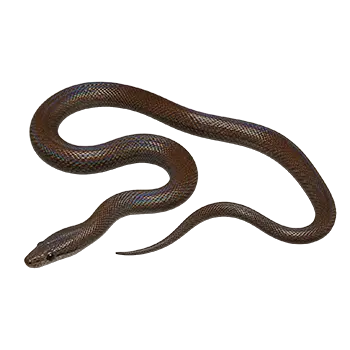
Skeletal and muscular development during this phase transforms the slender, somewhat fragile neonate into a robust, well-muscled sub-adult. The head broadens noticeably relative to the neck, and the body develops the characteristic cylindrical build of an adult boid. The iridescent quality of the scales — the microscopic ridges that refract light into rainbow hues — becomes increasingly pronounced through successive sheds during the juvenile period, and many keepers consider animals in the twelve-to-eighteen-month range to display the most vivid iridescence of their entire lives.

Shed frequency is noticeably higher during the juvenile period than at any other life stage, reflecting the rapid rate of tissue growth. Juveniles may shed every four to six weeks under normal conditions, compared to every six to ten weeks for mature adults. Each shed cycle temporarily suppresses appetite and increases defensive behavior, so keepers should expect brief feeding pauses and heightened sensitivity during the opaque pre-shed phase. Tracking shed dates in a logbook or spreadsheet alongside weight and feeding records creates a comprehensive growth profile for each individual.

Feeding Progression & Dietary Management

As juvenile Colombian Rainbow Boas grow, their prey must scale accordingly. The general guideline is to offer prey items that are approximately equal in girth to the widest point of the snake's body at midbody. A juvenile that began on pinky mice as a neonate will typically transition to fuzzy mice, then hopper mice, and eventually adult mice or weaned rats over the course of the first eighteen months. Each transition should be gradual, and keepers should observe the snake's feeding response and post-feeding behavior closely when moving to a larger prey size for the first time.

Feeding frequency should be adjusted as the juvenile grows. Smaller juveniles in the three-to-nine-month range benefit from feeding every five to seven days, while larger sub-adults approaching twelve to eighteen months can be transitioned to feeding every seven to ten days. This gradual reduction in frequency mirrors the metabolic deceleration that occurs naturally as the snake approaches adult size. Maintaining a neonate-level feeding frequency in a larger juvenile leads to obesity, which is one of the most common and preventable health problems in captive boid snakes.

Prey type diversity is a subject of ongoing discussion among experienced keepers. While commercially bred frozen-thawed mice and rats form the backbone of most captive feeding programs, some keepers periodically offer alternative prey items such as chicks, quail, or African soft-furred rats to provide nutritional variety. There is reasonable evidence that dietary diversity offers modest nutritional benefits, particularly in terms of calcium-to-phosphorus ratios and fatty acid profiles. However, dietary variety is not essential for health, and a well-maintained frozen-thawed rodent diet is nutritionally complete for this species at the juvenile stage.

Feeding behavior in juvenile Colombian Rainbow Boas is typically enthusiastic and straightforward. Most juveniles will strike at offered prey with minimal hesitation, constrict vigorously, and begin swallowing within minutes of the kill. Occasional feeding refusals are normal and most commonly coincide with pre-shed periods, seasonal temperature fluctuations, or environmental disturbances such as enclosure relocation. A refusal of one or two consecutive meals in an otherwise healthy juvenile is rarely cause for concern, but a pattern of three or more consecutive refusals warrants investigation into husbandry conditions and a review of the animal's body condition and weight trend.

Enclosure Upgrades & Habitat Design

Juvenile Colombian Rainbow Boas will outgrow their neonatal tubs or deli cups within the first few months of life and require progressively larger enclosures as they develop. A general guideline is that the enclosure's length plus width should equal or exceed the snake's total body length. For a juvenile in the two-to-three-foot range, an enclosure measuring approximately 36 by 18 by 18 inches provides adequate space for thermoregulation, movement, and behavioral expression. PVC enclosures and front-opening glass terrariums with sealed tops are both suitable options, though PVC models tend to retain humidity more effectively in dry indoor environments.

The transition from a simple neonatal container to a more complex juvenile enclosure is an opportunity to introduce environmental enrichment that supports natural behavior. Sturdy branches, cork bark tubes, and elevated platforms allow climbing and perching, which Colombian Rainbow Boas engage in frequently during their juvenile period. While this species is often classified as terrestrial, juveniles are notably more arboreal than adults and will readily utilize vertical space. Providing climbing opportunities not only encourages exercise and muscle development but also gives the snake additional options for thermoregulation, as temperatures naturally stratify vertically within enclosed spaces.

Substrate selection becomes more consequential in the juvenile enclosure because the animal is now spending extended periods in contact with its bedding. Cypress mulch and coconut coir remain the preferred substrates for this species due to their excellent moisture-holding capacity and resistance to mold growth when maintained properly. A substrate depth of two to three inches allows the juvenile to burrow partially, which many individuals will do during the daytime hours. Spot-clean the substrate after each defecation and replace the entire substrate every four to six weeks, with a full enclosure disinfection at each change.

Hide structures remain important during the juvenile period. Providing at least two snug-fitting hides — one positioned over the warm zone and one over the cool zone — ensures that the snake can thermoregulate without sacrificing the sense of security that enclosed spaces provide. Hides should be sized so that the snake fills most of the interior space when coiled; an oversized hide does not provide the close contact that makes these structures psychologically effective. As the juvenile grows, hides will need to be replaced with larger versions. Commercial half-log hides, inverted plastic containers with entry holes, and cork bark flats all work well and should be rotated or replaced whenever they become soiled or damaged.

Temperament Development & Handling

The juvenile period is the most formative window for establishing the Colombian Rainbow Boa's long-term temperament in captivity. Animals that receive regular, consistent handling during this phase almost universally develop into calm, tractable adults that tolerate routine interaction without defensive behavior. Conversely, juveniles that are rarely handled or subjected to erratic, stressful interactions may retain a defensive disposition that becomes increasingly difficult to modify as the snake matures and gains physical strength.

Handling sessions for juveniles can be gradually extended from the five-to-ten-minute neonatal sessions to fifteen to twenty minutes as the animal grows and demonstrates increasing tolerance. Three to four sessions per week is an ideal frequency that provides consistent human contact without overwhelming the snake. Each session should begin with a calm, deliberate removal from the enclosure using a hook or by gently sliding a hand under the snake's midbody. Avoid reaching in from above, as overhead approaches trigger a predator-avoidance response in most snake species and can provoke a defensive strike even in well-socialized individuals.

Juvenile Colombian Rainbow Boas frequently go through periods of increased defensiveness that do not necessarily indicate a regression in socialization. These episodes often coincide with growth spurts, pre-shed periods, or seasonal hormonal shifts. A juvenile that has been calm and handleable for weeks may suddenly become nippy and defensive for a few days before returning to its baseline temperament. Responding to these episodes with patience — continuing regular handling sessions without escalating restraint — reinforces the message that human contact is not threatening. Pausing handling entirely during defensive phases risks undoing progress.

As juveniles approach the sub-adult size range of three to four feet, their physical strength becomes a relevant consideration during handling. A sub-adult Colombian Rainbow Boa can coil firmly around a hand or arm and may require gentle unwinding if it becomes overly anchored. This constriction is not aggressive; it is simply the snake using its primary locomotor mechanism to secure itself on what it perceives as a branch or perch. Supporting the snake's body weight across both hands and forearms reduces the motivation to grip tightly. Keepers who allow the snake to move freely and feel securely supported will find that constriction pressure remains minimal and manageable.

Shedding Cycles & Skin Health

Shedding is more frequent during the juvenile period than at any other life stage, and the quality of each shed serves as a reliable barometer of overall husbandry. A healthy juvenile Colombian Rainbow Boa that is maintained in appropriate humidity conditions will shed in a single, intact piece from nose to tail tip. The shed skin, when stretched out, should be slightly longer than the snake itself due to the elasticity of the keratinous outer layer. Examining each shed carefully for completeness — paying particular attention to the eye caps, tail tip, and labial scales — is a simple but informative quality check that takes only a few seconds.

Problematic sheds, known as dysecdysis, are almost always caused by inadequate humidity rather than underlying disease. When a juvenile enters the pre-shed phase — signaled by dulling of the skin and a milky-blue opacity over the eyes — ambient humidity should be increased to 80 to 90 percent. A humidity box, which is simply a sealed container with damp sphagnum moss and an entry hole, gives the snake access to a microenvironment of near-saturated air that facilitates clean shedding. Many experienced keepers provide a humidity box as a permanent fixture in the enclosure rather than adding one only at shed time, as the snake will use it as a retreat and soaking site between shed cycles as well.

Retained shed is a problem that must be addressed promptly but carefully in juveniles. Small patches of retained skin on the body can usually be resolved by placing the snake in a shallow container of lukewarm water for fifteen to twenty minutes and then gently working the retained pieces free with a damp cloth. Retained eye caps require a more cautious approach, as the spectacle is a thin, transparent scale that covers the cornea and can be damaged if handled roughly. If eye caps remain after a soaking attempt, veterinary assistance is recommended rather than attempting manual removal with forceps or tape, which risks corneal abrasion.

Between sheds, the skin of a healthy juvenile should be smooth, supple, and free of raised scales, discoloration, or crusty lesions. Any blistering, reddening, or weeping of the skin — particularly along the ventral surface — may indicate a bacterial or fungal dermatitis that requires prompt veterinary evaluation. Scale rot, as ventral skin infections are colloquially known, is almost always associated with chronically wet substrate, poor ventilation, or infrequent cleaning. Maintaining a dry, clean substrate surface while preserving adequate ambient humidity through misting and water dish placement is the key to preventing dermal infections during the fast-growing juvenile stage.

Health Monitoring & Preventive Care

Ongoing health monitoring during the juvenile period focuses on tracking growth, feeding consistency, shed quality, and behavioral baselines. A juvenile that is feeding reliably, shedding cleanly, gaining weight steadily, and exhibiting normal exploratory behavior during evening hours is, by every practical measure, a healthy animal. Deviations from any of these baselines — unexplained weight loss, repeated feeding refusals, fragmented sheds, or prolonged hiding during normally active periods — should be investigated systematically, starting with a thorough review of environmental parameters.

Annual veterinary examinations are recommended for juvenile Colombian Rainbow Boas, with fecal parasite screening included at each visit. Even captive-bred animals maintained in clean conditions can harbor low-level parasite loads that become clinically significant when the immune system is stressed by growth demands, suboptimal temperatures, or seasonal changes. Coccidia and flagellated protozoa are among the most commonly detected internal parasites in captive boid snakes, and both are readily treatable when identified early through routine screening.

Respiratory health requires ongoing vigilance during the juvenile period because the high humidity levels this species demands can become a liability if ventilation is insufficient. The goal is to provide humid air that is also fresh and moving, not stagnant and saturated. Enclosures that fog heavily on the interior glass, develop condensation dripping from the ceiling, or produce a musty odor are too wet and insufficiently ventilated regardless of what the hygrometer reads. Adjusting ventilation openings, reducing misting frequency, or switching to a more breathable substrate can restore the balance between humidity and airflow.

Injury prevention is another component of juvenile health management that is often overlooked. Juveniles are active explorers and can injure themselves on sharp cage furnishings, rough screen lids, or improperly secured lighting fixtures. All cage furniture should be inspected for sharp edges and loose components before installation. Screen-topped enclosures should have the interior edges of the screen frame covered or padded, as juveniles that rub repeatedly against bare metal mesh can develop chronic rostral abrasions that are painful and prone to secondary infection. Switching to a front-opening enclosure with a solid top eliminates this risk entirely and is the preferred design for this species at every life stage.

Always consult a qualified professional before making any health-related decisions. This content is provided for informational reference only and should not replace professional guidance specific to your animal.