
Recognizing Terminal Decline

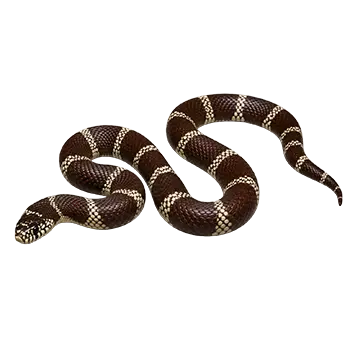
Terminal decline in a California Kingsnake (Lampropeltis californiae) is characterized by a progressive deterioration in multiple physiological systems that is no longer responsive to husbandry correction or medical treatment. Unlike acute illness, which may present suddenly and resolve with appropriate intervention, terminal decline unfolds over weeks to months and follows a generally predictable trajectory of worsening symptoms. Recognizing this trajectory — and distinguishing it from treatable geriatric conditions — is one of the most difficult and important responsibilities a long-term keeper faces.

The hallmark of terminal decline is irreversible weight loss despite adequate food availability and appropriate environmental conditions. A California Kingsnake that continues to lose weight over a period of two or more months, despite being offered appropriately sized prey at regular intervals and maintaining proper enclosure temperatures, is experiencing a systemic failure that feeding alone cannot correct. This weight loss is often accompanied by visible muscle wasting along the dorsal surface, a pronounced vertebral ridge, and a general loss of the body's normal cylindrical profile. The animal may appear as though it is deflating, with loose, wrinkled skin hanging along the flanks.

Feeding cessation is another cardinal sign. While voluntary fasting is normal in many contexts — seasonal, pre-shed, post-breeding — a complete and extended refusal to eat that persists beyond eight to twelve weeks in a non-brumating animal with no identifiable husbandry issues is a serious indicator of underlying disease. Terminal conditions that commonly cause prolonged anorexia in kingsnakes include advanced renal failure, hepatic disease, systemic neoplasia, and severe chronic infection. By the time feeding cessation becomes absolute and prolonged, the underlying condition has typically progressed beyond the point of curative treatment.

Behavioral changes during terminal decline are often subtle at first but become increasingly pronounced. The snake may become uncharacteristically reclusive, spending nearly all of its time in a single hide and showing little or no interest in its surroundings. Responsiveness to handling diminishes — the animal may lie limply rather than gripping or exploring when held. In some cases, the opposite pattern emerges, with a terminally ill snake exhibiting restless, purposeless movement that suggests discomfort or disorientation. Either extreme — profound lethargy or agitated restlessness — represents a significant departure from the individual's baseline behavior and should be interpreted as a meaningful clinical sign.

Hospice Husbandry & Comfort Care

Once a California Kingsnake has been assessed by a veterinarian and the determination has been made that curative treatment is no longer possible or appropriate, the focus of care shifts entirely to comfort and quality of life. Hospice husbandry is not the absence of care but rather a redirection of care priorities — from extending life to ensuring that whatever time remains is as comfortable and stress-free as possible. This shift in philosophy guides every husbandry decision during the animal's final period.

Enclosure management during hospice care emphasizes simplicity, cleanliness, and accessibility. The enclosure should be downsized if necessary to ensure that the snake can easily reach water, heat, and shelter without expending energy it does not have. A small, clean tub with paper towel substrate, a single snug hide positioned over the warm zone, and a shallow, easily accessible water dish is often the most appropriate hospice setup. This simplified environment is easier to keep clean — which is especially important as a declining animal may lose control of its excretory functions — and reduces the energy cost of basic activities.

Temperature management during hospice care should err on the side of warmth. Maintaining the ambient temperature at the upper end of the species' preferred range — 82 to 85 degrees throughout the enclosure rather than providing a gradient — reduces the metabolic demand of thermoregulation and supports whatever immune function remains. A declining animal that cannot effectively shuttle between warm and cool zones benefits from uniform warmth that eliminates the risk of prolonged exposure to suboptimal temperatures.

Hydration support becomes paramount during the final stages of life. A terminally ill snake that is no longer eating may still drink, and fresh, clean water must be available at all times. If the animal is too weak to reach its water dish, water can be offered directly by placing drops near the mouth using a syringe or pipette. Soaking in lukewarm water for ten to fifteen minutes several times per week can support hydration through cutaneous absorption and may provide comfort to an animal experiencing the skin dryness and tightness associated with dehydration. All soaking must be supervised to prevent drowning in an animal that may lack the strength to keep its head above water.

Feeding during hospice care should be offered but never forced. If the animal accepts food voluntarily, however infrequently, the meals provide both nutrition and a degree of normalcy. If the animal has ceased eating entirely, force-feeding or assist-feeding is generally inappropriate in a hospice context, as it creates significant stress without meaningfully improving prognosis. The exception may be cases where the veterinarian believes that nutritional support could extend a period of comfortable life, but this decision should always be made in consultation with a professional who can assess the animal's overall condition and likely trajectory.

Pain Assessment in Snakes

Assessing pain and discomfort in snakes is one of the most challenging aspects of reptile hospice care, and it is an area where the keeper's long familiarity with the individual animal's baseline behavior becomes invaluable. Snakes do not vocalize in pain, do not display facial expressions, and do not exhibit many of the behavioral pain indicators that are readily recognized in mammals. This does not mean that snakes do not experience pain — neurological research has conclusively demonstrated that reptiles possess nociceptors and process pain signals through the central nervous system — but rather that pain in snakes manifests through subtle behavioral and postural changes that require careful observation to detect.

Postural indicators of pain or discomfort in a California Kingsnake include abnormal body positioning, such as sustained elevation of the head and neck above the body plane, persistent tight coiling in a non-defensive context, or adoption of an unnaturally rigid body posture. An animal that would normally rest in a loose coil but is instead lying in a stiff, extended position may be experiencing abdominal discomfort. Similarly, a snake that presses its body against the enclosure glass or walls in a sustained, repetitive manner — rather than the normal exploratory nosing — may be exhibiting a pain-related behavior.

Behavioral indicators include sudden and sustained changes in activity pattern, feeding behavior, and responsiveness to stimuli. A snake in pain may become hyperreactive to touch, flinching or pulling away from gentle contact that it previously tolerated without reaction. Alternatively, it may become profoundly unresponsive, showing little or no reaction to being handled, moved, or otherwise disturbed. Changes in respiratory pattern — shallow, rapid breathing or occasional deep, labored breaths — can indicate pain, respiratory compromise, or both.

Veterinary pain management for terminal snakes is an evolving field with limited but growing pharmacological options. Meloxicam and other non-steroidal anti-inflammatory drugs have been used in reptile patients with some success, and opioid analgesics such as tramadol and morphine have been investigated in snake species, though dosing protocols are less well established than in mammalian veterinary medicine. Any pain management protocol for a terminally ill California Kingsnake should be developed and supervised by a reptile-experienced veterinarian who can weigh the benefits of pain relief against the risks of drug side effects in an already compromised animal.

The keeper's role in pain assessment is to observe, document, and communicate. Maintaining a daily log of the animal's behavior, posture, activity level, feeding response, and any noted deviations from baseline provides the veterinarian with the detailed, longitudinal information needed to make informed pain management decisions. A single veterinary visit provides a snapshot; the keeper's daily observations provide the continuous narrative that gives that snapshot context and meaning.

Euthanasia: When & How

The decision to euthanize a California Kingsnake is the most difficult choice a keeper will face, and it is a decision that should be made thoughtfully, compassionately, and with the animal's welfare as the sole guiding principle. Euthanasia is not a failure of care; it is the final act of responsible stewardship — the recognition that continued life has become a source of suffering rather than a state worth preserving. Arriving at this decision requires honest assessment, professional guidance, and the emotional courage to prioritize the animal's comfort over the keeper's desire to hold on.

Quality-of-life criteria for a terminally ill California Kingsnake center on several key questions. Is the animal able to maintain basic physiological functions — hydration, thermoregulation, waste elimination — without assistance or distress? Is the animal showing signs of pain or discomfort that cannot be adequately managed with available treatments? Has the animal ceased eating entirely for an extended period with no prospect of resumption? Is the animal able to rest comfortably, or does it appear restless, agitated, or distressed even in an optimized environment? When the answers to these questions indicate that the animal's daily experience is dominated by discomfort, dysfunction, and distress, euthanasia becomes the most compassionate available option.

The timing of euthanasia is a deeply personal decision, but veterinary guidance is essential. A reptile-experienced veterinarian can provide an objective assessment of the animal's condition, prognosis, and likely trajectory that helps the keeper make an informed decision rather than one driven solely by emotion. Many veterinarians are willing to discuss quality-of-life criteria proactively with keepers of aging or terminally ill animals, establishing mutually agreed-upon thresholds that, when reached, signal that the time has come. This advance planning reduces the burden of crisis decision-making and ensures that the decision, when it is made, is grounded in the animal's welfare rather than the keeper's grief or guilt.

Euthanasia of reptiles must be performed by a licensed veterinarian using methods approved by the American Veterinary Medical Association. The standard method involves injection of an overdose of sodium pentobarbital, a barbiturate anesthetic that produces rapid unconsciousness followed by cardiac and respiratory arrest. In snakes, the injection is typically administered intravenously in the ventral tail vein or intracardially, though intravenous access can be challenging in small or dehydrated animals. The process is painless and rapid, and the animal should show no signs of distress. Some veterinarians may administer a sedative or anesthetic agent prior to the euthanasia injection to ensure the animal is fully unconscious before the final dose is given.

Keepers should be aware that reptilian physiology differs from mammalian physiology in ways that affect the euthanasia process. Specifically, reptiles may exhibit involuntary muscle contractions and spinal reflexes for minutes to hours after clinical death has occurred. These movements are not signs of consciousness or pain — they are purely reflexive — but they can be deeply distressing to observe for keepers who are not prepared for them. The veterinarian should explain this possibility in advance so that the keeper can make an informed decision about whether to be present during and after the procedure.

After Death: Practical Considerations

Following the death of a California Kingsnake, whether through euthanasia or natural causes, the keeper faces several practical decisions that, while difficult to contemplate during a period of grief, require timely attention. The handling of the animal's remains is the most immediate of these decisions, and the options available depend on local regulations, personal preference, and available services.

Home burial is a common choice for many snake keepers and is permitted in most jurisdictions, provided the burial is on the keeper's own property and meets local depth and setback requirements. The remains should be buried at a depth of at least two to three feet to prevent disturbance by scavenging animals. Wrapping the remains in a biodegradable cloth or placing them in an untreated wooden box provides containment during decomposition. If the animal was euthanized with sodium pentobarbital, home burial carries an additional safety consideration: the euthanasia drug remains active in the tissues and can be lethal to any animal that digs up and consumes the remains. In areas where wildlife or domestic animals may access the burial site, cremation is the safer alternative.

Pet cremation services that accept reptiles are increasingly available in most metropolitan areas and offer both communal and individual cremation options. Individual cremation returns the specific animal's ashes to the keeper, typically in an urn or container of the keeper's choosing. Communal cremation processes multiple animals together and does not return individual ashes. The veterinary clinic that performed the euthanasia can usually arrange cremation services directly or provide referrals to local providers.

If the cause of death is uncertain and the keeper maintains a collection of other reptiles, a necropsy — the animal equivalent of an autopsy — is strongly recommended. A necropsy performed by a veterinary pathologist can identify infectious diseases, organ failure patterns, or neoplastic conditions that may be relevant to the health management of the remaining collection. This is particularly important if the deceased animal showed symptoms of potentially transmissible diseases such as inclusion body disease, paramyxovirus, or cryptosporidiosis. The cost of a necropsy is modest relative to the value of the diagnostic information it provides, and the results can guide quarantine and screening decisions for the surviving animals.

The deceased animal's enclosure and all furnishings should be thoroughly disinfected before being used for another animal. A dilute bleach solution — one part household bleach to thirty parts water — applied to all hard surfaces, followed by thorough rinsing and complete drying, is effective against most bacterial and fungal pathogens. Porous items that cannot be adequately disinfected, such as cork bark, natural wood hides, and substrate, should be discarded. If the deceased animal had a confirmed or suspected infectious disease, the enclosure itself may need to be retired permanently, as certain pathogens can persist on surfaces even after disinfection.

Grief, Remembrance & Moving Forward

The death of a California Kingsnake that has been in a keeper's care for fifteen or more years is a genuine loss that deserves acknowledgment and respect. The bond between a keeper and a long-term reptile companion may not resemble the bond between a person and a dog or cat in its outward expression, but the depth of attachment that develops through years of daily care, observation, and interaction is real and significant. Grief following the loss of a reptile is a normal, healthy response, and keepers should give themselves permission to process that grief without minimizing it or apologizing for it.

The broader social environment does not always understand or validate grief over the loss of a reptile. Comments such as "it was just a snake" or "you can get another one" are unfortunately common and reflect a fundamental misunderstanding of the keeper-animal relationship. Seeking support from communities that do understand — local herpetological societies, online reptile keeping forums, and social media groups dedicated to the species — provides a space where the loss is recognized and the grief is treated as legitimate. Many experienced keepers have navigated this loss and can offer both empathy and practical perspective.

Commemorating the animal can be a meaningful part of the grieving process for some keepers. Photographs taken throughout the animal's life can be compiled into a visual record that celebrates the individual and the years of care it received. Some keepers preserve the final shed skin as a tangible memento. Others plant a tree or shrub at the burial site, creating a living memorial that grows and changes over time. The form of commemoration matters less than the act itself — it is a way of honoring the relationship and giving the loss a physical anchor.

The question of whether and when to acquire another snake is deeply personal and should be answered on the keeper's own timeline. Some keepers find that caring for a new animal helps fill the gap in their daily routine and provides a constructive focus during the grieving period. Others need weeks, months, or longer before they are emotionally ready to begin a new keeper-animal relationship. There is no correct timeline, and external pressure — from friends, family, or the keeper community — to either move on quickly or wait longer should be set aside in favor of the individual's own readiness.

The experience of caring for an animal through its entire lifespan — from hatchling to death — is one of the most complete and instructive relationships a keeper can have. It encompasses every aspect of animal stewardship: the excitement of new acquisition, the daily discipline of routine care, the satisfaction of watching the animal thrive, the challenge of managing illness, the weight of difficult decisions, and the grief of final loss. This full-arc experience makes the keeper more knowledgeable, more empathetic, and more capable in all future animal care endeavors. The animal's legacy lives on in the skills, wisdom, and compassion it cultivated in its keeper over the course of a shared lifetime.

Always consult a qualified professional before making any health-related decisions. This content is provided for informational reference only and should not replace professional guidance specific to your animal.