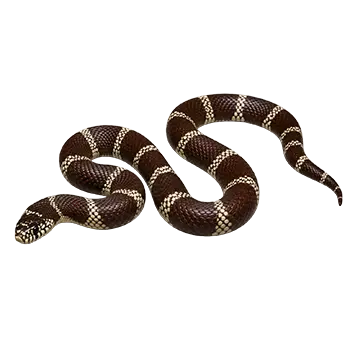

Successful reproduction in California Kingsnakes (Lampropeltis californiae) begins months before the actual introduction of a male to a female, with a thorough assessment of both prospective breeders' health, age, and body condition. Males are typically sexually mature by eighteen months of age, while females should ideally be at least two to three years old and weigh a minimum of 250 to 300 grams before being considered for breeding. Breeding a female that is too young or underweight places severe physiological demands on an animal that has not yet completed its own development, increasing the risk of egg binding, calcium depletion, and long-term reproductive damage.
Body condition scoring is a critical component of the pre-breeding evaluation. Both the male and female should be in robust but not obese condition, with smooth, rounded flanks, good muscle tone, and no visible vertebral ridge. The female in particular must carry sufficient fat reserves to sustain her through the extended fasting period that typically accompanies follicular development and gravidity. A female that enters the breeding season in marginal condition — borderline weight, recent illness, or incomplete recovery from a previous clutch — should be rested for the season and allowed to rebuild her reserves.
A veterinary pre-breeding examination is strongly recommended, especially for animals being bred for the first time or those acquired from other collections. This examination should include a fecal parasite screening, an external assessment for mites or scale abnormalities, and an evaluation of overall health status. Breeding animals that are carrying subclinical parasite burdens or low-grade infections places the female and her potential offspring at risk and can result in infertile clutches, developmental abnormalities, or the vertical transmission of pathogens from mother to eggs.
Conditioning for breeding involves a period of increased feeding frequency in the late summer and early autumn preceding the breeding season. Both males and females benefit from being offered slightly more frequent meals — once every seven to eight days rather than the standard ten to fourteen — during this conditioning period to build the energy reserves that will be drawn upon during brumation and the subsequent breeding activities. This conditioning phase typically spans six to eight weeks and should produce a noticeable but not excessive increase in body weight. Once conditioning is complete and the animals are in optimal body condition, the transition to brumation can begin.