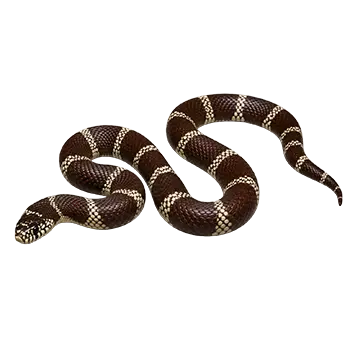

Adult Size, Body Condition & Physical Characteristics

Adult California Kingsnakes (Lampropeltis californiae) typically reach their full length of three to four feet by two to three years of age, with occasional individuals from robust bloodlines reaching four and a half feet under optimal conditions. Once adult length is achieved, growth effectively ceases and the animal's metabolic focus shifts from tissue building to maintenance, immune function, and reproductive capacity. Males tend to be slightly smaller and more slender than females of the same age, though this size difference is modest compared to more sexually dimorphic snake species.

Body condition assessment in adult kingsnakes relies on a combination of visual and tactile evaluation. A healthy adult should have smoothly rounded flanks when viewed in cross-section, with no visible spine ridge along the dorsal midline and no rib outlines visible through the skin. The body should feel firm and muscular when handled, not soft or doughy. When the snake is draped over a flat hand, the ventral surface should rest flush against the palm without the belly sagging laterally. Conversely, an adult in poor condition will appear thin, with a visible vertebral ridge and a triangular cross-sectional profile that tapers sharply from the spine to the ventral scales.

Scale quality is another important indicator of overall health in adults. Healthy scales are smooth, glossy, and lay flat against the body in overlapping rows. Dull, rough, or raised scales can indicate dehydration, nutritional deficiency, chronic low-level skin infection, or the early stages of a shed cycle. Adults typically shed every eight to twelve weeks, and the regularity and quality of sheds provide ongoing information about hydration and environmental conditions. A healthy adult produces clean, complete sheds with minimal assistance, and any deviation from this pattern warrants investigation.

The coloration and pattern of adult California Kingsnakes are stable and will not change significantly after the animal reaches maturity, barring health issues that affect pigmentation. Wild-type individuals display the species' characteristic alternating bands of dark brown or black and white or cream, though the precise shade, width, and regularity of bands vary among individuals and populations. Captive-bred morphs span a wide spectrum from stark black-and-white to lavender, chocolate, banana, and various aberrant and striped patterns. Regardless of morph, the vibrancy and contrast of the pattern serve as a general health barometer — well-maintained adults display their colors at full intensity, while stressed, dehydrated, or ill individuals often appear washed out.

Adult Nutrition & Feeding Protocols

Feeding an adult California Kingsnake is straightforward once the transition from growth-oriented to maintenance-oriented nutrition is complete. The standard adult diet consists of a single appropriately sized mouse — typically a small to medium adult mouse — offered once every ten to fourteen days. This interval mirrors the natural feeding rhythm of wild kingsnakes, which are opportunistic predators that do not feed on a daily or even weekly basis in their natural habitat. The prey item should be approximately the same diameter as the widest point of the snake's body and should leave a barely noticeable lump after ingestion.

Prey variety, while not strictly necessary for California Kingsnakes maintained on a rodent-based diet, can provide nutritional breadth and behavioral enrichment. Occasional substitution of a mouse with a day-old chick, a small quail, or a reptilink — a commercially produced sausage-style prey item made from ground whole prey — introduces different nutrient profiles and stimulates the snake's interest. Some keepers also offer appropriately sized frozen-thawed rat pinkies or rat fuzzies as an alternative prey type. Any new prey item should be introduced alongside, not in place of, the established feeding routine until the snake demonstrates consistent acceptance.

Seasonal appetite fluctuations are normal and expected in adult California Kingsnakes. Many adults voluntarily reduce or cease feeding during the autumn and winter months, particularly if they are exposed to natural photoperiod changes or mild temperature reductions. This seasonal anorexia can last anywhere from four to twelve weeks and reflects the species' natural brumation instinct. A healthy adult with good body reserves entering the cool season can safely fast for this duration without adverse effects. Attempting to force-feed or aggressively coax a seasonally fasting adult is counterproductive and creates unnecessary stress.

Obesity is the most prevalent nutritional disorder in captive adult California Kingsnakes and is almost entirely preventable through disciplined feeding practices. An obese adult appears visibly distended even between meals, develops prominent fat pads along the lower jaw and around the cloaca, and may exhibit reduced activity and labored movement. Obesity contributes to fatty liver disease, reproductive failure, and shortened lifespan. If an adult has become overweight, the corrective approach is to reduce feeding frequency to once every three to four weeks and slightly decrease prey size until the animal returns to a healthy body condition over the course of several months. Crash dieting through extended fasting is not recommended, as it creates its own metabolic stresses.

Water management for adults follows the same principles as for younger animals but on a larger scale. The water dish should be heavy, stable, and large enough for the snake to coil inside if it wishes to soak. Water must be changed daily and replaced immediately if contaminated. Some adults develop a routine of soaking before shedding, and keepers who observe this pattern can proactively provide a slightly larger soaking dish during the pre-shed period. Chronic dehydration in adults manifests subtly — slightly wrinkled skin between scales, mild constipation, and sheds that come off in fragments rather than a single piece — and is easily prevented with consistent water management.

Permanent Enclosure Design & Maintenance

The permanent adult enclosure for a California Kingsnake should measure a minimum of 36 inches long, 18 inches deep, and 12 to 16 inches tall, with larger dimensions being preferable for animals at the upper end of the species' size range. Front-opening PVC or glass enclosures are the most practical options, providing easy access for routine maintenance while maintaining the environmental stability that snakes require. PVC enclosures offer superior insulation and humidity retention compared to glass, which can be advantageous in dry climates or during winter months when indoor heating depletes ambient moisture.

The thermal gradient remains the single most important environmental parameter throughout the animal's life. The warm end of the adult enclosure should be maintained at 85 to 88 degrees Fahrenheit, the cool end at 72 to 76 degrees, with a basking surface temperature of up to 90 degrees. Overhead ceramic heat emitters or radiant heat panels, controlled by a proportional thermostat, provide the most stable and safest heat delivery. Digital thermometers with probes at both ends of the enclosure allow real-time gradient verification. Temperature monitoring is not a setup-and-forget task — seasonal changes in room temperature, heating system fluctuations, and thermostat drift can all alter the gradient, and regular verification prevents slow-developing husbandry problems.

Substrate for adult enclosures is most commonly aspen shavings, which support the species' natural burrowing behavior while remaining dry and easy to spot-clean. A depth of three to four inches allows the snake to construct tunnels and create buried resting sites, both of which are important natural behaviors that contribute to the animal's psychological well-being. Full substrate changes should be performed at least once per month, with spot cleaning of soiled areas performed as needed between changes. During full substrate changes, the enclosure interior should be wiped down with a reptile-safe disinfectant, rinsed thoroughly, and allowed to dry completely before fresh substrate and furnishings are replaced.

Furnishing the adult enclosure goes beyond the functional minimum of two hides and a water dish. Adult California Kingsnakes are intelligent, active animals that benefit from environmental complexity. Cork bark flats and tubes, rock ledges, driftwood branches, and artificial or live plants create visual barriers, climbing opportunities, and textural variety that encourage natural exploratory behavior. Rearranging furniture periodically — every month or two — provides novel stimulation and mimics the dynamic nature of a wild habitat. This simple enrichment technique requires no additional equipment and has a measurable impact on the snake's activity levels and behavioral repertoire.

Adult Behavior & Ongoing Socialization

Adult California Kingsnakes that have been consistently handled from a young age are among the most tolerant and manageable snake species available in the pet trade. A well-socialized adult will rest calmly in the hands, show minimal defensive behavior, and may even appear to relax during extended handling sessions. This tractability is one of the primary reasons the species has maintained its popularity for decades, and it is a direct product of the time and patience invested during the hatchling and juvenile stages.

Handling frequency for adults can be somewhat more flexible than for younger animals. Two to four handling sessions per week, each lasting fifteen to thirty minutes, are generally sufficient to maintain a calm disposition. Some adults tolerate even longer sessions without signs of stress, while others begin to show restlessness or attempts to return to the enclosure after twenty minutes. Reading the individual animal's body language and respecting its signals is more important than adhering to a rigid schedule. Signs of stress during handling include persistent escape attempts, rapid tongue flicking without exploratory head movement, sustained body tension, musking, and tail vibration.

Seasonal behavioral changes are a notable feature of adult California Kingsnake behavior and can catch keepers off guard if they are not expected. During the late autumn and winter months, many adults become less active, retreat to their hides for extended periods, and refuse food. This behavioral shift corresponds to the brumation instinct — the reptilian equivalent of hibernation — and is a normal, hormonally driven response to decreasing photoperiod and temperature. In males, the spring emergence from this quiet period is often accompanied by heightened activity, increased tongue flicking, and restless pacing as reproductive hormones surge. Females may display similar restlessness, particularly if follicular development is underway.

The ophiophagous nature of the California Kingsnake must remain a management consideration throughout adulthood. This species will readily consume other snakes — including cage mates of the same species — and must never be housed communally. Even temporary cohabitation during cleaning, transport, or veterinary visits is risky if the animals are not closely supervised. The predatory response toward other snakes is not a behavioral flaw but a fundamental aspect of the species' ecology, and it requires the keeper to maintain strict individual housing at all times.

Enrichment for adult California Kingsnakes extends beyond enclosure furnishings. Novel scent introduction — placing a clean object from an outdoor environment, such as a smooth stone or a piece of untreated bark, into the enclosure — provides olfactory stimulation that engages the snake's primary sensory system. Supervised exploration outside the enclosure in a snake-proofed room offers a change of scenery and expanded movement opportunities. These enrichment activities contribute to the animal's cognitive engagement and overall quality of life, and they are especially valuable for long-lived captive animals that may spend fifteen to twenty years in the same general environment.

Preventive Health Care & Veterinary Schedule

Preventive health care for adult California Kingsnakes is anchored by an annual veterinary examination performed by a practitioner experienced in reptile medicine. This annual check should include a thorough external examination assessing body condition, scale health, eye clarity, and oral cavity condition; a fecal parasite screening; and a review of the animal's weight trend and husbandry log. Establishing a relationship with a qualified reptile veterinarian before a health crisis arises ensures that the animal receives informed, species-appropriate care when it is needed, rather than the improvised treatment that often results from emergency visits to a general-practice veterinarian unfamiliar with reptile physiology.

Internal parasites can affect adults as readily as juveniles, particularly in animals maintained in collections where new acquisitions are introduced without adequate quarantine. Routine fecal screening, performed at least annually, detects parasitic infections in their subclinical phase, before they produce visible symptoms such as weight loss, regurgitation, or abnormal stool consistency. Pinworm, roundworm, and flagellate protozoan infections are the most common findings in captive kingsnakes, and all are treatable with appropriate antiparasitic medications when detected early.

Respiratory health should be monitored continuously through daily observation. A healthy adult California Kingsnake breathes silently with its mouth closed, and the nostrils are clean and dry. Any audible respiratory sound — wheezing, whistling, clicking, or gurgling — is abnormal and warrants veterinary evaluation. Mucus discharge from the nostrils or mouth, open-mouth breathing, and elevated head posture with the chin tilted upward are all signs of respiratory distress. Respiratory infections in kingsnakes are almost always secondary to environmental problems, most commonly inadequate ventilation, excessive humidity, or insufficient warm-end temperatures. Correcting the underlying husbandry issue is as important as treating the infection itself.

Dermatological conditions in adults are typically preventable through proper substrate management and enclosure hygiene. Scale rot, caused by prolonged contact with damp or soiled substrate, is the most common skin condition and is entirely avoidable with regular spot-cleaning and timely full substrate changes. Blister disease, a related condition, produces fluid-filled vesicles on the ventral scales and similarly results from excessive moisture. Burns from unregulated heat sources, while less common than in decades past due to widespread thermostat use, still occur and can produce severe, deep-tissue damage that requires prolonged veterinary treatment. Prevention through proper equipment and regular temperature monitoring is always preferable to treatment after injury.

Long-Term Husbandry Routines & Record Keeping

Successful long-term care of an adult California Kingsnake depends more on the consistency and discipline of the keeper's daily and weekly routines than on any single advanced technique. A sustainable daily routine includes a visual check of the animal and its enclosure, verification of temperatures at both ends of the gradient, and replacement of the water dish contents. Weekly tasks include spot-cleaning soiled substrate, inspecting hides and furnishings for damage or contamination, and weighing the animal on a digital scale. Monthly tasks include a full substrate change, enclosure disinfection, and a more thorough inspection of all equipment including thermostats, thermometers, and light timers.

Record keeping is the foundation of proactive husbandry. A dedicated log for each animal should document every feeding event — including date, prey type, prey size, and whether the item was accepted or refused — every shed event with notes on completeness and quality, every weight measurement, and any behavioral observations of note. This longitudinal data set transforms reactive care into predictive care, allowing keepers to identify emerging trends long before they manifest as clinical problems. A gradual decline in feeding frequency, a pattern of increasingly fragmented sheds, or a slow downward weight trend are all meaningful signals that are invisible without consistent documentation.

Seasonal husbandry adjustments improve the quality of life for adult California Kingsnakes and align captive care with the animal's natural biological rhythms. During the autumn and winter months, a modest reduction in photoperiod — shortening the light cycle from fourteen hours of light to ten hours over a period of several weeks — and a slight decrease in nighttime temperatures to the low 70s or upper 60s supports the natural brumation instinct without requiring a full cooling protocol. This seasonal modulation reduces breeding-season behavioral disruptions, improves long-term appetite consistency, and may contribute to overall longevity by reducing chronic metabolic stress.

Equipment maintenance is an often-overlooked aspect of long-term husbandry that directly impacts animal safety. Thermostats should be tested against an independent thermometer at least quarterly to verify accuracy, as thermostat probe drift can cause temperatures to creep above or below safe ranges without triggering any alarm. Heat emitters and bulbs degrade over time and should be replaced according to the manufacturer's schedule or sooner if output diminishes. Enclosure latches and hinges should be checked regularly for wear, as a latch that was secure when new may loosen over months of use, creating an escape opportunity that did not previously exist.

Emergency preparedness is a component of responsible long-term care that many keepers overlook until they need it. Having a backup heat source available in case of equipment failure, maintaining a supply of frozen prey sufficient to cover at least two months of feeding, and keeping the contact information for the nearest reptile-experienced veterinary practice and emergency after-hours clinic readily accessible ensures that unexpected situations do not escalate into animal welfare crises. Power outages, equipment malfunctions, and sudden illness are not matters of if but when over the fifteen-to-twenty-year lifespan of a California Kingsnake, and preparation is the most effective response.

Always consult a qualified professional before making any health-related decisions. This content is provided for informational reference only and should not replace professional guidance specific to your animal.