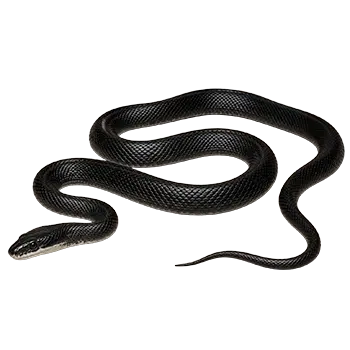

Growth & Physical Development

The juvenile phase of the Black Rat Snake (Pantherophis obsoletus) spans approximately the period from six months of age through the attainment of sexual maturity, which typically occurs between the third and fourth year in captivity. During this extended developmental window, the snake undergoes dramatic physical transformation, growing from a modestly proportioned yearling of roughly two feet to a powerful, muscular subadult that may exceed four feet in length. Growth is not linear but follows a decelerating curve, with the most rapid gains occurring during the first eighteen months and the rate gradually tapering as the animal approaches its adult dimensions.

One of the most visually striking changes during the juvenile period is the progressive ontogenetic color shift that defines this species. Hatchlings emerge with a conspicuous pattern of dorsal blotches on a lighter background, a pattern shared with several other Pantherophis species and one that provides effective camouflage among leaf litter. As the snake matures, melanin deposition steadily intensifies, beginning along the dorsal midline and spreading laterally. By two years of age, many individuals display a predominantly dark dorsum with only faint remnants of the juvenile blotching visible along the flanks. The ventral surface transitions from a checkered black-and-white pattern to a more uniformly dark slate, though some degree of lighter ventral patterning typically persists into adulthood.

Body proportions shift noticeably during the juvenile phase. The head, which appears proportionally large on a hatchling, comes into more balanced proportion with the thickening body. The animal develops visible musculature along the dorsolateral ridges, and the cross-sectional body profile transitions from the slightly flattened shape of a neonate to the characteristic loaf-shaped profile of a healthy growing colubrid. Keepers who handle their juvenile regularly will notice a marked increase in grip strength as the snake matures, reflecting the species' powerful constricting abilities and arboreal lifestyle.

Tracking growth through regular measurements and weights provides objective data that complements visual assessment. A gram-accurate digital scale and a flexible measuring tape are essential tools during this stage. Healthy juveniles should gain weight consistently between sheds, with brief plateaus of a few grams during pre-shed periods being normal. Sustained weight stagnation or loss over a period of three or more weeks, absent a deliberate brumation protocol, warrants a review of husbandry parameters and potentially a veterinary consultation to rule out internal parasites or other subclinical conditions.

Feeding Transitions & Nutritional Needs

Feeding management during the juvenile stage is defined by a gradual but continuous progression in prey size and a corresponding adjustment in feeding frequency. A yearling Black Rat Snake that has been reliably consuming fuzzy or hopper mice should be transitioned to adult mice as its girth increases, with the general guideline that prey diameter should approximate the widest point of the snake's body. This transition is not governed by a rigid timetable but by the individual snake's growth rate, and attentive keepers will recognize when a prey item that previously produced a visible post-feeding lump is now consumed without any appreciable change in the snake's profile, signaling that the next prey size increment is appropriate.

Feeding frequency should be reduced as the snake grows. Juveniles under one year of age typically thrive on meals offered every five to seven days. Between one and two years, extending the interval to seven to ten days supports healthy growth without promoting obesity. By the time the snake approaches its third year and growth has slowed substantially, feeding every ten to fourteen days is generally sufficient. This gradual reduction mirrors the natural metabolic deceleration that accompanies the transition from rapid juvenile growth to the slower tissue maintenance of subadulthood and adulthood. Maintaining the frequent feeding schedule of a hatchling throughout the juvenile years is a common husbandry error that leads to excessive fat deposition, particularly in the coelomic cavity, which can compromise organ function and reduce the animal's overall lifespan.

Nutritional variety, while not strictly essential for a species that thrives on a rodent-based diet, can be introduced during the juvenile period. Some keepers offer the occasional day-old chick, quail chick, or multimammate mouse to provide dietary enrichment and expose the snake to different nutrient profiles. These supplemental prey items should constitute no more than ten to fifteen percent of the overall diet and should not replace the staple rodent meals that form the nutritional backbone of the captive diet. All prey items should be offered pre-killed or thawed from frozen to eliminate the risk of bite injuries from live rodents, which become increasingly capable of injuring a snake as rodent size increases.

Water consumption increases proportionally with body size, and the juvenile's water dish should be upgraded as the snake grows to ensure the animal can submerge a significant portion of its body for soaking. Soaking behavior tends to increase around shed cycles and during periods of low ambient humidity. Keepers should monitor for excessive or continuous soaking outside of pre-shed periods, as this behavior can indicate the presence of external parasites such as mites or discomfort related to respiratory illness. The water dish should be cleaned and refilled daily, and its placement within the enclosure should be on the cooler side to prevent excessive evaporation that could elevate humidity beyond desired levels.

Enclosure Upgrades & Environmental Enrichment

As the juvenile Black Rat Snake grows, its enclosure must be scaled upward to accommodate its increasing body length and its pronounced drive to climb and explore. The compact tub or small terrarium that sufficed during the hatchling phase becomes inadequate once the snake reaches approximately eighteen to twenty-four inches in length, typically around six to eight months of age. A juvenile enclosure measuring approximately 36 by 18 by 18 inches provides adequate floor space and, critically, sufficient vertical dimension to support the climbing behavior that is central to this species' behavioral repertoire. By the time the snake reaches thirty to thirty-six inches, a further upgrade to a 48 by 24 by 24 inch enclosure or equivalent is warranted.

Vertical space and climbing opportunities are not optional luxuries for juvenile Black Rat Snakes but essential components of proper husbandry. In the wild, this species is among the most arboreal of North American colubrids, ascending trees to raid bird nests, thermoregulate on sun-warmed branches, and escape terrestrial predators. Captive juveniles deprived of climbing opportunities often develop stereotypic behaviors such as repetitive nose-rubbing along enclosure walls and restless pacing, both of which indicate unmet behavioral needs. Sturdy branches, cork bark tubes mounted vertically, and artificial vine networks provide the three-dimensional habitat structure that supports natural locomotion and reduces stress.

The thermal gradient established during the hatchling phase should be maintained throughout the juvenile period, though the larger enclosure volume makes achieving a clean gradient somewhat more challenging. The warm end should remain at 85 to 88 degrees Fahrenheit with a basking spot of up to 90 degrees, and the cool end should sit between 72 and 78 degrees. Multiple thermometers or a digital thermometer with remote probes placed at each end of the enclosure provide accurate, real-time temperature monitoring. Overhead radiant heat panels or ceramic heat emitters remain the preferred heat sources; heat lamps can be used provided they are fitted with guards to prevent direct contact burns.

Substrate selection can be broadened during the juvenile phase as the risk of accidental ingestion during feeding diminishes. Aspen shavings are a popular and effective choice for Black Rat Snakes, offering good moisture control, natural burrowing opportunities, and easy spot-cleaning. Cypress mulch is an alternative that retains humidity more effectively and may be preferable in drier climates or during winter months when indoor air tends to be particularly arid. Cedar and pine shavings must be strictly avoided, as the aromatic phenols they release are toxic to reptiles and can cause respiratory distress and neurological damage. Regardless of substrate type, the enclosure should receive a full substrate change and thorough disinfection every three to four weeks, with spot cleaning performed immediately after each defecation.

Behavioral Changes & Temperament Development

The juvenile period represents the most dynamic phase of behavioral development in the Black Rat Snake's life. The purely defensive, strike-first temperament of the hatchling gives way to a more nuanced behavioral repertoire as the snake grows and accumulates experience. Juveniles that have been handled regularly from a young age typically show a dramatic reduction in defensive responses by six to eight months of age, progressing from reflexive striking and musking to cautious exploration and, eventually, to relaxed tolerance of human contact. This behavioral trajectory is not guaranteed and depends heavily on the consistency and quality of the socialization effort; sporadic or rough handling can delay or reverse the taming process.

Activity patterns become more pronounced and predictable during the juvenile phase. Black Rat Snakes are primarily crepuscular and nocturnal, with peak activity occurring in the hours surrounding dusk and dawn. Keepers will notice their juvenile becoming increasingly active during these periods, patrolling the enclosure perimeter, climbing branches and enclosure furniture, and investigating any changes to the environment with focused tongue-flicking. This exploratory behavior is a sign of a confident, well-adjusted animal and should be encouraged through periodic rearrangement of cage furnishings to provide novel stimuli.

Feeding behavior in juveniles transitions from the hesitant, tentative strikes of a hatchling to the powerful, decisive constriction sequences of a developing predator. Juvenile Black Rat Snakes often develop strong feeding responses that can occasionally be misdirected toward the keeper's hands during cage maintenance, particularly if the snake has come to associate the opening of its enclosure with the arrival of food. This association can be mitigated by using a consistent hook-training protocol in which the snake is gently touched with a snake hook before every handling session, establishing a tactile cue that differentiates handling events from feeding events. Over time, the snake learns to associate the hook with non-threatening interaction, and the incidence of misdirected feeding strikes drops significantly.

Defensive behaviors, while diminishing in frequency with regular socialization, may resurface temporarily during periods of physiological stress such as pre-shed opacity, illness, or the hormonal fluctuations that accompany the approach of sexual maturity. Keepers should expect occasional setbacks in temperament during these windows and respond by reducing handling frequency rather than escalating it. Attempting to force interaction with a stressed or hormone-addled juvenile snake is counterproductive and can undo weeks of socialization progress. Patience and consistency remain the most effective tools in the keeper's behavioral management arsenal throughout the juvenile phase.

Common Health Issues in Juveniles

Juvenile Black Rat Snakes are generally hardy animals when housed under appropriate conditions, but several health concerns are more prevalent during this growth-intensive stage than at any other point in the animal's life. Internal parasites, particularly nematodes such as Ophidascaris and flagellate protozoans, are among the most common clinical findings in juvenile colubrids, especially those acquired from breeders who maintain large collections or those that have been exposed to wild-caught animals. Symptoms of significant parasite loads include progressive weight loss despite a normal feeding response, loose or foul-smelling stools, and visible worms or worm segments in fecal material. Annual fecal examinations by a reptile-experienced veterinarian are recommended throughout the juvenile period, with treatment administered as indicated by diagnostic results.

Snake mites (Ophionyssus natricis) are a persistent concern in any collection and can be particularly debilitating for juvenile snakes whose smaller body mass makes them more susceptible to the anemia and dehydration that result from heavy infestations. Mites appear as tiny black or reddish-brown mobile dots, most easily spotted around the eye sockets, in the gular fold beneath the chin, and under the edges of the ventral scales. A snake that soaks in its water dish excessively, particularly outside of pre-shed periods, should be examined closely for mites, as soaking is one of the primary behavioral responses to ectoparasite irritation. Treatment protocols vary but typically involve the application of reptile-safe miticides combined with thorough environmental decontamination, including the removal and replacement of all substrate and the chemical treatment of the enclosure and all cage furnishings.

Respiratory infections remain a risk throughout the juvenile period and are almost always secondary to environmental deficiencies. Enclosures that are too cool, too humid, or poorly ventilated create conditions under which bacterial pathogens that normally exist at harmless levels in the environment can proliferate and overwhelm the snake's mucosal defenses. Bubbling or whistling sounds during respiration, visible mucus strands in the mouth, open-mouth breathing, and a tendency to hold the head at an elevated angle with the neck extended are all clinical signs that warrant immediate attention. Early-stage respiratory infections often resolve with correction of environmental parameters alone, but established infections typically require veterinary intervention including culture and sensitivity testing followed by a targeted course of antibiotics.

Regurgitation in juvenile snakes is a serious event that demands prompt investigation. A single regurgitation episode may result from handling too soon after feeding, environmental temperatures that are too low for proper digestion, prey that was too large relative to the snake's girth, or the stress of a recent enclosure change or disturbance. The appropriate response to a regurgitation event is to withhold food for at least ten to fourteen days, then offer a prey item that is significantly smaller than the one that was regurgitated, in an environment where temperatures and security have been verified. Repeated regurgitation events, particularly those involving partially digested prey with a foul odor, can indicate a bacterial infection of the gastrointestinal tract known as cryptosporidiosis, a protozoal disease that is extremely difficult to treat and for which there is currently no reliable cure in reptiles.

Building Long-Term Handling Habits

The juvenile period is the most consequential window for establishing the handling relationship that will define the keeper's experience with their Black Rat Snake for the next two decades or more. A juvenile that receives consistent, calm, predictable handling develops into an adult that tolerates and even appears to enjoy human interaction, while a juvenile that is neglected, handled roughly, or subjected to unpredictable interactions often becomes a large, powerful adult that is difficult and stressful to manage. The investment of time during this phase cannot be overstated in its long-term importance.

Handling sessions during the juvenile phase should gradually increase in duration from the brief three-to-five-minute interactions of the hatchling stage to sessions lasting ten to fifteen minutes. Frequency should remain at three to five sessions per week, with sessions skipped during the forty-eight hours before and after feeding and during the pre-shed opacity period. Each session should begin with the hook-touch protocol, followed by gentle lifting and support of the snake's body from below. As the juvenile grows, it will begin wrapping around the keeper's wrists and arms during handling, using its prehensile grip to anchor itself. This wrapping behavior is not constriction and does not indicate aggression; it is simply the snake using its natural arboreal grip mechanics for stability.

Desensitization to novel stimuli is an important component of juvenile socialization that is often overlooked. A snake that is only ever handled in the same room, by the same person, under the same conditions may become reactive when exposed to unfamiliar environments. Gradually introducing the juvenile to new contexts, such as different rooms, the presence of other household members, and varying ambient light and noise levels, builds a broader tolerance that makes routine husbandry tasks like enclosure cleaning, veterinary transport, and public education presentations far less stressful for both the snake and the keeper.

As the juvenile approaches the subadult and adult transition, typically in the third year, keepers should be aware that hormonal changes associated with the onset of sexual maturity can temporarily alter temperament. Males in particular may become more restless and food-avoidant during the breeding season, even in the absence of a female, and some individuals display a transient increase in defensive behavior during this period. These changes are hormonally driven and typically resolve once the breeding season passes. Maintaining the regular handling routine through this period, with appropriate allowances for the snake's heightened sensitivity, helps prevent permanent behavioral regression and ensures a smooth transition into the adult management protocols that will govern the remainder of the animal's life.

Safety practices must scale with the animal's growth. A hatchling's bite is a minor inconvenience, but a three-foot juvenile can deliver a more substantial bite that, while not medically significant, can be startling enough to provoke a reflexive response from the keeper that endangers the snake. Maintaining a calm demeanor when bitten, avoiding the instinct to pull the snake away from the bite site, and allowing the animal to release on its own are essential skills that become increasingly important as the snake's size and bite force increase. Keepers who establish these habits during the juvenile phase are well prepared for the size and strength of the adult animal.

Always consult a qualified professional before making any health-related decisions. This content is provided for informational reference only and should not replace professional guidance specific to your animal.