
Physical Maturity & Adult Characteristics

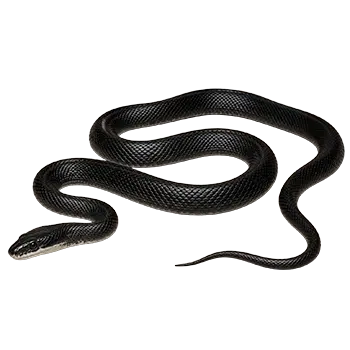
The Black Rat Snake (Pantherophis obsoletus) reaches full physical maturity between three and five years of age, though skeletal growth may continue at a greatly reduced rate for several years beyond the point at which the animal is considered functionally adult. A mature specimen typically measures between four and six feet in total length, with exceptional individuals from certain geographic populations or genetic lines reaching seven to eight feet. Males tend to be slightly longer than females on average, though there is considerable overlap between the sexes and reliable sex determination in adults requires probing or visual examination of tail proportions rather than reliance on size alone.

The adult coloration that gives this species its common name is fully established by the time the snake reaches maturity. The bold juvenile blotch pattern has been replaced by a predominantly glossy black dorsal surface, though faint remnants of the underlying pattern may remain visible under certain lighting conditions or when the skin is stretched during feeding. The ventral surface is typically a mottled patchwork of dark gray, black, and irregular white or cream markings. The chin and throat often retain lighter coloration, ranging from white to pale yellow, creating a contrast with the dark body that is particularly noticeable when the snake is in an elevated, alert posture. Individual variation in the degree of melanization is considerable and is influenced by both genetics and geographic origin.

Musculature in the adult Black Rat Snake is substantial and reflects the species' dual lifestyle as both a powerful constrictor and an agile arboreal climber. The dorsal musculature is well-developed, giving the animal a strongly keeled cross-sectional profile that aids in climbing by providing grip against rough bark surfaces. The ventral scales are broad and strongly angled, further enhancing the snake's climbing ability. An adult in good condition should present a body profile that is smoothly rounded without visible spine or rib outlines, but also without the soft, doughy appearance that indicates excessive fat deposition. The ideal body condition falls between these extremes and reflects a balance of adequate nutrition and regular physical activity.

Adult Black Rat Snakes possess a robust, somewhat elongated head that is distinct from the neck, with large, round eyes that have round pupils characteristic of non-venomous colubrids. The labial scales along the upper jaw are well defined and contribute to the species' characteristically alert facial expression. Dentition consists of numerous small, recurved teeth arranged in multiple rows, designed for gripping and restraining prey rather than cutting. While a bite from an adult can draw blood and cause minor lacerations, the teeth are not capable of inflicting serious injury to a human.

Long-Term Feeding & Weight Management

Feeding an adult Black Rat Snake requires a fundamental shift in philosophy from the growth-oriented approach of the juvenile years to a maintenance-focused strategy designed to sustain optimal body condition over a lifespan that may span two decades or more. An adult in good condition should be fed one appropriately sized meal every ten to fourteen days, with the prey item being a medium to large adult mouse or a small weaned rat depending on the snake's size. The prey should produce no visible lump or only the faintest suggestion of a lump after ingestion, as the dramatic post-feeding distension appropriate for a growing juvenile indicates overfeeding in an adult whose growth has essentially ceased.

Obesity is the most common nutritional disorder in captive adult rat snakes and is almost entirely preventable through disciplined feeding management. An overweight Black Rat Snake displays visible fat deposits along the spine, a noticeably rounded body profile that lacks the subtle angular keeling of a snake in good condition, and a general sluggishness that reduces activity levels and climbing behavior. Chronic obesity contributes to hepatic lipidosis, a degenerative liver condition in which fat infiltrates and replaces functional liver tissue, as well as cardiovascular strain and reduced reproductive viability. Prevention is straightforward: feed moderate-sized meals at appropriate intervals and resist the anthropomorphic impulse to feed the snake every time it displays a feeding response.

Conversely, underfeeding, while less common than overfeeding, can occur when keepers extend feeding intervals too aggressively or fail to increase prey size proportional to the snake's adult body mass. An underweight adult displays prominent vertebral and costal outlines, loose skin along the flanks, and a triangular cross-sectional body profile with a visible concavity between the spine and the lateral body wall. Sustained underweight conditions compromise immune function, impair shed quality, and reduce the snake's ability to thermoregulate effectively. If underweight is identified, the correction should be gradual, increasing meal frequency to every seven days with appropriately sized prey until the animal returns to a healthy body condition, then resuming the standard maintenance schedule.

Seasonal appetite fluctuations are normal and expected in adult Black Rat Snakes, even in individuals maintained at stable temperatures without a formal brumation protocol. Many adults voluntarily reduce or cease feeding during the late autumn and winter months, a vestigial behavior linked to the species' temperate range and its natural winter dormancy cycle. Keepers should not attempt to force-feed or otherwise override this seasonal anorexia, as it reflects a deeply ingrained physiological rhythm. Simply continue to offer food at regular intervals and accept the refusal without concern, provided the snake's body condition remains adequate. Appetite typically returns spontaneously as photoperiod increases in the spring.

Permanent Enclosure Design

The permanent adult enclosure for a Black Rat Snake should be the final upgrade in a series of progressively larger habitats that have accompanied the animal through its growth phases. For an average adult of four to five feet, a minimum enclosure size of 48 by 24 by 24 inches is recommended, with larger specimens requiring proportionally larger setups. The emphasis on vertical dimension is critical for this species; an enclosure that provides ample floor space but insufficient height fails to accommodate the climbing behavior that is central to the Black Rat Snake's natural activity patterns and psychological wellbeing. Front-opening enclosures are generally preferred over top-opening designs because they allow the keeper to interact with the snake at its level rather than approaching from above, which can trigger defensive responses.

Climbing infrastructure is the defining feature of a well-designed Black Rat Snake enclosure. Multiple sturdy branches spanning the width of the enclosure at varying heights, cork bark tubes and flats mounted both horizontally and vertically, and artificial or live plant cover create the multi-layered, three-dimensional habitat that this species utilizes in the wild. All climbing structures must be securely anchored to prevent shifting or collapse that could injure the snake. Natural hardwood branches such as oak, maple, or grapevine are excellent choices, but they should be heat-treated or thoroughly dried before introduction to eliminate any hitchhiking insects or fungal organisms.

The thermal gradient principles that governed hatchling and juvenile husbandry remain in effect for adults, though the larger enclosure volume generally produces a more gradual and naturalistic gradient. The warm end should be maintained at 84 to 88 degrees Fahrenheit with a basking area of up to 90 degrees, and the cool end should sit between 72 and 78 degrees. Nighttime temperatures can be allowed to drop by five to eight degrees across the entire enclosure, reflecting the natural diurnal temperature cycle and providing the snake with environmental cues that help regulate its circadian rhythm. Ambient humidity should be maintained between 40 and 60 percent, with localized increases available through a humid hide or a large water feature.

A well-designed adult enclosure should incorporate at least three hides: one on the warm end, one on the cool end, and one elevated hide positioned among the climbing branches. Black Rat Snakes are secretive by nature and will utilize all three locations depending on their thermoregulatory needs and activity state. Hides should be snug enough that the snake makes contact with the interior walls on multiple sides, as an overly spacious hide provides less security than one that allows the snake to press its body against surrounding surfaces. The water dish should be large enough for the snake to soak its entire body if desired, sturdy enough to resist tipping by a five-foot constrictor, and positioned on the cooler side of the enclosure. Lighting, while not strictly necessary for a species that does not require UVB for calcium metabolism, provides a consistent photoperiod that reinforces the snake's circadian rhythm and enhances the visual appeal of the enclosure.

Adult Behavioral Patterns

An adult Black Rat Snake that has been properly socialized through the hatchling and juvenile stages is typically a calm, tractable animal that tolerates handling well and displays minimal defensive behavior under routine conditions. The species is generally regarded as one of the most manageable of the larger North American colubrids, occupying a middle ground between the almost universally docile corn snake and the more persistently defensive Eastern racer. However, individual temperament varies considerably, and some adults retain a heightened defensive sensitivity throughout their lives despite consistent socialization efforts. Accepting this natural variation and adapting management practices accordingly is far more productive than attempting to force a naturally cautious individual into a level of docility it is not predisposed to achieve.

Activity cycles in adult Black Rat Snakes follow a strongly crepuscular to nocturnal pattern, with the majority of voluntary movement occurring between late afternoon and early morning. During daylight hours, most adults rest in their hides or draped along a branch in a loosely coiled resting posture. As ambient light dims, the snake becomes increasingly alert, often emerging from its hide to patrol the enclosure perimeter, investigate scent trails, and climb through the upper reaches of its habitat. Providing a dusk and dawn cycle through the use of a timer-controlled ambient light or low-wattage lamp enhances the naturalness of this activity pattern and gives the keeper predictable windows during which the snake can be observed in its active state.

Feeding behavior in well-established adults is typically decisive and efficient. Most individuals develop strong conditioned feeding responses to the cues associated with meal preparation, such as the sound of the freezer opening, the scent of thawing rodents, or the appearance of feeding tongs. This conditioned responsiveness can occasionally create management challenges when the snake begins to associate any enclosure opening with feeding, leading to misdirected strikes at the keeper's hands during routine maintenance. The hook-training protocol established during the juvenile phase remains the most effective countermeasure, and its consistent application throughout the adult years prevents the development of problematic feeding associations.

Seasonal behavioral shifts are a notable feature of adult Black Rat Snake behavior, even in captive specimens maintained without a formal brumation cycle. Males may display increased restlessness, reduced appetite, and a heightened tendency to roam during the late winter and early spring months, driven by endogenous hormonal rhythms associated with the wild breeding season. Females that have not been bred may show similar but less pronounced behavioral changes. These seasonal fluctuations are normal and do not require intervention beyond an awareness that the snake's temperament and feeding response may be less predictable during these periods.

Preventive Health & Veterinary Care

Preventive veterinary care for adult Black Rat Snakes should follow an annual schedule that includes a comprehensive physical examination, a fecal parasite screening, and an assessment of body condition, hydration status, and shed quality. Establishing a relationship with a reptile-experienced veterinarian during the snake's younger years ensures continuity of care and provides the clinician with a longitudinal understanding of the individual animal's health baseline. Annual wellness examinations are relatively inexpensive compared to the cost of treating advanced disease and provide an opportunity to detect subclinical conditions before they progress to the point of causing visible symptoms.

Ectoparasite management remains relevant throughout the adult years, though well-maintained single-animal collections typically face lower mite pressure than multi-animal facilities. Quarantine protocols should be strictly observed whenever new reptiles are introduced into a collection, with a minimum isolation period of sixty to ninety days during which the new arrival is housed in a separate room, serviced with dedicated tools, and monitored closely for any signs of mites, respiratory illness, or abnormal fecal output. The consequences of introducing mites or infectious disease into an established collection can be devastating and are entirely preventable through disciplined quarantine practices.

Dermatological conditions in adult Black Rat Snakes most commonly manifest as scale rot (ulcerative dermatitis) and blister disease, both of which are associated with chronically damp substrate, inadequate ventilation, or contaminated enclosure conditions. Scale rot presents as discolored, softened, or ulcerated ventral scales, often with a reddish-brown exudate. Blister disease appears as fluid-filled vesicles on the ventral surface or lower flanks. Both conditions require prompt attention: the enclosure must be stripped to paper towel substrate, humidity reduced, and ventilation maximized. Mild cases may resolve with improved husbandry alone, but moderate to severe presentations typically require veterinary-prescribed topical antiseptics and potentially systemic antibiotics.

Dental health is an often-overlooked aspect of adult rat snake care. While snakes do not develop dental caries in the mammalian sense, they are susceptible to infectious stomatitis, commonly known as mouth rot. This condition typically begins as petechiae or pinpoint hemorrhages along the gum line and progresses to caseous exudate, swollen gums, and tooth loss if untreated. Stomatitis is frequently secondary to immune suppression caused by chronic stress, suboptimal temperatures, or concurrent systemic illness. Treatment involves debridement of necrotic tissue by a veterinarian, application of topical antiseptics, and in severe cases, systemic antibiotic therapy. Prevention centers on maintaining appropriate environmental conditions and minimizing sources of chronic stress.

Seasonal Cycling & Photoperiod Management

The Black Rat Snake is native to a broad swath of eastern North America where it experiences pronounced seasonal variation in temperature and photoperiod. Even in captivity, where environmental conditions are artificially controlled, the species retains strong physiological responses to seasonal cues that influence behavior, appetite, and reproductive cycling. Managing these seasonal rhythms through deliberate photoperiod and temperature adjustments enhances the overall health and behavioral normalcy of the captive animal, even when breeding is not the goal.

Photoperiod management involves adjusting the number of daylight hours the snake experiences throughout the year to approximate the natural annual light cycle of its geographic range. A schedule that provides fourteen to sixteen hours of light during summer months, gradually reduced to eight to ten hours during winter, and then increased again through spring provides the environmental cue structure that the snake's endocrine system has evolved to interpret. This cycling supports normal hormonal rhythms, reinforces the circadian activity pattern, and can help regulate the seasonal appetite fluctuations that many adult Black Rat Snakes display. Timer-controlled lighting systems make this management straightforward and consistent.

For keepers who choose not to brumate their Black Rat Snakes, a mild winter cooling period can still provide physiological benefits without the risks associated with full brumation. Reducing the warm end temperature by five to eight degrees and the cool end by a similar margin during the winter months, combined with the shortened photoperiod described above, creates a gentle seasonal signal that satisfies much of the species' innate cycling requirement. This approach is appropriate for animals that are not being bred and provides a low-risk compromise between the constant high temperatures of year-round tropical maintenance and the more demanding protocols of formal brumation.

Keepers who maintain their Black Rat Snakes at constant temperatures and photoperiods year-round are not necessarily harming their animals, but they may observe a higher incidence of behavioral abnormalities such as persistent restlessness during the natural breeding season, inconsistent feeding responses, and occasional bouts of seemingly unmotivated defensive behavior. These issues are rarely serious but can be puzzling for keepers who are unaware of the species' seasonal biology. Implementing even a modest seasonal cycling protocol often resolves these behaviors and produces a calmer, more predictable animal whose activity patterns align more closely with the species' evolved behavioral template.

Climate control equipment should be inspected and maintained on a seasonal basis to ensure reliable operation throughout the year. Thermostat failure during a cooling period can expose the snake to dangerously low temperatures, while a malfunctioning thermostat during summer can create lethal overheating conditions. Redundant temperature monitoring in the form of a standalone minimum-maximum thermometer provides an independent check on thermostat function and alerts the keeper to any equipment failures that might otherwise go undetected until the snake shows clinical signs of temperature stress.

Always consult a qualified professional before making any health-related decisions. This content is provided for informational reference only and should not replace professional guidance specific to your animal.