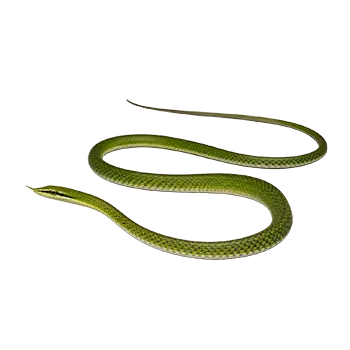

Recognizing Terminal Decline

Distinguishing the terminal decline of an Asian Vine Snake (Ahaetulla prasina) from the gradual changes of normal aging requires attentive observation and an honest assessment of the animal's trajectory over weeks and months rather than days. Terminal decline is characterized by a constellation of signs that, taken individually, might overlap with treatable illness but collectively indicate a systemic deterioration that has progressed beyond the capacity for recovery. The keeper who has maintained careful health records throughout the animal's life is best positioned to identify the inflection point at which decline accelerates past the threshold of manageable aging.

The most reliable early indicator of terminal decline is a sustained and irreversible loss of appetite. While senior Asian Vine Snakes commonly show reduced feeding frequency, a terminal animal will progress from reduced appetite to complete food refusal over a period of weeks to months. Prey items may be struck at but not consumed, or the snake may lose the coordination required to accurately target and constrict prey. When an animal that was previously feeding, even sporadically, ceases all feeding activity for four or more consecutive attempts over a period of several weeks, and no correctable husbandry or medical cause can be identified, the keeper should begin considering the possibility that the animal has entered a terminal trajectory.

Physical signs of terminal decline become progressively apparent as the process advances. The snake's body loses muscle mass and fat reserves, producing a pronounced triangular cross-section with the spine and ribs becoming visible through the skin. The coloration dulls and may take on a grayish or brownish cast that does not improve with shedding. The eyes may develop a persistent haze unrelated to the pre-shed opaque phase, and the tongue-flicking response — one of the most fundamental indicators of environmental engagement in snakes — slows markedly or ceases. The prehensile grip that once anchored the snake securely to branches weakens, and the animal may begin resting on the enclosure floor rather than on elevated perches, a behavioral shift profoundly uncharacteristic for this obligately arboreal species.

Neurological signs may accompany the final stages of terminal decline and are particularly distressing for keepers to witness. Discoordinated movement, an inability to hold the head steady, star-gazing (persistent upward tilting of the head), and corkscrewing or spiral rolling when attempting to move can indicate neurological degeneration from organ failure, neoplasia, or advanced systemic infection. These neurological signs typically signal that the animal's suffering is significant and that quality of life has deteriorated to a point where palliative and end-of-life decisions become immediately relevant.

Comfort-Focused Husbandry

Once a terminal trajectory has been recognized and confirmed through veterinary consultation, the focus of husbandry shifts from health maintenance and recovery to comfort and the reduction of suffering. This philosophical shift is important for the keeper to internalize, as it changes the criteria by which care decisions are evaluated. The question is no longer whether an intervention will restore health but whether it reduces discomfort, maintains dignity, and supports whatever quality of life remains available to the animal during its final period.

Enclosure modifications for comfort care prioritize safety and ease of access to essential resources. An animal that can no longer grip branches securely should be provided with a low, flat enclosure rather than the tall arboreal setup of its healthy years. A shallow plastic container with soft paper towel substrate, a low resting platform no more than two to three inches above the substrate, and easily accessible water eliminates the risk of falls and the energy expenditure of climbing. The enclosure should be positioned in a quiet area with minimal vibration, ambient noise, and visual disturbance. Temperature should be maintained at the lower end of the species' comfort range — 78 to 80 degrees Fahrenheit — as metabolic processes slow and the animal's thermoregulatory needs diminish.

Hydration management becomes the most important daily care task during the comfort phase. Even when feeding has ceased entirely, maintaining hydration supports organ function, eases the discomfort of dehydration, and can extend the period of acceptable quality of life. Misting the enclosure walls and any surfaces near the snake's resting position three to four times daily provides drinking opportunities without requiring the animal to move. For animals too weak to drink voluntarily, gentle application of water droplets to the lips using a small syringe or pipette — allowing the snake to lap at its own pace without forcing fluid into the mouth — can maintain minimal hydration. This should be done with extreme gentleness and discontinued if the animal shows any sign of distress or aspiration.

Handling during the comfort phase should be reduced to the absolute minimum necessary for care tasks. A dying snake derives no benefit from handling and may experience significant stress from the physical manipulation involved. Brief, gentle interactions limited to necessary enclosure maintenance, hydration assistance, and visual health assessment replace the regular handling routine of earlier life stages. The keeper's presence near the enclosure — speaking quietly, moving slowly — can be maintained without physical contact, providing whatever subtle comfort the animal may derive from familiar environmental cues.

Pain Assessment & Management

Pain assessment in a dying Asian Vine Snake presents one of the most challenging aspects of end-of-life care because snakes lack the vocal, facial, and postural pain cues that make suffering more recognizable in mammals. The absence of visible distress does not mean the absence of pain; reptilian neuroanatomy includes nociceptive pathways capable of transmitting pain signals, and behavioral research has demonstrated that snakes respond to painful stimuli with avoidance, guarding, and altered movement patterns. Keepers and veterinarians must rely on behavioral observation and physiological indicators to assess pain in a species that communicates distress through subtle channels.

Behavioral indicators of pain in terminally declining Asian Vine Snakes include persistent restlessness alternating with periods of rigid immobility, unusual body postures such as tightly coiled positions that differ from the animal's normal resting posture, flinching or withdrawal responses to gentle touch in areas that previously tolerated contact, and a refusal to settle into any position for more than brief periods. Respiratory changes — particularly irregular breathing patterns, sustained open-mouth breathing, or audible respiration in an animal that previously breathed silently — may also indicate pain or severe internal distress. Any combination of these signs warrants discussion with a veterinarian about the appropriateness of continued observation versus intervention.

Pharmacological pain management in reptiles is a developing field that has advanced significantly in recent years but remains less well-established than mammalian analgesia. Reptile-experienced veterinarians can prescribe analgesic medications appropriate for the species and the animal's condition. Meloxicam, a non-steroidal anti-inflammatory drug, is commonly used for mild to moderate pain management in snakes and can be administered orally or by injection at species-appropriate dosages. Opioid analgesics such as tramadol or buprenorphine may be prescribed for more severe pain, though dosing protocols for small colubrids require veterinary expertise to avoid respiratory depression or other adverse effects.

The decision to initiate pharmacological pain management should be made collaboratively between the keeper and the veterinarian, weighing the expected benefit against the stress of medication administration. For an animal in terminal decline, the discomfort of repeated oral dosing or injection must be balanced against the pain relief the medication provides. In some cases, the stress of treatment administration may outweigh its benefit, and the most compassionate course becomes a discussion of euthanasia rather than continued attempts at symptom management. This calculus is deeply individual and depends on the specific animal's condition, the keeper's capacity to administer treatment humanely, and the veterinarian's clinical assessment of remaining quality of life.

The Euthanasia Decision

The decision to euthanize a terminally declining Asian Vine Snake is among the most difficult responsibilities a keeper faces, and it deserves thoughtful, informed consideration rather than impulsive action driven by either premature intervention or delayed compassion. Euthanasia is most appropriately considered when the animal's quality of life has declined to a point where suffering is ongoing and cannot be adequately managed through palliative care, or when the trajectory of decline is clearly irreversible and continued life offers only increasing discomfort without meaningful periods of comfort or normalcy.

A structured quality-of-life assessment framework can help keepers make this decision with greater objectivity than emotion alone permits. Key parameters to evaluate include the animal's ability to maintain a comfortable resting position, the presence or absence of apparent pain behaviors, the frequency and severity of neurological symptoms, the animal's hydration and nutritional status, and whether the animal still demonstrates any environmental engagement such as tongue-flicking, visual tracking, or voluntary movement. When the majority of these parameters indicate sustained deterioration with no reasonable expectation of improvement, euthanasia becomes the compassionate choice rather than an act of giving up.

Veterinary euthanasia for reptiles is performed through an injection of a barbiturate solution, typically sodium pentobarbital, administered intravenously or intracoelomically. The procedure is rapid and painless when performed by an experienced veterinarian, though reptilian physiology means that cardiac cessation may take longer than in mammals — sometimes up to thirty minutes or more after apparent loss of consciousness. The veterinarian may administer a pre-euthanasia sedative to minimize any stress associated with handling and injection, and the keeper should discuss this option in advance to understand what the process will involve. Keepers who wish to be present during the procedure should be prepared for the extended timeframe and should understand that reflexive muscle movements may occur after the animal has lost consciousness.

The timing of euthanasia is a deeply personal decision, and there is no single correct answer. Some keepers prefer to act early in the terminal trajectory to prevent any possibility of suffering, while others choose to allow the animal to decline naturally as long as pain appears adequately managed. Both approaches are ethically defensible when informed by veterinary guidance and genuine concern for the animal's welfare. What is not defensible is the indefinite postponement of the decision in the face of clear, unmanageable suffering — a pattern that reflects the keeper's reluctance to experience loss rather than the animal's best interest. Open, ongoing dialogue with a trusted veterinarian provides the professional perspective needed to navigate this decision with both compassion and responsibility.

Natural Death & Aftercare

Some keepers choose to allow their Asian Vine Snake to die naturally rather than pursuing veterinary euthanasia, and this decision can be appropriate when the animal appears comfortable, pain is adequately managed, and the decline is proceeding without overt signs of suffering. Natural death in snakes typically occurs as a gradual shutdown of organ systems, with the animal becoming progressively less responsive over a period of hours to days before cardiac and respiratory cessation. The keeper who chooses this path accepts the responsibility of continuous monitoring to ensure that the animal's comfort is maintained and to recognize the point at which suffering exceeds the threshold of acceptable natural decline.

The hours preceding natural death are often characterized by a profound stillness. The snake may cease all voluntary movement, and respiratory effort becomes visually imperceptible. The body may feel cooler than normal as circulatory function diminishes, and the eyes may take on a fixed, unfocused appearance. Reflexive responses to touch — such as tail-tip coiling or head withdrawal — gradually cease. Death itself may be difficult to confirm immediately, as some snakes maintain faint cardiac activity for a period after respiration stops. Gently touching the corneal surface with a moistened cotton swab produces a blink reflex in a living snake; absence of this reflex, combined with absence of respiration and response to stimulation, confirms death.

Aftercare decisions should be made in advance of the animal's death whenever possible, as the emotional difficulty of the moment makes practical decision-making more challenging. Options for remains include burial on private property where local regulations permit, cremation through a veterinary clinic or pet cremation service, and preservation through taxidermy or skeletal preparation for keepers who wish to retain a physical memorial. Cremation services that accommodate exotic pets have become widely available in most metropolitan areas, and many offer individual cremation with return of ashes as well as communal cremation options. The veterinary clinic that provided the animal's medical care can typically arrange cremation services and may offer guidance on other aftercare options.

The emotional impact of losing a long-term captive animal should not be underestimated, regardless of the species involved. Keepers who have maintained an Asian Vine Snake for eight to twelve years have invested thousands of hours in the animal's care and have developed a relationship — however different from a mammalian pet bond — that carries genuine emotional weight. The grief associated with this loss is legitimate and deserves acknowledgment. Reptile-keeping communities, online forums, and in some areas, pet loss support groups that welcome exotic pet owners provide spaces where keepers can process their experience with others who understand the unique nature of the human–reptile bond.

Reflection & Legacy

The end of an Asian Vine Snake's life offers an opportunity for the keeper to reflect on the animal's entire life arc and the husbandry knowledge gained through years of dedicated care. Every keeper who successfully maintains this specialized species through its full lifespan accumulates a body of practical knowledge — about dietary management, environmental control, behavioral interpretation, and veterinary care — that represents a genuine contribution to the collective understanding of Ahaetulla prasina in captivity. Documenting this knowledge through detailed care records, breeding logs, and written accounts of husbandry experiences preserves it for the benefit of future keepers and the broader herpetological community.

Sharing end-of-life experiences within the keeping community serves a valuable educational function that is often overlooked in a hobby culture focused predominantly on acquisition, breeding, and the excitement of new animals. Candid discussion of terminal care decisions, the practical realities of comfort-focused husbandry, and the emotional dimensions of animal loss helps normalize an aspect of animal keeping that every responsible keeper will eventually face. Online forums, local herpetological societies, and species-specific social media groups provide platforms for this sharing, and contributions from experienced keepers who have navigated end-of-life care carry particular weight with newer hobbyists who may be encountering these situations for the first time.

For keepers considering acquiring another Asian Vine Snake after the loss of a previous animal, a period of reflection before making that decision is advisable. The impulse to fill the empty enclosure immediately is understandable but may short-circuit the processing of grief and the critical self-assessment of whether any aspect of the previous animal's care could have been improved. Reviewing husbandry records, consulting with a veterinarian about any health patterns observed over the animal's lifetime, and updating enclosure design and equipment based on accumulated experience ensures that the next animal benefits from everything the keeper learned through the life and death of its predecessor.

The lifecycle of a captive Asian Vine Snake, from the fragile translucence of a newborn membrane-wrapped neonate to the quiet stillness of a geriatric animal at rest on its final perch, encompasses a remarkable biological journey that the keeper has the privilege of witnessing and supporting. Each stage carries its own challenges and rewards, and the keeper who engages with all of them — including the difficult final stage — with equal attentiveness and compassion fulfills the fundamental ethical obligation that accompanies the decision to keep any living creature in captivity. The end of one animal's life, approached with knowledge, empathy, and dignity, becomes part of the foundation upon which better care for future animals is built.

Always consult a qualified professional before making any health-related decisions. This content is provided for informational reference only and should not replace professional guidance specific to your animal.