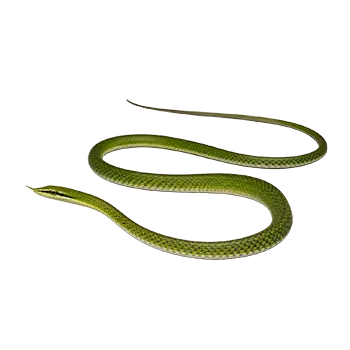

The Asian Vine Snake (Ahaetulla prasina) typically reaches sexual maturity between eighteen and twenty-four months of age, though readiness for breeding depends on more than chronological age alone. Both males and females should have achieved their full adult body length and a stable, healthy body weight before being considered for reproductive pairing. Breeding animals that have not yet completed their growth diverts metabolic resources away from skeletal and muscular development toward gamete production and, in females, gestation, resulting in stunted growth, weakened bone density, and reduced long-term reproductive viability.
Sexual dimorphism in Asian Vine Snakes provides reliable indicators for determining sex once the animals reach subadult size. Males are generally shorter and more slender than females of the same age, with a proportionally longer tail relative to total body length. The tail base in males shows a visible thickening immediately posterior to the cloaca, corresponding to the inverted hemipenes housed within the tail musculature. Females are typically longer, heavier-bodied, and have a more gradual taper from the cloaca to the tail tip. Probe sexing by an experienced handler or veterinarian provides definitive confirmation but should be performed only by individuals trained in the technique, as the delicate cloaca and hemipenes of this slender species are easily damaged by inexpert probing.
Pre-breeding health assessment is a non-negotiable step in responsible captive breeding. Both prospective parents should undergo a veterinary examination that includes a fecal parasite screening, a body condition evaluation, and a general health assessment. Animals with active parasitic infections, suboptimal body condition, or any signs of illness should not be bred until they have been treated and fully recovered. Females that have not maintained a consistent body weight for at least three months prior to breeding are not in suitable condition for the metabolic demands of gestation and should be given additional time to build reserves.
Genetic considerations, while less commonly discussed in colubrid breeding than in python or boa programs, deserve attention from responsible Asian Vine Snake breeders. Inbreeding depression can manifest as reduced fertility, smaller litter sizes, increased neonate mortality, and compromised immune function in offspring. Breeders should maintain accurate lineage records for all breeding animals and avoid pairing closely related individuals. Acquiring unrelated breeding stock from geographically separate sources or from breeders who maintain distinct genetic lines helps ensure the production of vigorous, genetically diverse offspring.