
Reaching Maturity & the Prime Years

The Asian Vine Snake (Ahaetulla prasina) reaches sexual maturity between eighteen and twenty-four months of age, marking the transition from the juvenile growth phase into the adult prime years that typically span from age two through age six or seven. During this extended prime, the snake achieves its full adult length of four to six feet — with females tending toward the upper end of this range — and maintains peak metabolic efficiency, immune function, and reproductive capability. The prime years represent the most stable and, in many ways, the most rewarding period of Asian Vine Snake keeping, as the animal's husbandry requirements become predictable and the keeper–animal relationship settles into a comfortable routine.

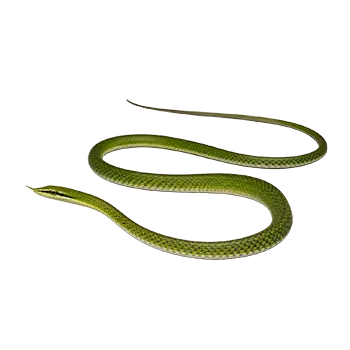
Adult Asian Vine Snakes in their prime exhibit the full expression of the species' remarkable morphology. The elongated, lance-shaped head with its distinctively pointed snout houses the forward-facing eyes with keyhole-shaped horizontal pupils that provide exceptional binocular vision — a trait nearly unique among snakes and directly adapted for the species' visually oriented hunting strategy. The body is compressed laterally rather than cylindrically, creating a cross-section that resembles a leaf blade more than a traditional snake body. This morphology, combined with the vivid green coloration and the snake's tendency to remain motionless for long periods among foliage, produces one of the most effective camouflage strategies in the serpent world.

Behaviorally, prime adult Asian Vine Snakes settle into a pattern of prolonged inactivity punctuated by brief but intense periods of movement and hunting. A healthy adult may remain coiled on a single perch for an entire day, moving only to thermoregulate or drink water droplets from misted foliage. This sedentary behavior is entirely normal for the species and should not be interpreted as lethargy or illness. Activity increases markedly during the late afternoon and early evening, when the snake may explore the full extent of its enclosure, investigate water sources, and adopt hunting postures along exposed perching sites. Understanding and accepting this natural activity pattern is essential for accurate health assessment.

The prime years are characterized by stable body weight and minimal growth. Once an adult Asian Vine Snake reaches its full length, typically by age two and a half to three years, body mass stabilizes and weight fluctuations of more than ten percent in either direction — outside of reproductive cycling in females — warrant investigation. Maintaining a weight log with weekly or biweekly entries provides a long-term dataset that reveals trends invisible in any single measurement. This data becomes invaluable for distinguishing normal seasonal variation from the gradual weight loss that may indicate subclinical illness or the weight gain that could signal overfeeding.

Permanent Enclosure Design

The permanent adult enclosure for an Asian Vine Snake should be a vertically oriented terrarium with minimum dimensions of twenty-four inches in length, eighteen inches in depth, and thirty-six inches in height. Taller enclosures of forty-eight inches or more are preferable when space permits, as the additional vertical range provides a more meaningful thermal gradient and greater opportunity for the snake to engage in natural arboreal behavior. Front-opening glass or acrylic terrariums with screened ventilation panels offer the best combination of visual access, humidity retention, and airflow control. Top-opening enclosures are less ideal because they require reaching in from above, which triggers defensive responses in a species that instinctively associates overhead movement with aerial predators.

The branch network within the adult enclosure demands careful planning and constitutes the most functionally important element of the habitat. Branches should span the full height of the enclosure in a lattice arrangement that avoids dead ends, creating continuous pathways that allow the snake to move from the warm upper zone to the cooler lower zone without descending to the substrate. Branch diameters should vary, ranging from thin perching branches approximately one-quarter to one-half inch in diameter to thicker resting branches of one inch or more. Natural materials such as manzanita, grapevine, cork bark, and bamboo are all suitable, and mixing materials provides textural variety that supports grip strength and foot health in this entirely arboreal species.

Plant integration in the adult enclosure moves beyond the functional minimum of the juvenile setup to create a miniature canopy ecosystem. Dense planting with species such as pothos, wandering dew (Tradescantia), bromeliads, and small ficus varieties provides the visual complexity and microclimatic variation that adult Asian Vine Snakes require for psychological wellbeing. The plant canopy should be dense enough to offer concealment opportunities at every level of the enclosure, as adult vine snakes that feel exposed become chronically stressed, which manifests as reduced feeding, persistent hiding, and increased defensive behavior. Live plants also contribute to humidity management by transpiring moisture and intercepting misting water on broad leaf surfaces where the snake can drink.

Ventilation in the adult enclosure must be engineered to balance the competing demands of humidity retention and air circulation. Stagnant, excessively humid air promotes the growth of mold, bacteria, and respiratory pathogens, while excessive ventilation desiccates the enclosure and stresses a species that depends on ambient moisture. A combination of screened top or side panels with the ability to partially cover them — using glass, acrylic, or food-safe plastic sheeting — allows the keeper to fine-tune airflow according to seasonal conditions and room climate. In dry climates or during winter months when indoor heating reduces ambient humidity, more coverage is needed; in humid summer conditions, the openings can remain fully exposed.

Long-Term Dietary Management

Feeding adult Asian Vine Snakes is a long-term commitment to sourcing appropriate prey that does not diminish with time or familiarity. The species' strong preference for lizard prey persists throughout adulthood, and while individual animals may accept a modest range of prey types, the foundation of the diet remains small to medium lizards offered at regular intervals. Adult females in their prime typically consume one appropriately sized lizard — equivalent to a medium green anole, a large house gecko, or a similarly proportioned species — every seven to ten days. Adult males, which are generally smaller and less heavy-bodied than females, may require slightly smaller prey items or slightly longer intervals between meals.

Prey variety within the lizard category benefits the snake nutritionally and may help maintain feeding enthusiasm over the long term. Alternating between different lizard species — anoles, house geckos, day geckos, small skinks — provides a broader nutritional profile than reliance on a single prey type. Each lizard species carries a somewhat different composition of muscle, fat, bone, and organ tissue, and this variety helps ensure that the snake receives a balanced intake of calcium, phosphorus, vitamins, and trace minerals. Gut-loading all feeder lizards with a high-quality insectivore diet for twenty-four hours prior to offering them to the snake remains an essential practice throughout the adult years.

Some adult Asian Vine Snakes can be maintained on a partial rodent diet if they were successfully transitioned during the juvenile period. Adults that accept scented pinky mice or small fuzzy mice as a portion of their diet benefit from the higher caloric density and more favorable calcium-to-phosphorus ratio of whole rodent prey. However, this transition is never guaranteed, and keepers should view rodent acceptance as a welcome bonus rather than a dietary goal. An adult that refuses rodents should never be subjected to prolonged fasting in an attempt to force the transition, as this approach risks dangerous weight loss in a species with minimal fat reserves.

Seasonal feeding variation is normal in adult Asian Vine Snakes and often corresponds to subtle environmental cues such as changes in photoperiod and ambient temperature, even in captive environments with controlled climate. Many adults show reduced appetite during the shorter days of winter and increased feeding enthusiasm during spring and summer. This cyclical pattern mirrors the species' wild biology, where prey availability and reproductive cycling influence feeding behavior, and it should be accommodated rather than fought. Reducing feeding frequency to once every ten to fourteen days during low-appetite periods and returning to the standard seven-to-ten-day schedule when enthusiasm returns is a physiologically appropriate management strategy.

Environmental Maintenance & Climate Control

Maintaining stable, species-appropriate environmental conditions over the years of the adult prime period requires both reliable equipment and consistent daily attention. The thermal gradient within the adult enclosure should provide a warm zone of 82 to 86 degrees Fahrenheit near the top of the enclosure, an ambient mid-zone of 78 to 82 degrees, and a cooler lower zone of 74 to 78 degrees. A basking spot reaching 88 to 90 degrees, created by a low-wattage spotlight or ceramic heat emitter positioned above a favored perch, allows the snake to elevate its body temperature for digestion without overheating the entire enclosure. Nighttime temperatures can drop to 70 to 74 degrees Fahrenheit, providing a natural diel temperature cycle that supports metabolic health.

Humidity control in the adult enclosure is a daily commitment that cannot be automated away entirely, though technology can reduce the workload. A timer-controlled misting system that delivers fine water mist two to three times daily — morning, midday, and evening — establishes the baseline humidity level of 60 to 80 percent that the species requires. Manual misting with a hand sprayer supplements the automated system, allowing the keeper to target specific areas such as the drinking surfaces near the snake's favored perches. A digital hygrometer placed at the snake's primary resting height provides the most relevant humidity reading; floor-level readings will consistently overestimate the humidity experienced by an arboreal snake that never descends to the substrate.

Lighting management for adult Asian Vine Snakes involves maintaining a consistent photoperiod that approximates the equatorial day length cycles of the species' native range. A twelve-hour light and twelve-hour dark cycle, adjusted by no more than one hour in either direction seasonally if the keeper wishes to simulate mild seasonal variation, provides appropriate circadian cues. Full-spectrum LED fixtures that produce a color temperature of 5500K to 6500K approximate natural daylight and reveal the snake's coloration most accurately. Low-level UVB supplementation, using a 2.0 to 5.0 percent UVB fluorescent or LED fixture, continues to be recommended based on accumulating evidence that arboreal colubrids benefit from ultraviolet exposure for vitamin D3 synthesis and immune regulation.

Enclosure cleaning during the adult years follows a routine schedule supplemented by spot-cleaning as needed. The substrate should be spot-cleaned within twenty-four hours of each defecation and fully replaced every four to six weeks. Glass or acrylic panels should be wiped clean of water spots and biological film weekly to maintain visibility and prevent bacterial colonization. Water dishes, if provided, require daily cleaning and refilling with dechlorinated water. Misting nozzles and drip system components should be flushed monthly to prevent mineral buildup and microbial contamination. A quarterly deep-clean — removing all furnishings, scrubbing surfaces with a reptile-safe disinfectant, rinsing thoroughly, and reassembling — keeps the enclosure hygienic without disrupting the snake's routine unduly.

Handling & Behavioral Expectations

Adult Asian Vine Snakes that have been handled consistently since the juvenile stage typically develop a calm tolerance for brief interactions, making routine husbandry tasks manageable for keepers with reasonable experience. However, the species remains fundamentally a display animal rather than a hands-on pet, and this distinction should guide expectations throughout the adult years. Even the calmest individual will occasionally display defensive behaviors — mouth-gaping, body inflation, lateral swaying — in response to perceived threats, and keepers must accept these responses as normal communication rather than evidence of regression or mistreatment.

Handling sessions for adult Asian Vine Snakes should remain brief, ideally under ten minutes, and purposeful. Routine health checks, enclosure maintenance that requires temporarily relocating the snake, and veterinary transport are all legitimate reasons for handling. Recreational handling purely for the keeper's enjoyment should be approached with restraint, as prolonged or frequent handling sessions constitute a stressor that provides no benefit to the animal. The snake's body should be fully supported at all times, with particular attention to avoiding any pressure on the delicate anterior body and head region. The prehensile tail will naturally wrap around the keeper's wrist or fingers, providing additional security during the interaction.

An important behavioral consideration during the adult years is the species' response to enclosure maintenance activities. Adult Asian Vine Snakes are keenly visually aware of their surroundings and react to the keeper's movements near and within the enclosure. Opening the enclosure door slowly and pausing for several seconds before reaching inside allows the snake to register the keeper's presence and reduces the likelihood of a startled defensive response. Using a soft snake hook to gently tap the snake before lifting it signals the transition from resting state to handling state and, over time, conditions the animal to associate the hook with predictable, non-threatening interactions.

Keepers should be aware that adult Asian Vine Snakes, while possessing rear-mounted grooved fangs and mild venom, pose negligible medical risk to humans during routine handling. The venom of Ahaetulla prasina is optimized for subduing small lizard and frog prey and produces, at most, mild localized swelling and itching in humans if a prolonged chewing bite is sustained. Defensive strikes are almost always closed-mouth bluffs or brief open-mouth contacts that do not result in envenomation. Nevertheless, basic hygiene — washing any bite site with soap and water, monitoring for unusual reactions, and informing a physician if any unexpected symptoms develop — remains prudent practice.

Preventive Health Care & Routine Monitoring

Preventive health care for adult Asian Vine Snakes during the prime years centers on consistent environmental management, routine observation, and scheduled veterinary examinations. An annual wellness visit with a reptile-experienced veterinarian should include a thorough physical examination, a fecal analysis for internal parasites, and a discussion of the animal's feeding history, shedding pattern, and any behavioral changes observed by the keeper. This annual baseline becomes increasingly valuable as the snake ages, providing a documented record against which future health assessments can be compared.

Daily health monitoring by the keeper requires no special equipment beyond attentive observation. During routine misting and feeding activities, the keeper should note the snake's posture, respiration, alertness, and response to the keeper's presence. A healthy adult Asian Vine Snake at rest displays smooth, regular respiration with no audible component, maintains a stable perching posture with the body supported primarily by two or three anchor points along its length, and responds to nearby movement with deliberate head tracking and tongue flicking. Any deviation from this baseline — labored breathing, loss of perching stability, failure to track movement, or persistent hiding during normally active periods — warrants closer investigation.

Shedding regularity and quality remain the most accessible indicators of long-term husbandry adequacy. Adult Asian Vine Snakes in their prime typically shed every six to eight weeks, though individual variation exists. Each shed should be complete, coming away in a single unbroken piece that includes intact eye caps. Keepers who save and inspect shed skins can identify problems early: retained eye caps appear as opaque, wrinkled films over the spectacle region of the shed; fragmented sheds indicate humidity deficiency; and sheds with discolored patches or unusual texture may signal localized skin infection. Persistent shedding problems despite adequate humidity and hydration suggest systemic issues that require veterinary evaluation.

Weight monitoring, continued from the juvenile period, provides quantitative health data that complements visual observation. Adult Asian Vine Snakes maintain remarkably consistent body weight during their prime years, with normal variation of no more than five to eight percent around a stable baseline. Gradual weight loss over multiple weigh-ins — even if each individual reading seems close to normal — can indicate chronic low-grade infection, parasitic burden, or subclinical digestive dysfunction. Sudden weight loss exceeding ten percent of baseline warrants immediate veterinary consultation. Conversely, sustained weight gain in a non-reproductive adult suggests overfeeding and should be addressed by reducing prey size or extending the interval between meals.

Always consult a qualified professional before making any health-related decisions. This content is provided for informational reference only and should not replace professional guidance specific to your animal.