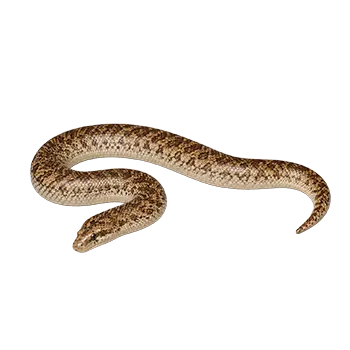

Understanding the Adult Stage

The Arabian Sand Boa reaches full maturity between eighteen and thirty months of age, depending on sex, genetics, and the feeding regimen maintained during the juvenile period. Females are the larger sex, typically measuring fourteen to sixteen inches in total length and weighing between 70 and 120 grams, while males are noticeably smaller at ten to twelve inches and 40 to 70 grams. Once mature, growth essentially ceases, and the keeper's focus shifts from supporting development to maintaining long-term health, body condition, and quality of life.

The prime adult years span roughly from age two to age ten and represent the longest and most stable phase of the Arabian Sand Boa's life in captivity. During this period, the snake's husbandry requirements are straightforward and predictable, making the species an excellent choice for keepers who value a low-maintenance but rewarding captive animal. The adult Arabian Sand Boa establishes strong routines around feeding, burrowing, and activity cycles, and deviations from these patterns often serve as early indicators of health or environmental problems.

Adult Arabian Sand Boas are among the most docile snakes available in the pet trade. Their calm temperament, small size, manageable care requirements, and fascinating fossorial behavior make them well suited to keepers of all experience levels. However, their secretive nature means that extended periods may pass without the keeper seeing the snake at all, as a healthy adult may remain buried in its substrate for days at a time, surfacing only briefly to drink, feed, or explore during the late evening hours. This behavior is entirely normal and should be expected rather than interpreted as a sign of distress.

Maintaining an adult Arabian Sand Boa in optimal condition requires attention to a relatively small number of critical parameters: correct temperature gradients, appropriate humidity levels, clean and adequately deep substrate, a consistent feeding schedule with properly sized prey, and fresh water. When these fundamentals are met, the species thrives in captivity with minimal intervention, rewarding the keeper with years of quiet, predictable companionship.

Long-Term Nutrition and Feeding

Adult Arabian Sand Boas require significantly less food than growing juveniles, and adjusting the feeding schedule to reflect this reduced metabolic demand is one of the most important transitions in the snake's care. An adult should be offered one appropriately sized prey item every ten to fourteen days. For most adult females, this means a small adult mouse or a large hopper; for the smaller males, a single hopper or large fuzzy mouse is typically sufficient. The prey item should create a barely visible lump when swallowed and should not distend the snake's body noticeably.

Obesity is a genuine and underappreciated risk in captive Arabian Sand Boas. Because these snakes are largely hidden in substrate, weight gain can go unnoticed until the animal is significantly overweight. Monthly weigh-ins using a digital gram scale are the most reliable way to monitor body condition over time. A healthy adult female should maintain a weight within the 70-to-120-gram range, while males should stay within 40 to 70 grams. Weight that creeps steadily upward without a corresponding increase in length indicates overfeeding and should be corrected by extending the interval between meals.

Prey variety is not strictly necessary for Arabian Sand Boas, which do well on a diet of commercially produced frozen-thawed mice. However, occasional variation in the form of appropriately sized African soft-furred rats or multimammate mice can provide minor nutritional diversity and may stimulate feeding interest in individuals that show signs of meal boredom. Never offer wild-caught prey, as it may carry parasites, pesticide residues, or infectious agents that pose a risk to the captive snake.

Fasting periods are a normal part of the adult Arabian Sand Boa's annual cycle, particularly during the cooler months if the keeper provides any seasonal temperature variation. A healthy adult in good body condition can safely fast for four to six weeks without concern. Fasting that extends beyond two months, or fasting accompanied by weight loss exceeding ten percent of the snake's baseline body weight, warrants a veterinary evaluation to rule out illness, parasitic infection, or reproductive complications in females.

Enclosure Design for Adults

A permanent enclosure for an adult Arabian Sand Boa should provide a floor space equivalent to at least a twenty-gallon long tank for females and a fifteen-gallon equivalent for males. Front-opening terrariums are preferred over top-opening tanks because they allow the keeper to access the enclosure without reaching down from above, which can startle a buried snake and disrupt the substrate landscape the animal has constructed. The enclosure must be secure, with no gaps in doors, lid margins, or cable pass-throughs large enough for the snake to exploit.

Substrate remains the single most important element of the adult enclosure. Fine-grain, dust-free play sand is the gold standard for Arabian Sand Boas, providing the texture and density needed for natural burrowing behavior. The sand layer should be a minimum of four to five inches deep across the entire enclosure floor, allowing the snake to submerge completely. Some keepers mix a small proportion of organic topsoil into the sand to create a slightly denser substrate that holds burrow structure better, but the mixture must remain dry and free of mold or organic decomposition.

The thermal gradient in an adult enclosure should provide a warm-side surface temperature of 90 to 95 degrees Fahrenheit, achieved with an overhead ceramic heat emitter or radiant heat panel connected to a quality thermostat. The cool side should naturally settle around 78 to 82 degrees. A probe thermometer placed at substrate level on each side of the enclosure provides accurate readings of the temperatures the snake actually experiences while buried. Ambient air temperature above the substrate is less important than substrate-level readings for this fossorial species.

Furnishing the adult enclosure is a balance between providing environmental enrichment and maintaining the open sand surface that the species requires. One or two hides, a stable water dish, and a few pieces of flat stone or driftwood positioned partially buried in the substrate create a naturalistic and functional habitat. Avoid overcrowding the enclosure with decor, as excessive obstacles interfere with the snake's ability to construct and maintain its burrow network. Live plants are generally incompatible with the arid, sandy conditions required by this species.

Environmental Maintenance and Seasonal Cycles

Daily maintenance for an adult Arabian Sand Boa enclosure is minimal. Check the water dish for cleanliness and refill as needed, verify that the thermostat is maintaining correct temperatures, and remove any visible fecal matter or urates from the substrate surface. Full substrate changes are recommended every four to six weeks, or more frequently if contamination is identified. When performing a full substrate change, take the opportunity to disinfect the enclosure interior with a reptile-safe cleaner and rinse thoroughly before replacing the sand and returning the snake to its habitat.

Seasonal temperature cycling can be beneficial for adult Arabian Sand Boas and is considered essential for keepers who plan to breed their animals. During the winter months, typically November through February, reducing the warm-side temperature to 80 to 85 degrees and the cool side to 72 to 75 degrees mimics the natural seasonal variation experienced by wild populations on the Arabian Peninsula. This brumation-like cooling period stimulates reproductive hormones and provides a natural metabolic rest period that may contribute to long-term health and longevity.

Photoperiod should follow natural seasonal patterns, with twelve to fourteen hours of light during the summer months gradually decreasing to eight to ten hours during winter. While Arabian Sand Boas do not require specialized UVB lighting, a consistent light-dark cycle supports healthy circadian rhythms and hormonal regulation. If the enclosure is in a room with windows, natural daylight variation may be sufficient. Otherwise, a simple timer-controlled room light or low-wattage LED fixture can provide the necessary photoperiod control.

Humidity monitoring is particularly important in environments where seasonal changes in outdoor weather affect indoor humidity levels. Central heating systems can dry indoor air to extremely low levels during winter, which is generally favorable for this desert species but can become problematic if humidity drops below 20 percent for extended periods, potentially leading to dehydration and difficult sheds. Conversely, summer months in humid climates may push enclosure humidity above the ideal 30-to-40-percent range, increasing the risk of dermatological problems. A digital hygrometer placed inside the enclosure provides the data needed to make adjustments proactively.

Handling and Enrichment

Adult Arabian Sand Boas that have been regularly handled since their juvenile stage are typically calm, tolerant, and easy to manage. Handling sessions of fifteen to twenty minutes, two to three times per week, are appropriate for maintaining the snake's familiarity with human contact. Always avoid handling for forty-eight hours following a meal and during the pre-shed period. Approach the snake calmly, using a snake hook or gentle probing of the substrate to locate the buried animal before lifting it out. Sudden excavation of the substrate to extract a sleeping snake is stressful and counterproductive.

Enrichment for a fossorial species like the Arabian Sand Boa differs fundamentally from enrichment strategies used for arboreal or terrestrial snakes. The primary form of enrichment is the substrate itself. Providing a deep, uniform sand bed that allows complex burrowing behavior satisfies the species' most fundamental behavioral drive. Rearranging enclosure furnishings every few weeks during substrate changes creates novelty that stimulates exploration and new burrow construction, which constitutes meaningful cognitive and physical engagement for the animal.

Sensory enrichment can be provided through occasional introduction of novel scents into the enclosure. Placing a small amount of shed skin from a conspecific or a non-threatening prey item scent on the substrate surface during the evening can stimulate investigative behavior. Some keepers report that their adult Arabian Sand Boas show increased surface activity and exploration following the introduction of new scent cues, suggesting that olfactory stimulation is processed and acted upon even in this relatively sedentary species.

Observation-based enrichment, while difficult with a species that spends most of its time buried, is rewarding when it occurs. Adult Arabian Sand Boas exhibit a distinctive ambush hunting posture in which the snake buries itself completely with only the top of its head and eyes visible above the substrate surface, waiting motionless for prey to pass within striking range. This behavior can be observed during pre-feeding periods and is one of the most compelling natural behaviors displayed by any captive snake species. Providing opportunities for the snake to express this behavior by placing prey on the substrate surface rather than using tongs directly contributes to behavioral welfare.

Preventive Health Care

Annual veterinary wellness examinations are recommended for all adult Arabian Sand Boas. A routine visit typically includes a physical examination assessing body condition, skin health, oral health, and respiratory function, along with a fecal analysis to screen for internal parasites. While healthy adults in well-maintained enclosures rarely develop serious health problems, annual screening catches subclinical issues before they become symptomatic and allows the veterinarian to establish a baseline of normal values for each individual animal.

Scale rot remains one of the most common dermatological conditions affecting captive sand boas and is almost exclusively caused by excessive humidity or substrate contamination. Regular inspection of the ventral scales during handling sessions allows early detection of the initial symptoms: small, discolored patches on the belly scales that may appear pinkish, brown, or darkened compared to the surrounding healthy tissue. Caught at this stage, scale rot typically resolves with environmental corrections alone. Advanced cases with open lesions or spreading necrosis require veterinary treatment with systemic antibiotics.

Respiratory infections in adult Arabian Sand Boas follow the same pattern as in younger animals but may develop more slowly due to the adult's stronger immune system and greater body reserves. Chronic low-grade respiratory infections can persist for weeks before producing overt symptoms, so awareness of subtle behavioral changes is important. An adult that begins spending more time on the surface, particularly with its head elevated or tilted slightly upward, may be compensating for respiratory discomfort. Audible breathing sounds, excess mucus, and lethargy are later-stage symptoms that indicate the infection has progressed and requires prompt veterinary intervention.

External parasites, particularly snake mites, should be monitored for during every handling session. While sand substrate is less hospitable to mite populations than organic substrates such as bark or moss, infestations can still occur, especially in collections where multiple species are maintained or where newly acquired animals bypass proper quarantine procedures. A mite infestation in an adult Arabian Sand Boa presents the same way as in juveniles: tiny dark specks visible around the eye scales, labial pits, and cloacal area, along with increased soaking behavior and irritability. Treatment should be supervised by a reptile veterinarian to ensure appropriate product selection and dosing.

Common Challenges During the Adult Years

Feeding strikes are perhaps the most frequently reported challenge among keepers of adult Arabian Sand Boas, yet they are rarely a cause for genuine concern. Healthy adults in good body condition may voluntarily fast for several weeks to several months, particularly during the winter cooling period or in response to subtle environmental changes such as a new brand of substrate, a relocated enclosure, or changes in room activity levels. The keeper's first response to a feeding strike should always be to evaluate husbandry parameters rather than to assume illness. In the vast majority of cases, the snake will resume feeding on its own once the triggering factor is identified and corrected, or simply when it is ready.

Escape attempts, while uncommon in a species that typically prefers the security of its substrate to exploration, do occur and are most often the result of inadequate enclosure security or environmental stress. An adult Arabian Sand Boa that is repeatedly found pushing against the enclosure walls or testing the lid margins may be responding to incorrect temperatures, insufficient substrate depth, vibrations from nearby appliances or foot traffic, or the scent of a conspecific in an adjacent enclosure. Addressing the underlying environmental trigger is more effective than simply reinforcing the enclosure hardware, though both measures may be necessary.

Aggression during feeding is the one context in which the normally docile Arabian Sand Boa can surprise an unwary keeper. Adults that have been conditioned to associate the opening of the enclosure with feeding may strike at the keeper's hand or any object entering the enclosure. This is a food-driven response, not a temperamental one, and can be managed by using long feeding tongs, tapping the snake gently with a snake hook before reaching into the enclosure to signal that the interaction is handling rather than feeding, and establishing a consistent routine that separates handling days from feeding days.

Substrate ingestion is an occasional concern, particularly when prey items are offered directly on the sand surface. Small amounts of sand consumed incidentally during feeding typically pass through the digestive tract without issue. However, large or repeated ingestion can lead to gastrointestinal impaction, which presents as abdominal swelling, constipation, and eventual feeding refusal. To minimize this risk, consider placing a flat feeding stone or a small piece of slate in the enclosure and consistently offering prey on this surface rather than directly on the sand. If impaction is suspected, veterinary imaging and treatment may be necessary.

Always consult a qualified professional before making any health-related decisions. This content is provided for informational reference only and should not replace professional guidance specific to your animal.