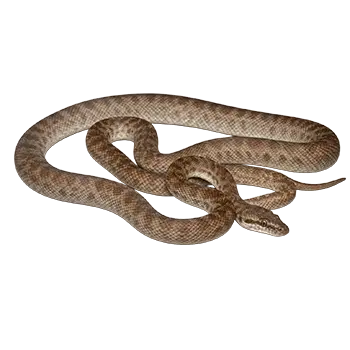

Antaresia pythons are egg-laying species, and hatchlings emerge from their eggs fully formed and independent after an incubation period of roughly fifty to sixty days. A typical clutch ranges from five to fifteen eggs depending on the species and the size of the female, with Children's pythons and Spotted pythons generally producing larger clutches than the diminutive Pygmy python. Hatchlings use a small egg tooth to slit their way through the leathery shell, and this process can take anywhere from several hours to a full day. It is critical not to intervene by cutting or peeling eggs prematurely, as hatchlings absorb the remaining yolk sac during the final phase of emergence and disrupting this process can compromise their initial nutritional reserves.
Newborn Antaresia pythons measure between eight and twelve inches depending on species, with Pygmy python hatchlings at the smaller end and Spotted python neonates at the larger. Despite their small size, hatchlings are alert and mobile from the moment they leave the egg. They will begin tongue-flicking to assess their environment almost immediately and may attempt to find cover within the first few hours. The keeper's role during this initial period is observation rather than interaction, allowing each hatchling to complete its emergence and begin orienting itself without the added stress of handling or disturbance.
The incubation container should be left undisturbed until all viable eggs have hatched or it becomes clear that remaining eggs are not viable. Once hatchlings have fully emerged and separated from their eggshells, they can be gently transferred to individual housing. Any unhatched eggs should be examined carefully after forty-eight hours, as some embryos may require additional time. Deceased embryos or infertile eggs should be removed promptly to prevent mold growth that can affect the health of surviving hatchlings still in the container.
Each hatchling should be set up in its own small enclosure immediately after removal from the incubation container. Housing multiple Antaresia neonates together is inadvisable because these snakes are opportunistic feeders and may attempt to consume clutchmates, particularly during feeding time when prey scent is present. Small plastic tubs with secure ventilation, a single hide, a shallow water dish, and a layer of paper towel substrate provide an ideal initial setup that is easy to monitor and maintain during the critical first days.