
Growth Rate and Physical Development

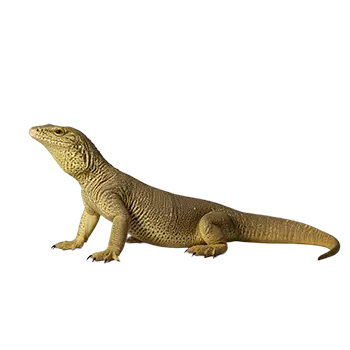
The juvenile phase of the Argus Monitor, Varanus panoptes, spans roughly from three months of age through eighteen to twenty-four months and encompasses the most dramatic period of physical transformation in the animal's life. During this window, the monitor transitions from a modestly sized hatchling of ten to fourteen inches to a powerful subadult measuring thirty to forty inches or more, depending on sex, genetics, and husbandry quality. Growth is not linear but occurs in surges punctuated by brief plateaus, and keepers who track body mass on a weekly or biweekly basis will observe this staircase pattern clearly. Male juveniles typically begin to outpace females in both length and mass by the time they reach twelve to fourteen months of age, though reliable sex determination through external morphology alone remains difficult until the animal approaches subadult size.

Skeletal development during the juvenile phase demands meticulous attention to calcium-phosphorus balance and thermal management, because the rapid elongation of long bones, vertebral column, and cranial structures creates enormous mineral demand that cannot be met by a calcium-deficient diet or an inadequately heated enclosure. A juvenile Argus Monitor that is not digesting efficiently due to suboptimal basking temperatures will fail to assimilate ingested calcium regardless of supplementation quality, and the resulting metabolic bone disease progresses quickly in a fast-growing animal. Visible signs include a softening of the mandible that produces an underbite or misaligned jaw, tremors or fasciculations in the limbs during movement, a reluctance to climb or support weight on the forelimbs, and in advanced cases, pathological fractures that occur during normal activity.

Muscle mass accrual during the juvenile period is equally impressive and gives the adolescent Argus Monitor the dense, powerful build that distinguishes the species from more lightly constructed varanids. The forelimbs and shoulders develop pronounced musculature that supports the animal's vigorous digging behavior, while the hind limbs and tail base thicken substantially to power the bipedal running gait that Argus Monitors employ when sprinting at full speed. Adequate protein intake, consistent access to appropriate basking temperatures, and sufficient enclosure space for physical activity are all prerequisites for healthy muscle development. A juvenile that appears long and thin rather than proportionally filled out is likely underfed, kept too cool, or housed in an enclosure that restricts natural movement patterns.

Shedding frequency during the juvenile phase typically settles into a cycle of every three to four weeks, with each successive shed reflecting the animal's accelerating size. Complete, clean sheds that come away in large sections with no retained material on the digits, tail tip, or around the eyes indicate proper humidity management and overall systemic health. Chronic retained shed, particularly on the toes, is a serious concern in juvenile monitors because the constricting bands of unshed skin can compromise circulation to the distal digits, leading to dry gangrene and eventual toe loss. A humid retreat maintained within the enclosure and periodic targeted misting during the pre-shed opaque phase will resolve the vast majority of shedding issues before they become problematic.

Diet and Nutritional Transition

The juvenile Argus Monitor's diet undergoes a fundamental shift from an insect-dominated neonatal feeding plan to a mixed regime that incorporates progressively larger whole prey items, organ meats, and an expanded roster of invertebrates. This transition should be gradual and driven by the animal's increasing gape size and digestive capacity rather than imposed on an arbitrary schedule. By three to four months of age, most juveniles are readily consuming adult crickets, large dubia roaches, superworms, hornworms, and silkworms alongside weekly offerings of appropriately sized pinky or fuzzy mice. The introduction of whole vertebrate prey is nutritionally significant because it provides a natural calcium-to-phosphorus ratio, pre-formed vitamin A from liver tissue, and essential fatty acids that an exclusively insect diet cannot replicate regardless of supplementation.

Feeding frequency should be adjusted downward as the juvenile grows and individual prey items become larger and more calorie-dense. A four-month-old juvenile may eat daily, while a twelve-month-old subadult consuming adult mice and large insects typically does well on feedings every other day or four to five times per week. The total caloric intake per feeding should increase even as frequency decreases, matching the animal's rising metabolic demands without promoting the obesity that can result from overfeeding large prey items on a daily schedule. Monitoring body condition through visual assessment and regular weigh-ins remains the most reliable method for calibrating feeding frequency, as individual metabolic rates vary significantly even among clutchmates raised under identical conditions.

Calcium and vitamin supplementation continues throughout the juvenile phase but can be moderated somewhat once whole prey constitutes a meaningful fraction of the diet. Insect prey should still be dusted with calcium-D3 powder at every feeding, but whole rodent prey, which contains bioavailable calcium in its skeletal structure, does not require additional supplementation. Multivitamin application can be reduced to once or twice weekly as the dietary breadth increases and the risk of specific micronutrient deficiency drops. Over-supplementation with fat-soluble vitamins, particularly vitamin A and D3, carries its own risks of toxicity and should be avoided. If whole prey makes up fifty percent or more of the weekly diet by volume, vitamin D3 dusting on the remaining insect portion can be reduced to every other feeding, provided UVB lighting is also available.

Dietary enrichment through variety is both nutritionally and behaviorally beneficial for juvenile Argus Monitors. Beyond the staple insects and rodents, appropriate supplemental items include quail eggs offered whole with shell intact, day-old chicks, prawns, lean strips of chicken heart or gizzard, and commercially available whole fish such as silversides or smelt. These items should be rotated through the feeding schedule rather than offered simultaneously, creating novelty and ensuring that the juvenile does not fixate on a single prey type to the exclusion of others. Prey that must be hunted, such as live insects released into the enclosure, provides critical exercise and cognitive stimulation that reinforces the natural foraging behavior central to varanid ecology.

Fresh water must be available at all times in a dish large enough for the growing juvenile to soak in comfortably. As the animal's size increases, the water dish must be scaled up accordingly, because a cramped dish that only allows the monitor to submerge its head discourages the full-body soaking behavior that supports hydration, thermoregulation, and healthy ecdysis. Water should be changed daily and the dish sanitized with a reptile-safe disinfectant at least twice per week, as monitor lizards frequently defecate in their water and bacterial proliferation in a warm, soiled dish can lead to dermatitis, stomatitis, or gastrointestinal infection.

Enclosure Upgrades and Habitat Design

The transition from a neonatal enclosure to juvenile housing is one of the most significant husbandry milestones in raising an Argus Monitor and typically becomes necessary by three to four months of age, when the animal has outgrown the forty-gallon hatchling setup both physically and behaviorally. A juvenile Argus Monitor between four and twelve months of age requires an enclosure with a minimum footprint of four feet by two feet, with a height of at least two feet, though larger dimensions are always preferable and reduce the frequency of future upgrades. Custom-built enclosures constructed from sealed plywood, PVC panel systems, or modified stock tanks offer the most practical and cost-effective solutions for housing a medium-sized varanid at this stage, as commercially available glass terrariums of appropriate size are heavy, fragile, and thermally inefficient.

Substrate depth should be increased substantially during the juvenile phase to accommodate the animal's intensifying burrowing behavior. A minimum depth of six to eight inches of the soil-sand blend is appropriate, with deeper areas of ten to twelve inches provided against the back wall or in a dedicated dig zone if the enclosure design allows. Juvenile Argus Monitors are prolific excavators that will construct elaborate tunnel networks given sufficient substrate volume, and these self-built retreats serve as the primary mechanism for fine-tuning body temperature, accessing higher humidity microhabitats, and achieving the sense of security that reduces chronic stress. Enclosures with inadequate substrate depth produce animals that pace restlessly, glass-surf along the walls, and exhibit elevated cortisol-related behaviors including food refusal and defensive aggression.

Thermal requirements remain consistent with the neonatal phase but must be delivered across a larger spatial gradient. The basking surface should still reach 150 to 165 degrees Fahrenheit, which may require a more powerful halogen flood lamp or the addition of a secondary heat source as enclosure volume increases. The cool end should hold at 75 to 82 degrees Fahrenheit, and overnight temperature drops to the low 70s are acceptable and even beneficial, as they mirror the diurnal cycling the species experiences across its native range. Supplemental radiant heat from a ceramic heat emitter or radiant heat panel may be necessary to maintain ambient warm-side temperatures in the 85 to 95 degree range, particularly in enclosures located in cooler rooms or during winter months. Every heat source must be thermostatically controlled, and all bulbs and emitters positioned inside the enclosure must be protected by a wire bulb guard to prevent direct contact burns.

The enclosure layout should include multiple hiding opportunities at different points along the thermal gradient, a large and sturdy water dish that the juvenile cannot easily tip, and climbing structures such as thick branches, cork bark flats, or stacked flagstone shelves that provide three-dimensional space usage. While Argus Monitors are primarily terrestrial, juveniles are more arboreal than adults and will readily use elevated basking platforms and climbing surfaces. Secure anchoring of all heavy furnishings is essential, as a juvenile monitor that dislodges a poorly supported rock slab or log section risks crushing injuries. UVB lighting should be upgraded in tandem with the enclosure size, with a tube fixture spanning at least two-thirds of the enclosure length positioned at a distance that delivers appropriate irradiance to the animal's basking area according to the manufacturer's specifications.

Behavioral Development and Socialization

The juvenile period is the window in which the Argus Monitor's adult behavioral repertoire takes shape, and the quality of interaction the animal receives during this time profoundly influences its temperament for the remainder of its life. A juvenile Argus Monitor that is handled regularly, exposed to varied stimuli, and managed with calm consistency will typically mature into a confident, tractable adult that tolerates routine handling and cooperates with health assessments. Conversely, a juvenile that is neglected, handled inconsistently, or subjected to rough or frightening interactions during this formative phase will develop entrenched defensive behaviors that become progressively harder to modify as the animal gains size and strength.

Handling sessions should continue daily or near-daily throughout the juvenile phase, with session duration gradually extending from the three-to-five-minute neonatal window to ten to fifteen minutes as the animal's comfort level increases. The juvenile will develop a distinctly individual personality during this period, and attentive keepers will learn to read the animal's body language with increasing accuracy. A relaxed juvenile holds its body loosely, tongue-flicks at a moderate pace, and maintains a normal respiratory rate without inflation of the torso. An agitated or defensive animal inflates laterally, tucks its chin, raises the anterior body off the ground, hisses audibly, and may whip its tail, which in a juvenile of eighteen inches or more can deliver a stinging impact. Recognizing the early signs of stress and adjusting handling intensity accordingly prevents the escalation to biting and preserves the trust that has been established.

Cognitive enrichment becomes increasingly important as the juvenile's intelligence and curiosity mature. Argus Monitors are among the most cognitively complex reptiles in private keeping, and a juvenile that is housed in a barren enclosure with predictable, unchanging conditions will develop stereotypic behaviors including repetitive pacing circuits, excessive glass-surfing, and obsessive digging at a single point along the enclosure wall. Rotating cage furnishings, introducing novel objects for investigation, varying the location where food is presented, and providing puzzle-style feeding devices that require the monitor to work for its meal all contribute to a mentally stimulated animal that channels its considerable intelligence into exploration and problem-solving rather than stress behaviors.

Socialization with other household members and controlled exposure to novel environments outside the enclosure further broadens the juvenile's behavioral flexibility. Supervised exploration sessions in a monitor-proofed room allow the animal to exercise, investigate new textures and structures, and interact with its keeper in a context outside the established territory of the enclosure. These sessions should be conducted in a warm room with all escape routes secured, as a startled juvenile Argus Monitor can sprint at remarkable speed and will exploit any opening to wedge itself behind furniture, inside walls, or beneath appliances. As the animal grows and gains confidence, the boldness and investigatory drive that characterize the species become increasingly apparent, and many keepers find that their juvenile Argus Monitor actively solicits interaction by approaching the enclosure door when the keeper enters the room.

The juvenile phase is also when dominance-related behaviors may begin to emerge in animals housed communally, though solitary housing is strongly recommended for Argus Monitors at any age. Cohabitation introduces competition for basking sites, food, and preferred retreat locations that produces chronic subordination stress in the less dominant individual, even when overt aggression is not observed. A subordinate juvenile may appear to coexist peacefully but will show suppressed feeding, reduced growth, elevated hiding frequency, and depressed immune function relative to the dominant animal. These effects are insidious because they develop gradually and may not become apparent until the subordinate animal presents with a secondary health problem such as respiratory infection or parasitic overload.

Health Monitoring and Veterinary Care

Proactive health surveillance during the juvenile phase centers on establishing a relationship with a reptile-experienced veterinarian, maintaining a regular monitoring schedule for key health indicators, and addressing emerging issues before they progress to the point of clinical illness. A baseline veterinary examination should ideally be conducted within the first few weeks of acquiring a juvenile Argus Monitor, and should include a thorough physical assessment, a fecal parasite screen using both direct smear and flotation methods, and a baseline body weight record. Captive-bred juveniles may carry low-level parasite burdens acquired from the breeder's colony, while wild-caught or farm-raised imports frequently harbor significant parasite loads that require targeted anthelmintic treatment to resolve.

Fecal parasite screening should be repeated every three to four months during the juvenile growth phase, as reinfection from environmental sources is common in enclosures that use natural substrates, and the immunosuppressive effects of rapid growth can allow previously subclinical infections to proliferate. Common parasites encountered in captive Argus Monitors include pinworms, hookworms, coccidia, and flagellated protozoa such as Trichomonas. Treatment protocols should be prescribed and supervised by a veterinarian rather than administered based on internet dosing guides, because the margin between therapeutic and toxic doses of common reptile anthelmintics such as fenbendazole is narrower in varanids than in some other reptile families, and overdosing can cause hepatic or neurological damage.

Respiratory infections represent one of the most frequently encountered health problems in juvenile monitor lizards and are almost always linked to suboptimal environmental conditions rather than primary pathogen exposure. An enclosure that is too cool, too damp, poorly ventilated, or maintained on a saturated substrate creates the conditions under which opportunistic bacteria and fungi colonize the respiratory mucosa. Early signs include audible wheezing or crackling during respiration, mucus bubbles at the nostrils or mouth corners, open-mouth breathing at rest, reduced appetite, and lethargy. A respiratory infection caught early responds well to environmental correction combined with appropriate antibiotic therapy prescribed by a veterinarian, but advanced pneumonia in a juvenile varanid can be rapidly fatal and may require aggressive supportive care including nebulization therapy and fluid administration.

Dermatological conditions, including bacterial dermatitis, fungal skin infections, and thermal burns, are also seen with regularity in juvenile monitors. Bacterial dermatitis typically presents as discolored, raised, or weeping patches on the ventral scales and is most commonly associated with sustained contact with damp, soiled substrate. Prompt substrate replacement, topical antiseptic treatment, and improved sanitation protocols resolve most cases, though systemic antibiotics may be required if the infection has progressed or involves deeper tissue layers. Thermal burns result from direct contact with unguarded heat sources and produce characteristic blistering or necrotic patches on the dorsal surface. All heat elements within the enclosure must be shielded with a wire cage guard that prevents the animal from pressing against the heat source, as varanids will frequently attempt to bask in direct contact with a bulb or ceramic emitter.

Maintaining a health journal that records feeding dates and volumes, shedding dates and completeness, weight measurements, urate consistency, behavioral observations, and any veterinary interventions creates a comprehensive longitudinal record that is invaluable for identifying trends and diagnosing problems. A keeper who can present this record at a veterinary appointment enables far more efficient diagnosis than one who relies on memory alone. The juvenile growth phase is the period when the animal's lifelong health trajectory is most malleable, and investments in preventive care, environmental optimization, and early intervention during this window pay compounding dividends throughout the monitor's adult life.

Always consult a qualified professional before making any health-related decisions. This content is provided for informational reference only and should not replace professional guidance specific to your animal.