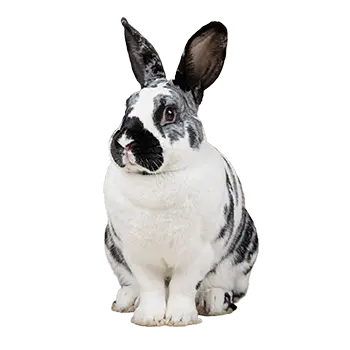

The Checkered Giant enters its juvenile phase at approximately eight weeks of age and undergoes a remarkable period of rapid growth that continues well into the first year of life. As one of the largest rabbit breeds recognized by the American Rabbit Breeders Association, the Checkered Giant transitions from a small kit of just a few ounces into a powerful, full-arch rabbit that must exceed eleven pounds at maturity. This growth trajectory demands careful attention to nutrition, housing, and overall husbandry to ensure the skeletal and muscular systems develop properly.
During the first three to four months, juvenile Checkered Giants grow at an astonishing rate, often gaining several ounces per week. The full-arch body type characteristic of this breed becomes increasingly pronounced during this period, with the long legs, athletic build, and distinctive running posture becoming more evident with each passing week. The signature markings of the breed, including the butterfly nose marking, eye circles, cheek spots, herringbone spine marking, and side spots, should be fully established and clearly defined by this stage.
Between four and eight months, the growth rate begins to moderate but remains steady. The skeletal frame continues to lengthen and fill out, and the rabbit develops the muscular definition expected of this active breed. It is important to provide ample space during this period, as a growing Checkered Giant that is confined to a small cage may develop skeletal abnormalities or behavioral problems. The enclosure should allow the rabbit to take at least three full hops in any direction and to stand fully upright on its hind legs without its ears touching the ceiling.
Full physical maturity in Checkered Giants is typically not reached until twelve to fourteen months of age, though the most dramatic growth occurs before the eight-month mark. Males tend to reach their mature size slightly later than females and may continue to fill out in the chest and shoulders well into their second year. Regular weighing on a kitchen or postal scale helps track growth progress and can alert you early to any plateaus or weight loss that might indicate health concerns.