
Growth & Physical Development

The Entlebucher Mountain Dog undergoes rapid physical transformation between eight weeks and approximately eighteen months of age. As the smallest of the four Swiss mountain dog breeds, the Entlebucher reaches a mature weight of 40 to 65 pounds, but much of that growth occurs in concentrated bursts during the juvenile period. Owners should expect their puppy to appear gangly and disproportionate at times, with legs that seem too long for their body or a head that looks oversized relative to their frame.

Growth plates in the long bones remain open throughout the juvenile period and do not fully close until the dog is between twelve and eighteen months old. This is an important consideration when planning physical activities, as repetitive high-impact exercise on hard surfaces can damage developing joints and contribute to orthopedic problems later in life. Controlled exercise on varied terrain is far more appropriate than forced jogging or extended fetch sessions during this stage.

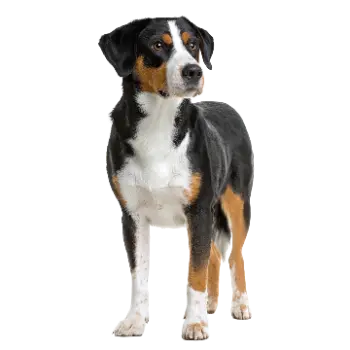
The Entlebucher's distinctive tricolor coat begins to take on its adult pattern during the juvenile months. The black, tan, and white markings become more defined, and the coat texture may shift from the softer puppy fluff to the breed's characteristic dense, close-fitting double coat. Seasonal shedding cycles will begin to establish themselves during this period as well.

Monthly weigh-ins and body condition assessments help ensure the puppy is growing at a healthy rate. Entlebuchers that gain weight too quickly may be at increased risk for joint problems, while those that are consistently underweight may need dietary adjustments. A veterinarian familiar with the breed can provide guidance on ideal growth curves and body condition scores specific to the Entlebucher.

Nutrition & Diet Transition

Feeding an Entlebucher Mountain Dog during the juvenile stage requires balancing adequate nutrition for growth with the need to avoid excess weight gain. A high-quality puppy food formulated for medium-sized breeds provides the appropriate ratio of protein, fat, calcium, and phosphorus to support healthy skeletal and muscular development. Large-breed puppy formulas are not necessary for the Entlebucher, as they are a medium-sized breed, but the feeding plan should still prioritize controlled, steady growth.

Most Entlebucher puppies thrive on three meals per day from eight weeks through about six months of age, transitioning to two meals daily thereafter. Free-feeding, or leaving food available at all times, is generally not recommended for this breed. Entlebuchers tend to be enthusiastic eaters, and unrestricted access to food can lead to overconsumption and unhealthy weight gain that stresses developing joints.

The transition from puppy food to adult food typically occurs between twelve and eighteen months, depending on the individual dog's growth rate and body condition. This switch should be made gradually over the course of seven to ten days, mixing increasing proportions of the new food with decreasing amounts of the old to avoid digestive upset. Your veterinarian can help determine the ideal timing for this transition based on your dog's specific development.

Treats used during training should be factored into the daily caloric intake. It is easy to overfeed an Entlebucher during the juvenile phase when training demands are high and treats are being dispensed frequently. Using small, low-calorie training treats or setting aside a portion of the daily kibble ration for use as rewards helps keep overall nutrition on track without sacrificing training momentum.

Behavioral Changes

Adolescence in the Entlebucher Mountain Dog can be a challenging period for even experienced dog owners. Between six and eighteen months, hormonal changes drive shifts in behavior that may include increased independence, selective hearing when it comes to previously learned commands, and testing of established household boundaries. This is a normal developmental phase, not a sign of a poorly trained or defective dog.

Entlebuchers are a herding breed with strong working instincts, and these drives often become more pronounced during adolescence. Owners may notice their young dog attempting to herd children, other pets, or even adults by nipping at heels, circling, or body-blocking movement. While these behaviors stem from deeply ingrained breed tendencies, they need to be redirected consistently to prevent them from becoming entrenched habits.

Fear periods are another hallmark of the juvenile stage. An Entlebucher puppy that previously seemed fearless may suddenly become wary of objects, people, or situations it previously accepted without concern. These fear periods are neurologically normal and typically resolve on their own if handled calmly. Forcing a frightened puppy to confront whatever has startled it will often intensify the fear rather than resolve it, so patience and gentle positive exposure are the best approach.

Resource guarding may also emerge during this period, particularly in dogs with strong drives and confident personalities. An Entlebucher that growls over food bowls, toys, or resting spots is communicating discomfort and should be addressed through structured behavior modification rather than punishment. Early intervention with a qualified trainer or behaviorist can prevent minor guarding tendencies from escalating into more serious behavioral issues.

Training Priorities

The Entlebucher Mountain Dog is an intelligent and driven breed that responds exceptionally well to consistent, reward-based training methods. During the juvenile period, the training focus should expand from basic obedience commands to include impulse control, leash manners, and reliable recall. These skills are particularly important for a breed that is naturally energetic, strong-willed, and physically powerful for its size.

Recall training deserves special emphasis with the Entlebucher. Their herding instincts and high prey drive can override even solid training if a squirrel, rabbit, or other fast-moving animal catches their attention. Building a reliable recall requires high-value rewards, gradually increasing distractions, and consistent practice in controlled environments before testing it in the real world. A long training lead provides a safety net while the recall is still being proofed.

Leash manners are another priority, as a fully grown Entlebucher is a muscular, determined puller if left untrained. Beginning leash training early and rewarding the dog for walking at your side, rather than relying on corrections after the pulling has already become habitual, produces far better long-term results. Using a front-clip harness during the training process can make walks more manageable while the dog is learning.

Mental stimulation is as important as physical exercise for this breed during the juvenile period. Puzzle feeders, scent work games, and structured training sessions channel the Entlebucher's considerable intelligence into productive activities. A bored juvenile Entlebucher will find its own entertainment, which frequently involves destructive chewing, digging, or other undesirable behaviors that are far easier to prevent through enrichment than to correct after they have become habits.

Exercise & Activity

Balancing exercise needs with skeletal safety is one of the key challenges of raising a juvenile Entlebucher Mountain Dog. These are high-energy dogs bred for all-day work in the Swiss Alps, and their stamina and drive are evident even in puppyhood. However, the growing skeleton is vulnerable to repetitive stress injuries, and the type and duration of exercise must be carefully managed until growth plates close.

A common guideline suggests five minutes of structured exercise per month of age, twice daily, as a starting framework. For an Entlebucher, this means a four-month-old puppy might get two twenty-minute walks per day, supplemented by free play in a safely fenced area. Off-leash play on varied natural terrain, including gentle slopes, grass, and soft trails, provides exercise that also builds proprioception and body awareness without the jarring impact of pavement running.

Swimming is an excellent low-impact exercise option for juvenile Entlebuchers, provided the dog is introduced to water gradually and positively. Not all Entlebuchers are natural swimmers, but many take to water readily and benefit from the cardiovascular workout it provides without stress on developing joints. Always supervise water activities closely and use a canine life vest until the dog is a confident swimmer.

As the dog approaches physical maturity around fourteen to eighteen months, exercise duration and intensity can be gradually increased. Hiking, agility foundation work, and structured running on soft surfaces become appropriate activities. The Entlebucher excels in dog sports that combine physical and mental challenges, and the juvenile period is an ideal time to introduce the foundational skills for activities like agility, herding trials, or rally obedience.

Spay/Neuter Considerations

The decision of when to spay or neuter an Entlebucher Mountain Dog has become more nuanced as veterinary research has evolved. Traditional recommendations often suggested altering dogs at six months of age, but recent studies on medium and large breeds have prompted many veterinarians and breed clubs to recommend waiting until the dog has reached full physical maturity, typically between twelve and eighteen months for the Entlebucher.

The rationale for delayed spaying or neutering centers on the role that sex hormones play in skeletal development. These hormones signal the growth plates to close at the appropriate time, and removing them prematurely may result in longer-than-normal limb bones, altered joint angles, and potentially increased risk of orthopedic injuries such as cruciate ligament tears. For a breed already predisposed to certain joint conditions, this is a meaningful consideration.

Conversely, there are valid reasons for earlier spaying or neutering in certain situations. Intact females experience heat cycles that require management, and intact males may develop behaviors such as marking, roaming, and inter-dog aggression that complicate household life. The risk of unwanted pregnancy must also be managed responsibly. These factors should be weighed against the potential orthopedic benefits of waiting.

The best approach is to have an individualized conversation with your veterinarian about your specific dog's health, living situation, and risk factors. Breed-specific research on the Entlebucher Mountain Dog, while still limited compared to more common breeds, can inform this discussion. Regardless of timing, the surgical procedure itself is routine and recovery is typically straightforward with appropriate post-operative care and activity restriction.

Socialization & Exposure

Continued socialization during the juvenile period is essential for producing a well-adjusted adult Entlebucher Mountain Dog. While the primary socialization window closes around fourteen to sixteen weeks, the experiences a young dog has during the following months continue to shape its responses to the world. Entlebuchers that are isolated during adolescence may become suspicious, reactive, or overly territorial as they mature.

Exposure to a wide variety of people, including individuals of different ages, appearances, and mobility levels, helps prevent the wariness toward strangers that the breed can develop. Entlebuchers are naturally reserved with unfamiliar people, which is a breed characteristic rather than a flaw, but this reserve should never tip into fearfulness or aggression. Regular positive interactions with new people keep the dog's social skills polished.

Introductions to other dogs should continue throughout the juvenile period, but with greater attention to the quality of interactions rather than sheer volume. A negative experience with an aggressive or poorly socialized dog during adolescence can have lasting effects on an Entlebucher's comfort level around other dogs. Controlled playdates with known, well-mannered dogs are far more beneficial than chaotic dog park environments where the outcome is unpredictable.

Environmental exposure is equally important. Taking the juvenile Entlebucher to different locations such as pet-friendly stores, outdoor markets, quiet trails, and busy sidewalks builds confidence and adaptability. Novel surfaces, sounds, and visual stimuli should be introduced at the dog's pace, with treats and praise reinforcing calm, curious behavior. An Entlebucher that has been thoughtfully exposed to the diversity of the human world during its youth will navigate adult life with far greater ease and confidence.

Always consult a qualified professional before making any health-related decisions. This content is provided for informational reference only and should not replace professional guidance specific to your animal.