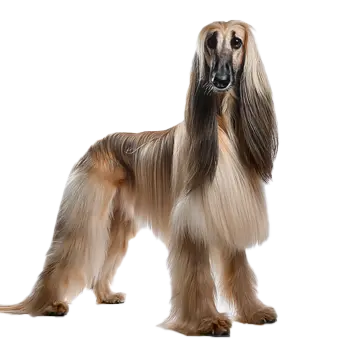

The Afghan Hound's juvenile period, spanning roughly three to twelve months of age, is marked by dramatic physical transformation. What begins as a compact, fuzzy puppy evolves into a tall, lean, and increasingly elegant young dog. Afghan Hounds grow rapidly in height during the first six months, often appearing lanky and awkward as their legs lengthen faster than their bodies fill out. This ungainly stage is entirely normal and gradually resolves as the dog matures.
By six months, most Afghan Hound puppies have reached a significant portion of their adult height but are far from their mature weight and muscular development. The long, silky coat that defines the breed begins to emerge during this period, replacing the soft puppy fuzz with the early stages of the flowing adult coat. Owners should expect the coat transition to be gradual and sometimes uneven, with patches of adult hair growing in alongside remaining puppy fur.
Bone growth continues well beyond the first year in this large breed. The growth plates in the long bones remain open until approximately twelve to eighteen months of age, which has important implications for exercise and activity levels. Excessive high-impact exercise — prolonged running on hard surfaces, jumping from heights, or forced endurance work — should be avoided until the growth plates have closed to reduce the risk of developmental orthopedic problems.
Regular weight monitoring remains important during the juvenile phase. Afghan Hounds should be lean, and it can be tempting to overfeed a puppy that appears thin. However, keeping a growing Afghan Hound at a healthy, slightly lean body condition is far better for long-term joint and skeletal health than allowing excess weight gain during the critical growth window.