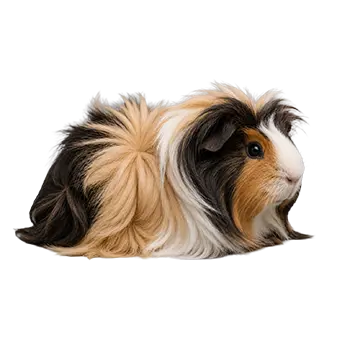

The juvenile period for a Sheba Mini Yak spans roughly from four weeks to about five or six months of age, and it is marked by rapid and sometimes uneven growth. During this window, your guinea pig will transition from a small, wobbly pup into a sturdy young adult. Weekly weigh-ins are important for tracking progress, as healthy juveniles should show consistent upward trends on the scale. Growth spurts may cause temporary gangly proportions, which is perfectly normal.
The Sheba Mini Yak's distinctive coat undergoes significant changes during the juvenile phase. The tousled rosettes become more pronounced, and the fur grows noticeably longer and denser. You may notice the coat going through an awkward stage where it looks uneven or scraggly before settling into its characteristic wild texture. This is a natural part of coat maturation and not a sign of nutritional deficiency or illness.
Bone and muscle development are equally active during adolescence. Providing adequate space for movement is essential to support healthy skeletal growth. A cramped enclosure during this period can contribute to muscle weakness and poor posture. Aim for a minimum of eight square feet of floor space for a single guinea pig, with additional room for each cage mate. Ramps, tunnels, and open floor areas encourage the natural locomotion that strengthens growing bodies.
By the end of the juvenile stage, your Sheba Mini Yak should be approaching its adult weight of 1.5 to 2.5 pounds. Males tend to grow slightly larger and broader than females. If your guinea pig seems significantly undersized compared to breed standards at six months, consult your veterinarian to rule out nutritional gaps, parasites, or other health concerns that may be limiting growth.