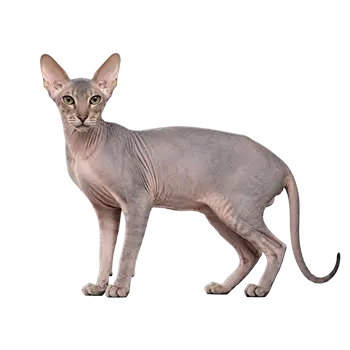

The juvenile period for a Peterbald typically spans from around three months to approximately one year of age, though some individuals continue filling out until eighteen months. During this time, the kitten undergoes rapid skeletal and muscular growth, transforming from a clumsy, round-bellied baby into a sleek, elegant young cat. Peterbalds have a naturally lean and athletic build with long limbs, a wedge-shaped head, and large ears, and these defining features become increasingly pronounced throughout adolescence.
One of the most distinctive aspects of Peterbald development is the ongoing evolution of their coat. Kittens born with a fine chamois-like covering may lose it gradually, while those born with a brush coat may retain it or see it thin over time. Some Peterbalds are born completely bald and remain so for life. The hair loss gene in this breed is progressive and somewhat unpredictable, so owners should be prepared for their kitten's appearance to change considerably during the juvenile months. This is entirely normal and not a sign of illness.
Weigh your adolescent Peterbald regularly, ideally weekly, to ensure steady and proportional growth. A healthy juvenile should show a consistent upward trend without dramatic spikes or plateaus. Because this breed has a higher metabolic rate than many coated cats — largely due to the energy required to maintain body temperature — Peterbalds may appear lean even when perfectly healthy. Your veterinarian can help you distinguish a naturally slender frame from underweight condition.
Teeth development is another important marker during this stage. Deciduous teeth begin falling out around three to four months of age, with permanent adult teeth replacing them by six to seven months. You may find tiny baby teeth on the floor or in food dishes, and some kittens experience mild discomfort during the transition. Provide appropriate chew toys and monitor eating habits to ensure the process proceeds smoothly.