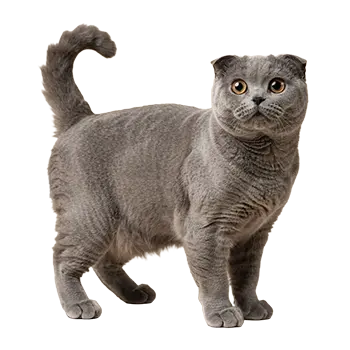

Fold Gene Genetics & Pairing Ethics

The single most important concept in Foldex breeding is the genetics of the fold gene and the ethical obligations that follow from it. The Foldex was developed in Quebec, Canada, by crossing the Scottish Fold with the Exotic Shorthair, producing a cat that combines the Fold's distinctive ear carriage with the Exotic's round face, dense coat, and compact body. The fold phenotype is caused by a dominant mutation in the TRPV4 gene, which affects cartilage formation throughout the body. A cat that inherits one copy of the mutation from a single parent is heterozygous and typically displays the folded ears with minimal skeletal effects. A cat that inherits two copies, one from each parent, is homozygous and will develop osteochondrodysplasia, a painful and progressive cartilage and bone disorder.

The foundational rule of responsible Foldex breeding is absolute: a folded-ear cat must never be bred to another folded-ear cat. Every breeding pair must consist of one fold and one straight-eared partner, ensuring that no offspring can inherit two copies of the mutation. This rule is non-negotiable and is upheld by every reputable breed registry and breeder association. Violations produce kittens condemned to chronic pain, impaired mobility, and lifelong suffering. Any breeder who pairs fold to fold, regardless of the rationale offered, is acting outside the bounds of ethical practice.

Permissible outcross partners for the Foldex include straight-eared Foldex cats, Exotic Shorthairs, and in some registries, British Shorthairs or Scottish Straights. The choice of outcross affects the resulting kittens' body type, coat, and facial structure. Breeders should select outcross partners that complement the breed standard while prioritizing health, temperament, and genetic diversity. Linebreeding, the practice of mating related cats to fix desirable traits, must be approached with extreme caution and thorough knowledge of the pedigrees involved to avoid concentrating deleterious recessive genes.

Genetic testing has become increasingly accessible and should be a standard part of the Foldex breeding program. DNA tests can identify carriers of polycystic kidney disease, which can enter the Foldex gene pool through Exotic Shorthair and British Shorthair lines. Blood type testing is also advisable, as type B blood occurs in both the British Shorthair and Exotic Shorthair populations, and neonatal isoerythrolysis, a fatal blood type incompatibility between mother and kitten, can occur when a type B queen is bred to a type A sire.

Pre-Breeding Health Assessment

Before any Foldex is entered into a breeding program, a comprehensive health evaluation must confirm that the cat is physically, genetically, and temperamentally suitable for reproduction. This assessment protects the welfare of the breeding cat, its mate, and the resulting offspring, and it distinguishes responsible breeding from casual or uninformed reproduction.

The pre-breeding veterinary examination should include a thorough physical assessment with particular attention to the musculoskeletal system. Radiographs of the limbs, tail, and spine are essential for fold-eared candidates to rule out significant osteochondrodysplasia. While heterozygous fold cats may show mild radiographic changes that do not produce clinical symptoms, cats with moderate to severe skeletal abnormalities should be removed from the breeding program regardless of their show quality or pedigree. The examination should also include cardiac auscultation to screen for heart murmurs, a dental evaluation, and assessment of overall body condition.

Laboratory screening encompasses blood typing, testing for feline leukemia virus and feline immunodeficiency virus, a complete blood count, serum chemistry panel, and urinalysis. Genetic testing for polycystic kidney disease and any other breed-relevant mutations should be completed and results documented. Both the queen and the stud should be current on all vaccinations prior to mating, as several feline diseases can be transmitted sexually or through close contact during the breeding encounter.

The breeding cat's temperament merits careful consideration. The Foldex breed standard emphasizes a gentle, sociable, and adaptable disposition, and cats that display excessive fearfulness, aggression, or stress reactivity should not be bred regardless of their physical merits. Temperament is heritable, and perpetuating anxious or aggressive behavioral tendencies undermines the breed's defining character. Both the queen and the stud should demonstrate the calm, people-oriented temperament that Foldex owners expect.

Female Foldex cats should not be bred before reaching full physical maturity, typically around eighteen months to two years of age. Breeding a queen before her skeletal and reproductive systems are fully developed increases the risk of complications during pregnancy and delivery. Similarly, queens should be retired from breeding by approximately six to seven years of age, and no queen should produce more than two to three litters per year to protect her long-term health.

The Breeding Process

The feline estrous cycle is polyestrous and seasonally influenced, meaning that intact female cats cycle repeatedly during the longer daylight months, typically from late winter through early autumn in the northern hemisphere. The Foldex queen in estrus displays characteristic behaviors including increased vocalization, rolling, lordosis posturing, and a marked increase in affectionate rubbing against people and objects. Estrus typically lasts five to seven days if the queen is not mated, and she will cycle again within two to three weeks.

Breeding is usually conducted at the stud's home, as intact males are more confident and effective on their own territory. The queen is introduced to the stud's environment several days before the anticipated breeding to allow acclimation. Mating in cats is a brief, intense event. The queen assumes the lordosis position, the stud mounts and achieves intromission, and ejaculation occurs within seconds. The queen typically cries out and rolls away after mating due to the barbed structure of the feline penis, which stimulates ovulation. Multiple matings over two to three days are standard practice to maximize the likelihood of conception, as cats are induced ovulators and require the stimulus of mating to release eggs.

Confirming pregnancy can be accomplished through several methods. Abdominal palpation by an experienced veterinarian may detect developing fetuses as early as seventeen to twenty-five days after mating. Ultrasound examination provides reliable confirmation from approximately twenty-five days onward and allows assessment of fetal viability through heartbeat detection. Radiography becomes useful later in pregnancy, around day forty-five, when fetal skeletons have calcified sufficiently to be visible and an accurate count of expected kittens can be obtained.

Feline gestation averages sixty-three to sixty-seven days. During the first three weeks, the queen may show minimal outward signs of pregnancy. Appetite typically increases from the third week onward, and the queen's caloric intake should be gradually elevated by feeding a nutrient-dense kitten-formula food. By the fifth week, the abdomen begins to enlarge visibly, and the queen may become increasingly affectionate and inclined to seek out quiet, enclosed spaces as the delivery date approaches.

Pregnancy Care & Whelping Preparation

A pregnant Foldex queen requires attentive care throughout gestation to support her health and the development of her kittens. Nutrition is the most important modifiable factor during pregnancy. Transition the queen to a high-quality kitten-formula food by the third week of gestation, as this diet provides the elevated protein, fat, and caloric density needed to support fetal growth and prepare the queen's body for lactation. Offer food freely during the last three weeks of pregnancy, as the growing uterus compresses the stomach and the queen may prefer to eat smaller, more frequent meals.

Veterinary monitoring during pregnancy should include at least one prenatal visit around the midpoint of gestation and a second visit in the final week. The midpoint visit confirms fetal viability and screens for potential complications. The late-pregnancy visit allows the veterinarian to perform radiographs to count fetuses, assess fetal positioning, and discuss the birth plan. Knowing the expected litter size is valuable because it tells you when delivery is complete and eliminates the uncertainty of waiting for additional kittens that may not exist.

Prepare the whelping area at least two weeks before the expected delivery date. Choose a quiet, warm room that the queen is familiar with and set up a whelping box that is large enough for her to stretch out fully but enclosed enough to provide security. The box should have sides high enough to contain the newborn kittens but low enough for the queen to enter and exit without jumping, which is especially considerate of the Foldex's potential joint sensitivity. Line the box with clean, washable bedding and have additional sets ready for frequent changes during and after delivery.

Assemble a whelping kit that includes clean towels, a bulb syringe for clearing neonatal airways, unwaxed dental floss and blunt scissors for tying and cutting umbilical cords if necessary, a digital kitchen scale for weighing kittens, a heating pad, kitten milk replacer and feeding bottles as backup, and your veterinarian's emergency contact number. Most Foldex queens deliver without complications, but being prepared for intervention ensures you can act quickly if a problem arises.

Delivery & Immediate Postpartum

Labor in the cat progresses through three stages. Stage one involves uterine contractions that are not visible externally but cause behavioral changes including restlessness, nesting behavior, panting, purring, and a decline in appetite. This stage can last twelve to twenty-four hours. Stage two begins with visible abdominal straining and the delivery of kittens. Each kitten is typically born within thirty to sixty minutes of the onset of active pushing, though intervals of up to two hours between kittens can be normal if the queen is resting and not in distress. Stage three involves the passage of placentas, which usually follows each kitten. Count the placentas to confirm that all have been expelled, as a retained placenta can cause serious postpartum infection.

The queen should sever the umbilical cord and clean each kitten vigorously, stimulating breathing and circulation. If she does not attend to a kitten promptly, you may need to intervene by clearing fluid from the nose and mouth with the bulb syringe, rubbing the kitten briskly with a clean towel to stimulate breathing, and tying and cutting the cord approximately one inch from the body using the dental floss and scissors from your whelping kit. Work quickly but calmly, and return the kitten to the mother as soon as it is breathing normally.

Seek veterinary assistance immediately if the queen has been actively straining for more than one hour without producing a kitten, if more than four hours pass between kittens with remaining fetuses expected, if the queen appears exhausted or distressed, if a kitten appears partially delivered but stuck in the birth canal, or if the queen passes foul-smelling discharge at any point during labor. Dystocia, or difficult birth, requires professional intervention and can become life-threatening for both the queen and the remaining kittens if not addressed promptly.

In the hours immediately following delivery, ensure that every kitten is nursing and that the queen is resting comfortably. Offer her food and fresh water within reach of the nesting box. Monitor her vaginal discharge, which should be reddish-brown and gradually diminish over the first week. Heavy bleeding, green or foul-smelling discharge, or a sudden decline in the queen's demeanor warrants an emergency veterinary call. Weigh each kitten, record the data, and begin the daily weighing routine that will guide neonatal care in the days ahead.

Ethical Responsibilities of the Foldex Breeder

Breeding the Foldex carries ethical obligations that extend well beyond the mechanics of genetics and whelping. The breed's unique genetic profile, which depends on a mutation that affects cartilage throughout the body, places a heightened responsibility on breeders to prioritize health outcomes above all other considerations, including ear fold aesthetics, show ring success, and financial return.

Every Foldex litter will contain a mix of folded-ear and straight-eared kittens, typically in a roughly equal ratio. Straight-eared kittens are essential to the breed's health and should be valued accordingly. Breeders who treat Straights as inferior or unmarketable undermine the breeding program's integrity. Straight-eared Foldex cats make excellent pets and are vital as future breeding partners for fold-eared cats. Ethical breeders place all kittens in appropriate homes with equal care and transparency about the kitten's health, temperament, and expected needs.

Transparency with buyers is a cornerstone of ethical breeding. Provide each buyer with complete documentation of genetic testing results for both parents, radiographic screening reports, vaccination and deworming records, and a written health guarantee. Explain the fold gene honestly, including the potential for cartilage-related issues even in heterozygous cats, and provide guidance on joint monitoring and environmental modifications. A buyer who understands the breed's specific needs is far better equipped to provide a lifetime of appropriate care.

Breeder contracts should include provisions for the return of the cat at any point in its life if the owner can no longer provide care. Responsible breeders remain connected to every kitten they produce and serve as a resource for owners throughout the cat's lifespan. Spay and neuter clauses for pet-quality kittens protect the breed from indiscriminate reproduction and ensure that breeding remains the domain of informed, committed individuals working toward the breed's health and betterment.

Finally, every Foldex breeder should stay current with evolving research on the fold gene, cartilage biology, and feline genetics. Participate in breed clubs, attend veterinary conferences when possible, and collaborate openly with other breeders. The long-term welfare of the Foldex depends on a breeding community that shares data, acknowledges challenges, and continuously refines its practices in light of new scientific understanding.

Always consult a qualified professional before making any health-related decisions. This content is provided for informational reference only and should not replace professional guidance specific to your animal.