
The Weaning Transition

Weaning is one of the most critical and nuanced phases in a juvenile White-Bellied Caique's development, and how it is managed has lasting consequences for the bird's physical health, emotional stability, and relationship with food. Caiques typically begin the weaning process between eight and twelve weeks of age, though individual variation is significant and the process should always be guided by the chick's readiness rather than a rigid calendar. Forcing weaning before the bird is developmentally prepared is one of the most common mistakes made by inexperienced hand-feeders and can lead to malnutrition, chronic stress, and food-related anxiety.

The earliest sign of weaning readiness is the chick's spontaneous interest in solid foods. A juvenile caique that is approaching the weaning window will begin mouthing, chewing, and playing with objects in its environment, including food items placed nearby. Offer a variety of age-appropriate foods at this stage, including warm softened pellets, finely chopped fruits and vegetables, cooked grains, and sprouted seeds. The goal is to encourage exploration and self-feeding without pressuring the chick to consume a specific quantity. During early weaning, solid food intake will be minimal and inconsistent, and the chick will continue to rely on formula for the majority of its caloric needs.

As the chick begins consuming measurable amounts of solid food, hand-feeding sessions can be gradually reduced. The standard approach is to eliminate one feeding at a time, starting with the midday feeding when the bird is most active and most likely to forage independently. Monitor body weight daily throughout the weaning process. A weight loss of up to ten percent from the peak pre-weaning weight is considered normal and reflects the transition from a formula-dependent metabolism to one sustained by solid foods. Weight loss exceeding ten percent, or a chick that loses weight rapidly rather than gradually, indicates that weaning is proceeding too quickly and formula feedings should be temporarily increased.

Abundance weaning, the practice of providing a constant supply of varied foods while allowing the chick to self-regulate its formula intake, is widely regarded as the most humane and effective approach for caiques. This method respects the bird's natural developmental timeline and reduces the psychological stress associated with abrupt food changes. Some juvenile caiques wean quickly over the course of two to three weeks, while others may take six weeks or longer. Patience during this period is not indulgence but rather an investment in the bird's long-term physical and emotional well-being.

Diet & Nutritional Requirements

Once a juvenile White-Bellied Caique has completed the weaning transition, establishing a balanced and varied diet becomes the caregiver's primary nutritional responsibility. Caiques are active, high-energy parrots with metabolic demands that reflect their constant motion and playful behavior, and a diet that fails to meet these demands will manifest in poor feather condition, low energy, weakened immunity, and behavioral problems. The dietary foundation established during the juvenile period sets the pattern for the bird's lifelong relationship with food.

A high-quality pelleted diet should form the core of the juvenile caique's daily intake, comprising approximately fifty to sixty percent of the total diet by volume. Pellets provide a nutritionally complete and balanced baseline that is difficult to achieve through seeds, fruits, and vegetables alone. Select a pellet formulated for small to medium parrots and avoid products that are heavily dyed, sugar-coated, or contain artificial preservatives. Some caiques resist pellets initially, particularly if they were weaned primarily onto soft foods, and a gradual introduction strategy using warm, slightly moistened pellets mixed with familiar foods can ease the transition.

Fresh fruits and vegetables should constitute approximately thirty to forty percent of the daily diet and should be offered in as much variety as possible. Caiques benefit from a rotating selection that includes dark leafy greens such as kale, Swiss chard, and dandelion greens, orange and red vegetables such as carrots, sweet potatoes, and bell peppers, and a moderate amount of fresh fruit including berries, mango, papaya, and apple. Avocado, chocolate, caffeine, onion, garlic, and fruit pits must be strictly excluded, as these are toxic to parrots. Wash all produce thoroughly before serving and remove uneaten fresh foods within a few hours to prevent bacterial growth.

Seeds and nuts should be treated as supplemental items rather than dietary staples, making up no more than five to ten percent of the total diet. While caiques enjoy sunflower seeds, safflower seeds, and small nuts, these items are high in fat and low in many essential nutrients. Offering them as training rewards or foraging enrichment rather than as a free-choice food helps prevent the selective eating habits that lead to nutritional imbalances. Introduce a variety of healthy foods during the juvenile period while the bird's food preferences are still forming, as caiques that develop a narrow dietary range during adolescence can be extremely difficult to transition onto new foods later in life.

Fresh, clean water must be available at all times and changed at least twice daily. Juvenile caiques are notorious for dunking food items into their water dishes, which accelerates bacterial contamination. Using a water bottle or a heavy, tip-resistant bowl placed away from food stations can help maintain water quality. Some caregivers offer a secondary shallow water dish for bathing, which juvenile caiques typically discover and enjoy on their own.

Behavioral Development & Personality

The juvenile period is when the White-Bellied Caique's legendary personality emerges in full force. Known throughout the aviculture community as the clowns of the parrot world, caiques display a level of physical energy, playfulness, and comedic behavior that is unmatched among similarly sized parrots. Understanding the behavioral patterns that emerge during adolescence helps caregivers channel this energy constructively and avoid the common pitfall of interpreting normal developmental behaviors as behavioral problems requiring correction.

Juvenile caiques are extraordinarily physical birds. They hop, bounce, wrestle, roll onto their backs, and engage in vigorous play with toys, household objects, and their caregivers' hands and fingers. This behavior is not hyperactivity or misbehavior but rather an expression of the species' natural locomotion patterns, which in the wild include hopping along branches and engaging in acrobatic foraging maneuvers. Provide ample opportunities for physical play, including sturdy foot toys, swings, ladders, and surfaces that allow the bird to hop and climb. A caique that does not have adequate outlets for physical activity will redirect its energy into destructive or attention-seeking behaviors.

Biting and beaking intensity often increase during the juvenile period as the bird tests boundaries and explores its social environment. Juvenile caiques use their beaks to investigate objects, solicit attention, express excitement, and communicate displeasure, and the pressure they apply during these interactions can vary from gentle mouthing to surprisingly forceful bites. It is essential to establish consistent responses to biting during this developmental window. Reacting with dramatic vocal responses or sudden withdrawal can inadvertently reinforce biting by providing the exciting reaction the bird was seeking. A calm, neutral response combined with brief withdrawal of attention is generally more effective than punishment, which caiques tend to interpret as confrontation rather than correction.

Vocal development accelerates during adolescence. While White-Bellied Caiques are not among the most prolific talkers in the parrot world, they are capable of learning words and short phrases, and their natural call repertoire expands significantly during this period. Juvenile caiques produce a wide range of whistles, chirps, beeps, and contact calls, some of which can be quite loud. The species is known for a distinctive high-pitched flock call that can be startling in a domestic setting. Consistent vocal interaction from caregivers during this period helps shape the bird's communication patterns and can encourage speech acquisition, though individual aptitude for mimicry varies considerably among caiques.

Flight Training & Physical Development

Flight is a defining capability for White-Bellied Caiques, and the juvenile period is when this ability develops from tentative fledgling attempts into competent, controlled aerial navigation. The decision of whether to allow a juvenile caique to fledge fully, maintain a moderate wing clip, or keep the bird flighted is one that each caregiver must make based on the bird's living environment, safety considerations, and lifestyle factors. Regardless of the decision on long-term wing management, allowing a juvenile caique to experience at least its initial fledging flights has measurable benefits for coordination, confidence, cardiovascular health, and psychological development.

Fledging typically begins between ten and fourteen weeks of age, when the juvenile's flight feathers have grown in sufficiently to generate lift. Early flight attempts are clumsy and poorly controlled, consisting of short, downward-angled glides that may end in crash landings. This is normal and expected. The bird's flight muscles, coordination, and spatial awareness develop through practice, and each attempt builds the neurological pathways necessary for controlled flight. Ensure the fledging environment is safe by removing ceiling fans, covering windows and mirrors, closing toilet lids, and eliminating other household hazards before the bird begins its flight practice.

For caregivers who choose to maintain a flighted bird, structured recall training should begin as soon as the juvenile demonstrates basic flight control. Recall training teaches the bird to fly to the caregiver on cue, which is both a practical safety skill and a powerful bonding exercise. Start with very short distances in a confined space, using a high-value food reward and an enthusiastic verbal cue. Gradually increase the distance and complexity of the recall as the bird's flight skills improve. A reliably recall-trained caique can be given greater supervised freedom in the home, which benefits both its physical fitness and mental health.

Physical development during the juvenile period extends well beyond flight. Juvenile caiques undergo a significant increase in muscle mass, bone density, and overall body condition between the ages of three and six months. The beak and feet grow stronger, and the bird develops the grip strength and dexterity that characterize adult caiques. Provide a variety of perch diameters and textures to promote healthy foot development, and offer chewable items such as untreated wood blocks, leather strips, and palm frond shreds to encourage beak exercise and conditioning. Adequate calcium intake is particularly important during this period of rapid skeletal growth, and a cuttlebone or mineral block should be available at all times.

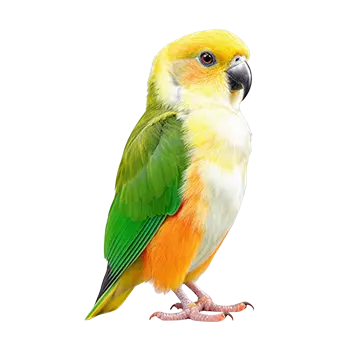
The juvenile molt, which typically occurs between four and six months of age, marks the transition from baby plumage to adult feathering. During this molt, the bird will shed its juvenile feathers and grow in the vivid green, orange, and white plumage that defines the species. The molt places additional nutritional demands on the bird, and caregivers should ensure protein and micronutrient intake is adequate to support healthy feather production. Bathing opportunities should be offered more frequently during the molt to help soften feather sheaths and soothe irritated skin.

Socialization & Environmental Enrichment

The juvenile period represents the most influential socialization window in a White-Bellied Caique's life, and the breadth and quality of experiences the bird encounters during this phase will shape its temperament for years to come. Caiques are naturally curious and bold compared to many parrot species, but this boldness must be reinforced through positive exposure to varied people, environments, sounds, and objects. A juvenile caique that is kept in isolation or exposed to a limited range of stimuli will gradually lose its natural confidence, becoming increasingly reactive and fearful as it matures.

Introduce the juvenile caique to as many different people as practical during this period. Caiques have a well-documented tendency to form extremely strong bonds with one or two preferred individuals, and while this loyalty is endearing, it can develop into problematic one-person bonding if the bird does not learn to accept interaction with multiple people during adolescence. Encourage friends, family members, and visitors to interact with the bird under supervision, offering treats and gentle handling. The goal is to teach the bird that unfamiliar humans are a source of positive experiences rather than threats.

Environmental enrichment is not optional for juvenile caiques but rather a fundamental requirement for psychological health. These birds possess an intelligence and energy level that demands constant stimulation, and a barren cage with a few static perches and a food bowl is wholly inadequate. Rotate toys on a weekly basis, providing a mix of foraging toys that require problem-solving, destructible toys that satisfy the urge to chew and shred, and interactive toys that encourage physical play. Foraging enrichment, which requires the bird to work for its food by solving simple puzzles or extracting items from containers, is particularly valuable for caiques and mimics the mental challenges they would face in their natural habitat.

Outside-the-cage time is essential and should be provided for a minimum of several hours daily under supervision. Juvenile caiques benefit from having a designated play area equipped with a playstand, swings, ladders, and a variety of toys. Supervised exploration of different rooms in the home broadens the bird's environmental confidence and provides novel stimulation. During these sessions, expose the bird to normal household activities such as cooking sounds, television, music, and the movements of other household members. A caique that grows up accustomed to the rhythms of domestic life is far less likely to develop noise phobias or startle responses as an adult.

Socialization with other birds, if applicable, should be managed carefully during the juvenile period. Caiques can coexist with other parrot species, but they have a reputation for being assertive and sometimes aggressive with birds outside their own species. Introductions should be conducted gradually, at a safe distance, and with constant supervision. Never leave a juvenile caique unsupervised with another bird, regardless of how well the initial introduction appears to go. The caique's high energy and physical play style can easily overwhelm or injure a less robust companion, and interspecies conflicts can escalate without warning.

Health Monitoring & Veterinary Milestones

Veterinary care during the juvenile period builds upon the health foundation established during the neonatal stage and shifts focus from acute survival concerns to long-term preventive medicine. The juvenile White-Bellied Caique should receive a comprehensive wellness examination at the time of weaning completion, which serves as a baseline assessment of the bird's health as it transitions to an independent diet and a more active lifestyle. This examination typically includes a thorough physical assessment, blood work to evaluate organ function and blood cell counts, and testing for common avian pathogens if this was not completed during the neonatal period.

The post-weaning weight should stabilize within a few weeks of completing the weaning transition, settling into a range that will remain relatively consistent throughout the bird's adult life. For White-Bellied Caiques, the healthy adult weight range is generally between 150 and 170 grams, though individual variation based on frame size and genetics is normal. Establish a regular weighing schedule, ideally weekly, and record the results. Sudden weight changes in either direction are among the earliest and most reliable indicators of health problems in parrots, and having a baseline weight record allows both the caregiver and the veterinarian to identify trends that might otherwise go unnoticed.

The juvenile period is also the appropriate time to discuss disease prevention strategies with the avian veterinarian. While there are limited vaccines available for pet parrots compared to dogs and cats, the veterinarian can advise on testing protocols for Polyomavirus, Psittacine Beak and Feather Disease, and avian Chlamydiosis, as well as biosecurity practices that reduce the risk of exposure to these and other pathogens. If the household includes other birds, quarantine protocols for any new additions should be reviewed, as juvenile caiques are particularly vulnerable to infectious diseases during the period when their immune system is still maturing.

Behavioral health is an integral component of veterinary care during adolescence that is too often overlooked. The avian veterinarian can help distinguish between normal developmental behaviors, such as increased biting, testing boundaries, and heightened vocalization, and behaviors that may indicate underlying health or welfare concerns. Feather-destructive behavior, for example, can begin during the juvenile period in response to nutritional deficiencies, environmental stressors, or hormonal changes, and early intervention is far more effective than attempting to address established feather-picking habits later in life. Include a discussion of the bird's behavioral development, daily routine, and environmental enrichment in every veterinary visit.

Preparing for Adulthood

The transition from juvenile to adult is not a single moment but rather a gradual process that occurs over several months, roughly between the ages of six months and two years in White-Bellied Caiques. During this extended adolescent period, the bird's personality solidifies, its social preferences crystallize, and the behavioral patterns that were established during the juvenile period become increasingly fixed. Understanding what to expect during this transition helps caregivers maintain patience and consistency during what can be a challenging but ultimately rewarding phase.

Hormonal changes begin to influence behavior as the juvenile caique approaches sexual maturity, which typically occurs between one and two years of age. The bird may become more territorial about its cage or favorite perching spots, display increased aggression during certain periods, or develop new vocalizations associated with courtship behavior. These hormonal shifts are a normal part of maturation and should be managed through environmental adjustments rather than punishment. Ensuring the bird receives approximately twelve hours of uninterrupted darkness each night helps regulate hormonal cycles and reduces the intensity of hormonal behaviors.

Establish consistent daily routines during the late juvenile period, as caiques thrive on predictability and can become anxious or behaviorally reactive when their schedule is disrupted. A reliable daily pattern that includes designated times for feeding, out-of-cage activity, training, bathing, and rest provides the structure that supports a well-adjusted adult bird. Training sessions using positive reinforcement are particularly valuable during this period, as they strengthen the bond between bird and caregiver, provide mental stimulation, and establish a communication framework that becomes increasingly useful as the bird matures.

The cage and living environment should be evaluated and upgraded as the bird approaches adult size and activity levels. A juvenile caique's first cage may be adequate for its initial months but is likely too small for a fully grown, fully active adult. The adult cage should be large enough to allow wing flapping and climbing, equipped with a variety of perch sizes and materials, and stocked with a rotating selection of toys. The cage placement should provide the bird with a view of household activity while also offering a quieter retreat area where the bird can rest without being in the center of traffic and noise.

Dietary fine-tuning is an ongoing process as the bird matures. The caloric and nutritional needs of a fully grown, active caique differ from those of a rapidly growing juvenile, and the diet should be adjusted accordingly. Monitor the bird's body condition regularly by gently palpating the keel bone. A prominent, sharp keel indicates the bird is underweight, while a keel that is difficult to feel beneath a layer of tissue suggests the bird is carrying excess weight. Both conditions warrant dietary review and potentially a veterinary consultation to rule out underlying health issues.

Always consult a qualified professional before making any health-related decisions. This content is provided for informational reference only and should not replace professional guidance specific to your animal.