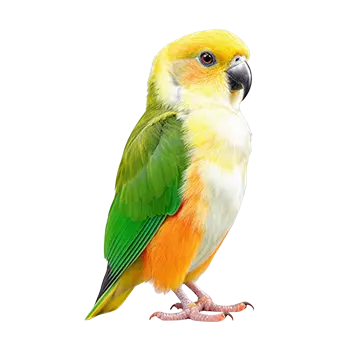

Breeding White-Bellied Caiques is a serious undertaking that requires substantial preparation, knowledge, and commitment well before a pair is ever introduced to a nest box. Caiques reach sexual maturity between two and three years of age, though responsible breeders generally recommend waiting until both birds are at least three years old before initiating breeding activity, as younger birds may lack the physical maturity and behavioral stability needed to successfully incubate eggs and raise chicks. Premature breeding attempts can result in abandoned eggs, neglected chicks, and physical complications for underdeveloped hens.
Sexual dimorphism in White-Bellied Caiques is minimal, which means visual identification of sex is unreliable. DNA sexing through a blood sample or feather follicle test is the only definitive method for confirming the sex of a potential breeding pair. Surgical sexing, once the standard in aviculture, has been largely replaced by DNA testing due to the lower risk and lower cost of the molecular approach. Ensure that both birds in a prospective pair have been accurately sexed before investing time and resources in pair bonding, as same-sex pairs will obviously fail to produce fertile eggs despite potentially displaying bonding behaviors.
Pair compatibility cannot be assumed based on sex alone. White-Bellied Caiques are selective in their mate choice, and placing a male and female together does not guarantee that they will bond or breed. Incompatible pairs may display indifference, persistent aggression, or one bird dominating and injuring the other. The introduction process should be gradual, beginning with the birds housed in separate cages placed within visual and vocal range of each other. Over a period of weeks, observe their interactions through the cage bars for signs of mutual interest, including coordinated vocalizations, mirroring movements, and proximity-seeking behavior. Only when consistent positive signals are observed should the birds be introduced into a shared space under close supervision.
Before proceeding with breeding, both birds should undergo a comprehensive veterinary examination that includes a physical assessment, blood work, and testing for common avian diseases including Polyomavirus, Psittacine Beak and Feather Disease, and Chlamydiosis. Breeding birds must be in excellent health, as the physiological demands of egg production, incubation, and chick rearing place significant stress on both the hen and the cock. A hen with marginal calcium reserves, liver dysfunction, or a chronic infection is at substantially higher risk of life-threatening complications such as egg binding.