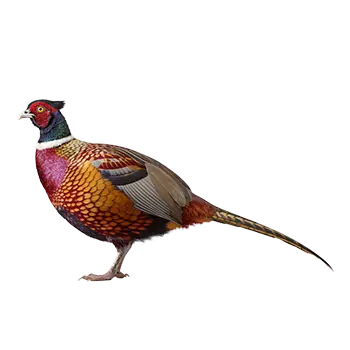

Recognizing Terminal Decline

The distinction between manageable age-related decline and irreversible terminal deterioration is one of the most difficult assessments a Ring-necked Pheasant caretaker must make. In some cases, the transition is abrupt, brought on by a sudden illness, organ failure, or traumatic injury. More often, however, the decline is gradual, a slow accumulation of losses that individually seem minor but collectively signal that the bird's body is reaching the limits of its capacity to sustain life.

Terminal decline in Ring-necked Pheasants typically manifests as a constellation of interconnected symptoms rather than a single dramatic event. Progressive weight loss that does not respond to dietary adjustments is one of the most consistent indicators. The bird may continue to eat but in diminishing quantities, or it may show interest in food without being able to consume adequate amounts due to beak deterioration, crop dysfunction, or internal disease. The keel bone becomes sharply prominent, the breast muscles visibly atrophied, and the bird takes on an overall angular, wasted appearance that is unmistakable to an experienced eye.

Behavioral withdrawal is another hallmark of terminal decline. A bird that once foraged actively, responded to its caretaker's approach, and participated in the normal social rhythms of the flock may become increasingly sedentary, spending long periods sitting in a sheltered spot with eyes partially closed and feathers fluffed. Responses to stimuli become muted or delayed. The bird may stop dust bathing, preening, or engaging in any maintenance behaviors, signs that it is conserving energy for basic survival functions alone.

Physical indicators that suggest the body's systems are failing include labored or irregular breathing, persistent tail bobbing at rest, changes in droppings that indicate organ dysfunction such as dark green or tarry feces suggesting liver failure or watery droppings with excessive urates suggesting kidney failure, and progressive inability to stand or maintain balance. Any combination of these signs, particularly when they appear together and worsen over a period of days, suggests that the bird has entered a terminal phase and that the focus of care should shift from treatment to comfort.

Palliative Care Strategies

Palliative care for a Ring-necked Pheasant in terminal decline is centered on maximizing comfort and minimizing distress during the bird's remaining time. The goal is neither to hasten death nor to prolong life through aggressive interventions that cause more suffering than they relieve. Instead, palliative care provides a framework for gentle, compassionate management that honors the bird's needs while accepting the reality of its condition.

The cornerstone of palliative care is the creation of a quiet, comfortable, temperature-stable environment tailored to the bird's diminished physical state. A small, enclosed space such as a modified dog crate, a hospital cage, or a dedicated section of a sheltered pen, lined with soft bedding and positioned away from drafts, noise, and the activity of other birds, provides the sense of security that a vulnerable bird craves. Supplemental heat may be necessary, particularly for birds that have lost significant body mass and can no longer thermoregulate effectively. A ceramic heat emitter or radiant heat panel positioned to warm one side of the enclosure while leaving the other side cooler allows the bird to self-select its preferred temperature.

Hydration often becomes the most pressing physical need as a bird declines. A bird that is no longer eating may still drink, and maintaining hydration supports kidney function, reduces discomfort, and slows the progression of weakness. Fresh water should be placed directly in front of the bird, in a shallow container that requires minimal effort to access. Adding a small amount of unflavored electrolyte solution to the water can help maintain fluid balance. For birds that have stopped drinking voluntarily, subcutaneous fluid administration performed by or under the direction of a veterinarian can provide temporary relief, though this intervention becomes increasingly difficult to justify as the bird's overall condition deteriorates.

Minimizing handling and disturbance is an important aspect of palliative care. Every interaction with a declining bird should be purposeful and gentle. Unnecessary examinations, weighing, and treatments that cause stress without meaningful benefit should be discontinued. The caretaker's presence, offered quietly and without demands, can provide comfort to a bird that has been accustomed to human contact. Simply sitting near the enclosure, speaking softly, and allowing the bird to rest undisturbed is often the most compassionate thing a caretaker can do during this stage.

Pain Assessment & Comfort Measures

Assessing pain in a Ring-necked Pheasant requires a nuanced understanding of avian behavior, because birds are evolutionarily programmed to conceal signs of pain and vulnerability. In the wild, a visibly weakened or injured bird is a target for predators, and this survival instinct persists in captive birds. The absence of obvious pain behaviors does not mean the bird is comfortable, and caretakers must learn to read the subtle indicators that suggest a bird is experiencing physical distress.

Common behavioral indicators of pain in pheasants include a hunched posture with feathers fluffed around the body, reluctance to move or a change in gait that suggests guarding a painful area, reduced or absent vocalizations in a bird that was previously vocal, grinding the beak which can indicate gastrointestinal discomfort, and a fixed stare or persistent closing of the eyes during periods when the bird would normally be alert. Changes in breathing pattern, including an increased respiratory rate at rest or shallow, careful breathing that avoids expanding the chest fully, may indicate pain in the thoracic or abdominal region.

Pharmacological pain management is available for avian patients and should be discussed with a veterinarian experienced in bird medicine. Non-steroidal anti-inflammatory drugs such as meloxicam are the most commonly used analgesics in avian practice, offering both pain relief and anti-inflammatory effects that can improve comfort in birds suffering from arthritis, bumblefoot, internal inflammation, or other painful conditions. Opioid analgesics may be appropriate for more severe pain but require careful dosing and monitoring. The veterinarian will determine the appropriate medication, dose, and route of administration based on the bird's weight, condition, and the nature of its discomfort.

Non-pharmacological comfort measures complement medical pain management. Providing soft, thick bedding that cushions the bird's keel and feet reduces pressure-related discomfort. Maintaining a stable, warm environment eliminates the physiological stress of temperature regulation. Offering the bird's preferred foods, even if nutritional balance is no longer a priority, provides small moments of pleasure and engagement. Reducing ambient noise and visual stimulation allows the bird to rest without the metabolic cost of vigilance. Together, these measures create an environment in which the bird can experience its remaining time with as little suffering as possible.

Nutritional Support During Decline

Feeding a Ring-necked Pheasant in terminal decline requires a fundamental shift in philosophy from the nutritionally optimized diets of earlier life stages. The objective is no longer to meet precise nutritional targets or to support growth, reproduction, or peak condition. Instead, the goal is simply to provide whatever nourishment the bird will accept, in a form that is easy to consume, and to respect the bird's autonomy in choosing when and whether to eat.

As appetite wanes, offering a variety of highly palatable foods can encourage continued intake. Favorite treats, soft fruits, scrambled egg, moistened crumbled feed, mealworms, and other items the bird has enjoyed throughout its life may tempt a reluctant eater when standard pellets no longer hold appeal. The texture and form of food may need modification for birds with beak wear, jaw stiffness, or reduced swallowing ability. Mixing feed into a soft mash with warm water or offering finely chopped items reduces the physical effort required to eat.

Forced feeding, where food is delivered directly into the crop via a tube or syringe, is generally not appropriate for birds in terminal decline. The stress and discomfort of forced feeding typically outweigh its benefits in a bird whose body is no longer able to process nutrition effectively. There are exceptions, such as a bird recovering from a temporary crisis where a return to voluntary feeding is expected, but for a bird in irreversible decline, tube feeding prolongs the process of dying without meaningfully improving the bird's experience of its remaining life.

Water remains more important than food during the final days. A bird that has stopped eating but continues to drink is still maintaining some degree of physiological function and may have several comfortable days ahead. Ensuring that clean, accessible, slightly warmed water is always within reach is one of the simplest and most important acts of care during this time. When a bird stops drinking voluntarily, it is often a signal that the body's systems are shutting down and that the end is approaching within hours to a day or two.

Environmental Adjustments for End-of-Life Care

The environment in which a dying Ring-necked Pheasant spends its final days should prioritize tranquility, physical comfort, and protection from elements and threats that the bird can no longer cope with on its own. The spacious flight pen that served the bird well during its active years is rarely the appropriate setting for end-of-life care. A bird in terminal decline housed in a large pen is vulnerable to harassment by flock mates, exposure to weather extremes, and the inability to access food and water that may be located far from its preferred resting spot.

A dedicated end-of-life enclosure should be sized to match the bird's reduced mobility, large enough for the bird to stand, turn around, and take a few steps, but small enough that food, water, and shelter are all within easy reach. A space of approximately four to six square feet is adequate for a single bird. The enclosure should be positioned in a sheltered location with protection from wind, rain, direct sun, and temperature extremes. Indoor settings or covered porches work well, provided that ventilation is adequate to prevent ammonia buildup from droppings.

Bedding in the end-of-life enclosure should be soft, absorbent, and deep enough to provide cushioning for a bird that may spend most of its time sitting. Straw, soft hay, or clean towels are appropriate choices. The bedding should be changed as soon as it becomes soiled, as a declining bird's weakened immune system is unable to resist the bacterial contamination that accumulates in dirty substrate. Maintaining scrupulous hygiene in the enclosure is an act of care that directly impacts the bird's comfort during its final days.

Lighting should be dim and natural, mirroring the gentle rhythms of dawn and dusk without harsh artificial illumination. Darkness at night provides the bird with the opportunity to sleep undisturbed, which is an important component of comfort even for a dying animal. Noise levels should be kept to an absolute minimum. If the enclosure is located near household activity, a partial visual barrier such as a draped cloth can reduce the visual stimulation that a stressed or weakened bird finds exhausting.

If the declining bird has a longtime companion, whether a mate or a long-term pen partner, a careful judgment must be made about whether the companion should be housed nearby. In some cases, the presence of a familiar bird provides comfort and reduces the stress of isolation. In other cases, even a gentle companion may disturb a very weak bird through normal activity, feeding competition, or inadvertent physical contact. Observing the declining bird's response to the companion's presence, looking for signs of either comfort or agitation, guides this decision. A see-but-not-touch arrangement, where the companion is housed in an adjacent enclosure with visual contact but no physical access, often provides the best of both options.

The Decision to Euthanize

Euthanasia is the most difficult decision that any animal caretaker faces, and it is no less weighty for a Ring-necked Pheasant than for any other creature under a person's care. The word itself derives from the Greek for a good death, and when the decision is made at the right time and carried out humanely, it is precisely that, a final act of compassion that ends suffering that can no longer be meaningfully relieved.

The timing of euthanasia is deeply personal, but there are objective guideposts that can help a caretaker navigate this emotional territory. When a bird can no longer eat or drink independently, when it shows signs of unmanageable pain despite appropriate medical treatment, when it can no longer stand or maintain basic bodily functions, or when the ratio of distress to comfort has shifted decisively toward suffering, the humane choice is to prevent further decline rather than to wait for death to arrive on its own terms. Natural death in birds is often protracted and accompanied by significant suffering, including respiratory failure, seizures, and metabolic collapse, that euthanasia can prevent.

A veterinarian experienced in avian medicine can perform euthanasia quickly and with minimal distress to the bird. The standard method involves an injection of a barbiturate anesthetic, typically sodium pentobarbital, administered intravenously or into the body cavity. The bird loses consciousness within seconds and the heart stops shortly thereafter. There is no pain associated with this method, and the bird's last experience is the gentle slide into unconsciousness. Some veterinarians will perform the procedure at the bird's home or enclosure to avoid the stress of transport, a kindness that is well worth requesting.

For caretakers in rural areas where avian veterinary services may not be readily accessible, the American Veterinary Medical Association recognizes certain physical methods of euthanasia for poultry and game birds when performed by trained individuals. Cervical dislocation, when executed correctly and swiftly, causes immediate loss of consciousness and is considered an acceptable method for birds under a specified body weight. This method should only be performed by someone who has been properly trained, as an improperly executed attempt causes suffering rather than relieving it. If there is any uncertainty about technique, the bird should be transported to a veterinarian.

Advance planning removes some of the anguish from the moment itself. Discussing euthanasia with your veterinarian before the need becomes urgent, understanding the procedure, choosing whether you wish to be present, and deciding on the disposition of the bird's remains, whether burial, cremation, or another option, allows the caretaker to focus on the bird during the final moments rather than being consumed by logistical decisions.

Grief & Aftercare

The death of a Ring-necked Pheasant, whether by natural decline or humane euthanasia, leaves a real gap in the caretaker's daily life. The routines of feeding, watering, cleaning, and checking on the bird that may have been part of the caretaker's daily rhythm for years are suddenly unnecessary, and that absence can evoke a grief response that catches some people by surprise. Society does not always recognize the depth of feeling that can develop between a human and a semi-wild bird, but the bond formed through years of daily care is genuine and deserving of acknowledgment.

Grief over the loss of an animal companion is a normal and healthy response. The feelings of sadness, emptiness, guilt, and even anger that may arise are not signs of weakness but reflections of the relationship's significance. Some caretakers worry that they acted too soon or waited too long in making end-of-life decisions, and this second-guessing is a nearly universal component of pet loss grief. Reminding oneself that the decision was made from a place of love and a genuine desire to prevent suffering, even if the timing was imperfect in retrospect, provides a foundation for eventual peace with the decision.

Practical aftercare for the bird's remains must be addressed promptly. Options include burial on the owner's property where local regulations permit, cremation through a veterinary clinic or pet cremation service, and in some agricultural contexts, composting. If burial is chosen, the site should be at least three feet deep to prevent disturbance by scavengers, and placement should avoid proximity to water sources. Cremation services offer the option of individual cremation with return of ashes or communal cremation without return, and the choice is entirely personal.

If the deceased bird was part of a flock, the remaining birds may show subtle behavioral changes in the wake of its absence. A longtime pen mate may display searching behavior, increased vocalization, or temporary changes in feeding patterns. These responses are typically short-lived, and the remaining birds adjust to the changed social dynamic within a few days to a week. Introducing a new bird to fill the vacancy should be delayed until the caretaker has had time to process their own grief and to evaluate whether expanding the flock is the right decision going forward.

Many caretakers find that memorializing the bird in some way helps with the grieving process. Planting a tree or shrub at the burial site, keeping a photograph in a visible place, or simply taking a few moments to reflect on the bird's life and the experiences shared over its years of care can provide a sense of closure and gratitude. The Ring-necked Pheasant, with its brilliant plumage and wild spirit, leaves a vivid impression on those who have had the privilege of caring for one, and that impression endures long after the bird itself has gone.

Always consult a qualified professional before making any health-related decisions. This content is provided for informational reference only and should not replace professional guidance specific to your animal.