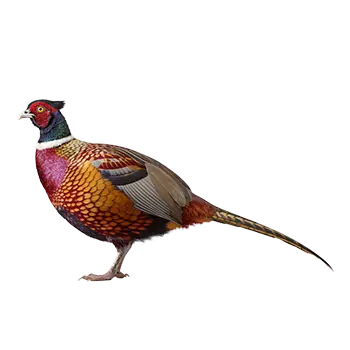

Breeding Readiness & Mate Selection

Ring-necked Pheasants are seasonally photoperiodic breeders, meaning their reproductive systems are activated by increasing day length in spring. In the Northern Hemisphere, the breeding season typically begins in March or April and extends through June, with peak egg production occurring in late April and May. Both males and females reach sexual maturity at approximately one year of age, though some early-hatched birds may show reproductive behavior as early as ten months. Successful breeding in captivity requires careful planning that begins weeks or even months before the first egg is expected.

Mate selection should prioritize genetic health, physical soundness, and temperament. Males selected for breeding should display vigorous courtship behavior, bright and well-formed plumage, strong leg structure, and good body condition without obesity. Hens should be at a healthy weight, free of chronic health issues, and have a history of good egg production if they have bred previously. Inbreeding should be avoided by maintaining records of parentage and rotating males between breeding groups on a regular cycle, typically every two to three years, to maintain genetic diversity within the flock.

The ideal mating ratio for Ring-necked Pheasants in captivity is one male to six to ten hens, though this ratio can be adjusted based on the individual male's vigor and fertility. A highly active, dominant male can successfully service a larger harem, while a less assertive male may produce better fertility rates with a smaller group of hens. Pairing a single male with a single hen is possible but generally produces lower overall egg yields than the harem system, as the hen may be subject to excessive mating attention without the buffer that a larger group provides.

Pre-season conditioning of breeding stock is essential for maximizing fertility and egg quality. Approximately six to eight weeks before the anticipated onset of laying, transition breeding birds from the maintenance diet to a breeder ration containing 18 to 20 percent protein with elevated levels of calcium, phosphorus, and vitamins A, D3, and E. These nutrients are critical for eggshell formation, embryonic development, and the hens' ability to sustain the physiological demands of a laying season that may span two to three months. Males benefit from the breeder diet as well, as adequate nutrition supports sperm production and the energy demands of constant courtship activity.

The Breeding Pen Environment

The physical environment in which Ring-necked Pheasants are housed during the breeding season has a direct and measurable impact on fertility rates, egg production, hen welfare, and overall breeding success. The breeding pen must accommodate the male's territorial behavior, provide adequate cover for hens to escape aggressive mating attempts, and include suitable nest sites that encourage the hens to lay in accessible, clean locations rather than hiding eggs in inaccessible corners.

Breeding pen dimensions should provide at least 20 to 25 square feet per bird, with a minimum total area of approximately 200 square feet for a standard breeding group. The pen must include abundant visual barriers and cover structures, which serve a particularly important function during the breeding season. A male in breeding condition is persistently attentive and can harass individual hens to the point of feather loss, scalp injuries, and stress-related immunosuppression if the hens have no means of avoiding his attention. Brush piles, planted shrubs, lean-to shelters, and stacked branches create the refuge zones that hens depend upon for rest and recovery between mating events.

Nest site provision influences both egg recovery rates and egg quality. Some hens will lay in open nest boxes or sheltered hollows provided for the purpose, while others prefer to create their own scrapes in secluded corners of the pen. Placing several nest structures in quiet, sheltered areas of the pen, lined with straw or dried grass, encourages hens to use designated sites. These structures should be partially enclosed to provide a sense of security but open enough for the caretaker to check for eggs without disturbing the hen. Egg collection should occur at least once daily, ideally at a consistent time, to minimize the risk of eggs being damaged by foot traffic, soiled by droppings, or chilled during cool nights.

Ground substrate in the breeding pen should be managed with particular care during the laying season. Wet, muddy conditions contribute to dirty eggs, which have a reduced hatch rate due to bacterial contamination penetrating the shell. Sand, gravel, or well-drained soil surfaces that dry quickly after rain are ideal. In areas that tend to remain damp, raised platforms or deep straw beds provide cleaner nesting alternatives. The pen should be inspected daily for drainage problems, standing water, and substrate deterioration.

Lighting manipulation can be used to advance or extend the laying season in captive Ring-necked Pheasants. Gradually increasing the artificial light period by 15 to 30 minutes per week, starting six to eight weeks before the desired onset of laying, stimulates the photoreceptors in the bird's hypothalamus and triggers the hormonal cascade that initiates reproductive activity. A target photoperiod of 16 to 17 hours of total light, combining natural and artificial sources, is standard practice in commercial pheasant breeding operations. Sudden changes in light duration should be avoided, as abrupt shifts can stress the birds and cause erratic laying patterns.

Courtship & Mating Behavior

The courtship behavior of the Ring-necked Pheasant is among the most elaborate and well-studied of all gallinaceous birds. Understanding the sequence and significance of these behaviors allows caretakers to assess breeding readiness, identify potential problems with mating compatibility, and intervene when the natural process is not proceeding as expected.

The male's courtship repertoire begins with territorial crowing, a loud, distinctive two-syllable call followed by a burst of wing drumming against the flanks. This vocalization serves a dual purpose, advertising the male's location and fitness to hens while warning rival males to maintain their distance. In captivity, where rival males are usually absent, the crowing serves primarily as a stimulus for the hens, signaling the male's breeding condition and readiness to mate. A male that fails to crow regularly during the breeding season may be in suboptimal condition, subordinate by temperament, or experiencing a health issue that is suppressing normal reproductive behavior.

Once a hen's attention is captured, the male transitions to the lateral display, a visually striking sequence in which he positions himself sideways to the hen, lowers the near wing to the ground, fans his tail toward her, and puffs out his breast and neck feathers to maximize his apparent size and showcase his plumage patterns. The facial wattles engorge with blood, becoming brilliantly red and conspicuously swollen. He may circle the hen in this posture, maintaining the lateral orientation to keep his most colorful features on full display. The quality and persistence of this display are honest signals of the male's condition, and hens have been observed to preferentially mate with males that display the longest ear tufts, largest wattles, and most vigorous wing drumming.

Mating itself is brief but physically demanding, particularly for the hen. The male mounts the hen from behind, gripping the feathers of her head or neck with his beak for balance while treading with his feet on her back. Frequent mating, which is normal when a male is housed with a small number of hens, can cause feather loss and skin abrasion on the hen's back and head. These injuries are commonly referred to as treading damage and range from minor feather thinning to raw, bleeding skin in severe cases. Hen saddles, protective fabric covers fitted over the hen's back, are a practical solution in cases where treading damage becomes a welfare concern.

Infertile matings, where copulation occurs but eggs fail to develop, can have multiple causes. The male may be physically incapable of proper cloacal contact due to obesity, leg problems, or excessively long spurs that interfere with mounting. The hen may be unreceptive, crouching incompletely or moving away before contact is achieved. Environmental stressors, nutritional deficiencies, and disease can all reduce fertility in both sexes. If fertility rates are lower than expected, typically below 80 percent for healthy, well-managed breeding groups, a systematic evaluation of male condition, mating behavior, nutrition, and pen environment is warranted.

Egg Laying & Clutch Management

A healthy Ring-necked Pheasant hen in good breeding condition will produce a substantial number of eggs over the course of a laying season. Under optimal conditions with appropriate nutrition and lighting, a single hen may lay 40 to 60 eggs or more during a season that spans approximately 10 to 14 weeks. Egg production typically begins slowly, with one egg every two to three days, and ramps up to a peak rate of approximately one egg per day before gradually tapering off as the season progresses and day length begins to shorten.

Egg collection should be performed at least once daily, and twice daily is preferable during peak production. Frequent collection prevents eggs from accumulating in the nest, which can trigger broodiness in some hens and reduces the time that eggs are exposed to temperature fluctuations, dirt, and potential damage. Eggs should be collected into clean, padded containers and handled gently to avoid hairline cracks in the shell that may not be visible but allow bacterial penetration that will kill the developing embryo.

Proper egg storage is critical for maintaining hatchability. Collected eggs that are not set immediately for incubation should be stored in a cool, humid environment. The ideal storage temperature is 55 to 65 degrees Fahrenheit at a relative humidity of 70 to 80 percent. Eggs should be stored pointed end down and turned at least once daily to prevent the yolk from adhering to the inner shell membrane. Hatchability declines progressively with storage duration, and eggs stored for more than ten to fourteen days show significantly reduced hatch rates. For best results, eggs should be set for incubation within seven days of collection.

Egg quality varies throughout the season and provides useful information about the hen's condition. Early-season eggs may be smaller than mid-season production, which is normal. Shell quality should be smooth, uniformly colored, and free of ridges, pitting, or thin spots. Eggs with visibly abnormal shells, including soft-shelled eggs, severely misshapen eggs, or eggs with rough, chalky deposits, should not be set for incubation, as they rarely hatch successfully and may harbor bacterial contamination that can spread to adjacent eggs in the incubator. A sudden decline in shell quality across multiple hens may indicate a calcium or vitamin D3 deficiency in the breeder diet that needs immediate correction.

Record keeping is essential for effective clutch management. Maintaining a daily log of eggs collected per pen, fertility rates from candling, and hatch results allows the breeder to identify productive and unproductive hens, evaluate male fertility, and make data-driven decisions about which birds to retain for future breeding seasons. Without records, breeding management becomes guesswork, and the opportunity to improve flock performance over successive generations is lost.

Incubation Protocols

Incubation of Ring-necked Pheasant eggs can be accomplished either naturally, using a broody hen of any suitable gallinaceous species, or artificially, using a mechanical incubator. Artificial incubation is by far the more common method in managed breeding programs because it allows precise environmental control, higher egg capacity, and independence from the unpredictable availability of broody hens. The incubation period for Ring-necked Pheasant eggs is 23 to 25 days, with most eggs hatching on day 24 under standard conditions.

The incubator should be set up, calibrated, and running at stable conditions for at least 24 to 48 hours before the first eggs are placed. The target incubation temperature for still-air incubators is 101 to 102 degrees Fahrenheit, measured at the top of the eggs. Forced-air incubators, which circulate air uniformly throughout the cabinet, should be set to 99.5 to 100 degrees Fahrenheit. Even minor deviations from the correct temperature can have significant effects on embryonic development. Temperatures consistently one degree too high accelerate development and produce weak, early-hatching chicks, while temperatures one degree too low slow development and can result in late hatches, malpositioned embryos, and reduced hatch rates.

Humidity management during incubation is equally critical. The target relative humidity for Ring-necked Pheasant eggs during the first 21 days of incubation is 55 to 60 percent, which corresponds to a wet-bulb thermometer reading of approximately 84 to 86 degrees Fahrenheit. Proper humidity controls the rate of moisture loss through the eggshell, which must proceed at a pace that creates an air cell of the correct size for the chick to pip into before hatching. Eggs that lose too much moisture produce dehydrated, undersized chicks, while eggs that retain too much moisture can drown the embryo during the hatching process.

Egg turning is essential during the first 21 days to prevent the developing embryo from adhering to the inner shell membrane. Eggs should be turned a minimum of three times daily, and five to seven times is ideal. Automatic egg turners built into commercial incubators simplify this task and provide more consistent turning intervals than manual methods. Turning should cease on day 21, when the eggs are transferred to a hatcher unit or the incubator humidity is raised to 65 to 70 percent for the final three days before hatching. This elevated humidity softens the shell membrane and facilitates the chick's emergence.

Candling, the process of shining a bright light through the egg to observe embryonic development, should be performed at regular intervals to identify infertile eggs and dead embryos. The first candling at day seven reveals fertile eggs as dark masses with visible blood vessel networks, while infertile eggs appear clear. A second candling at day fourteen confirms continued development. Infertile eggs and early dead embryos should be removed promptly, as they can harbor bacteria that multiply in the warm, humid incubator environment and contaminate viable eggs through a process known as exploding, where gas buildup from bacterial decomposition ruptures the shell.

Hatching & Immediate Post-Hatch Management

The hatching process in Ring-necked Pheasant eggs follows a predictable sequence that begins approximately 24 to 48 hours before the chick fully emerges. The first visible sign of hatching is the pip, a small crack or star-shaped fracture in the shell created by the chick's egg tooth, a small, hard projection on the tip of the upper beak. The pip is typically located at the large end of the egg, where the air cell is situated. After pipping, the chick rests and absorbs the remaining yolk sac before beginning the arduous process of zipping, rotating within the egg while cutting a circumferential line through the shell.

Resist the urge to assist chicks during the hatching process. The physical exertion of breaking free from the shell serves an important developmental function, strengthening the chick's muscles and stimulating respiratory function. Premature intervention, opening the shell manually, can cause hemorrhage from blood vessels in the shell membrane that have not yet fully retracted, and it deprives the chick of the yolk sac absorption that provides critical energy reserves for the first hours of life. Assistance should only be considered if a chick has pipped but made no further progress for 24 hours or more, and even then, it should be performed with extreme care by an experienced individual.

Once hatched, the chick should remain in the hatcher unit until it is completely dry and fluffy, which typically takes six to twelve hours. The hatcher environment should be maintained at 97 to 99 degrees Fahrenheit with humidity at 65 to 70 percent during this drying period. Moving wet chicks to a cooler environment causes rapid chilling and can be fatal. As chicks dry, they become increasingly active, standing, walking, and beginning to peck at their surroundings.

Transfer from the hatcher to a prepared brooder should occur within 24 hours of hatching. The brooder should be preheated to 95 degrees Fahrenheit, with food and water already in place. Each chick's beak should be dipped gently into the waterer upon placement to imprint the water source location. First feedings can begin as soon as the chick shows interest in pecking, which typically occurs within the first 12 to 24 hours. A high-protein game bird starter crumble offered on flat surfaces ensures easy access for the tiny chicks.

Hatch rate evaluation provides essential feedback on the breeding program's effectiveness. A well-managed Ring-necked Pheasant breeding operation should achieve hatch rates of 75 to 85 percent of fertile eggs. Rates consistently below this range indicate problems with incubation parameters, egg handling, storage conditions, parental nutrition, or a combination of these factors. Conducting breakout analysis on unhatched eggs, carefully opening them to determine the stage at which development ceased, provides diagnostic information that can guide corrective action for subsequent incubation cycles.

Reproductive Health & Complications

Breeding places unique physiological demands on both male and female Ring-necked Pheasants, and reproductive health complications, while not universal, are common enough that every breeder should be prepared to recognize and respond to them. Many reproductive problems are preventable through proper nutrition, appropriate mating ratios, and attentive management, but some will occur even under the best conditions.

Egg binding, the retention of a fully formed egg within the oviduct, is one of the most urgent reproductive emergencies in laying hens. A hen experiencing egg binding may strain repeatedly without producing an egg, adopt a wide-legged penguin-like stance, appear lethargic, refuse food, or sit in the nest for prolonged periods without laying. Calcium deficiency is the most common underlying cause, as the muscular contractions required to expel the egg depend on adequate calcium availability. Mild cases may resolve with the application of warmth, humidity, and calcium supplementation, but severe or prolonged egg binding is a life-threatening emergency that requires immediate veterinary intervention, potentially including manual extraction or surgical removal of the retained egg.

Prolapsed oviduct, where a portion of the reproductive tract protrudes through the vent, is a related complication that can occur during or after the passage of an unusually large egg. The prolapsed tissue appears as a red, moist mass visible at the vent. This condition requires immediate veterinary attention to clean, reduce, and stabilize the prolapse. If left untreated, the exposed tissue dries, becomes infected, or is pecked by pen mates, any of which can be fatal. Hens that experience a prolapse should be removed from the breeding program for the remainder of the season and evaluated carefully before being bred again.

Spur injuries inflicted by the male during mating can range from superficial scratches to deep lacerations on the hen's flanks and back. Males with particularly long, sharp spurs may need their spurs trimmed or blunted before the breeding season begins. This can be accomplished by carefully filing or using a heated blade to remove the sharp tip, taking care not to cut into the living core of the spur, which contains blood vessels and nerve endings. Alternatively, spur covers or sleeves made of rubber or soft leather can be applied to reduce the risk of injury.

Male infertility can manifest at any point during the breeding season and has multiple potential causes. Obesity is one of the most common, as excess abdominal fat physically impedes proper cloacal contact during mating. Advancing age reduces sperm quality and quantity. Nutritional deficiencies, particularly in vitamin E and selenium, impair spermatogenesis. Chronic stress from overcrowding, frequent disturbances, or poor pen conditions suppresses reproductive hormones. When fertility drops unexpectedly, evaluating the male's physical condition, diet, and environment systematically usually identifies the contributing factor. Replacing an infertile male mid-season requires a settling-in period during which the new male establishes dominance and the hens accept his presence, so fertility monitoring throughout the season allows timely intervention before too much of the laying period is lost.

Always consult a qualified professional before making any health-related decisions. This content is provided for informational reference only and should not replace professional guidance specific to your animal.