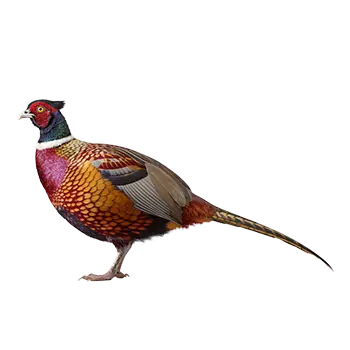

A Ring-necked Pheasant reaches full physical maturity by approximately one year of age, entering a prime period that, under the protection of captive husbandry, can extend for several years. The adult cock bird in peak condition is one of the most visually spectacular birds in aviculture, carrying an iridescent bottle-green head with brilliant red facial wattles, a bold white neck ring, a richly burnished copper and gold breast, and long, barred tail feathers that can measure over twenty inches in length. The adult hen, while more modestly attired, displays the intricately patterned brown, buff, and black plumage that represents one of nature's finest examples of concealing coloration.
Assessing body condition in adult Ring-necked Pheasants requires a practiced hand and eye. The keel bone, the prominent ridge of the breastbone, is the primary reference point. In a bird at ideal weight, the keel should be palpable but flanked by firm breast muscle on either side. A sharply prominent keel with little muscle coverage indicates underweight, while a keel that is difficult to locate beneath heavy muscle and fat deposits suggests the bird is overweight. Both extremes carry health consequences. Underweight birds have reduced disease resistance and poor feather quality, while obese birds are predisposed to fatty liver disease, reproductive failure, and reduced mobility.
The annual molt is one of the most significant physiological events in the adult pheasant's year. Beginning in late summer after the breeding season concludes, the molt involves the systematic replacement of every feather on the bird's body over a period of several weeks to a few months. During this time, the birds appear disheveled and may show patches of bare skin where old feathers have dropped and new ones have not yet emerged. Males lose their spectacular breeding plumage temporarily and may look remarkably plain until the new feathers grow in. This is a period of high nutritional demand, and the diet must support the intensive protein requirements of feather synthesis.
Maintaining prime condition in adult pheasants requires attention to the interplay between nutrition, housing, parasite management, and stress reduction. A bird that is well-fed but housed in a cramped, barren pen will not achieve peak condition. Equally, a bird in a spacious, enriched environment that receives an inadequate diet will show the effects in dull plumage, poor muscle tone, and reduced vitality. The goal of adult-stage management is to create conditions that allow the bird's natural hardiness and beauty to express themselves fully.