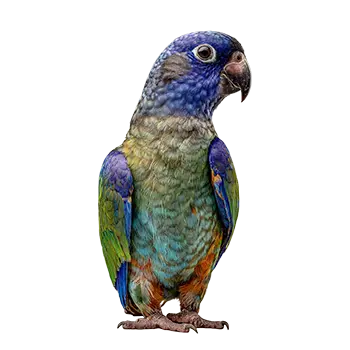

The juvenile stage of the Blue-headed Pionus begins around eight to ten weeks of age, as the chick transitions from a dependent nestling into a young bird developing its independence. During this period, the bird reaches its full body size, though it retains its juvenile plumage. Young Blue-headed Pionus parrots lack the vivid cobalt blue head coloring of adults, instead displaying a more muted, greenish-blue hue on the head and face that deepens gradually over the first one to two years.
Feather development continues actively during the juvenile phase. The bird will go through its first major molt, typically between four and six months of age, shedding baby feathers and replacing them with a more complete and durable set. This molting process can be itchy and uncomfortable for the bird, which may lead to increased preening or mild irritability. Ensuring adequate nutrition and humidity during this time supports healthy feather growth and minimizes stress.
Physically, the juvenile Pionus is building muscle strength and coordination through active play and flight. The bird's beak and feet continue to harden and develop the grip strength needed for climbing, foraging, and manipulating objects. Regular opportunities for movement and exploration are important for building the physical fitness and motor skills that will serve the bird throughout its long life.
Weight should be monitored periodically during the juvenile stage to ensure the bird is maintaining a healthy body condition. A gram scale remains a valuable tool, and monthly weigh-ins provide a useful baseline. Juvenile Pionus parrots typically weigh between 200 and 280 grams when fully grown, though individual variation exists. Sudden weight changes in either direction should be discussed with an avian veterinarian.