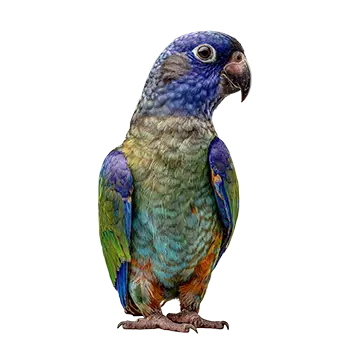

Determining when a Blue-headed Pionus transitions from its prime adult years into the senior stage is not as straightforward as it is with many other companion animals. With a potential lifespan of 25 to 40 years, these parrots are considered long-lived among medium-sized species. Generally, a Blue-headed Pionus may begin to show signs of aging around 20 to 25 years of age, though individual variation is significant and heavily influenced by genetics, diet, environment, and the quality of care received throughout its life.
The onset of the senior stage is typically gradual rather than sudden. Owners may notice subtle shifts in behavior, energy level, and physical condition over a period of months or years. The bird may become less active, sleep more, or show decreased interest in play and exploration. These changes are often so incremental that they can be easy to overlook or attribute to normal day-to-day variation rather than the beginning of an age-related trend.
Unlike mammals, birds do not develop gray hair or other immediately visible markers of aging. However, changes in feather quality, such as duller coloration, slower molt cycles, or incomplete feather replacement, can be indicative of advancing age. The bird's beak and nails may grow at altered rates, and overall muscle tone may begin to diminish. Periodic veterinary assessments become increasingly important during this transitional period to differentiate normal aging from the onset of treatable medical conditions.
Establishing a clear understanding of your bird's baseline health parameters during its adult years makes it much easier to recognize when age-related changes begin. Regular weight monitoring, annual blood panels, and detailed behavioral observations provide the reference points against which senior changes can be measured and evaluated.