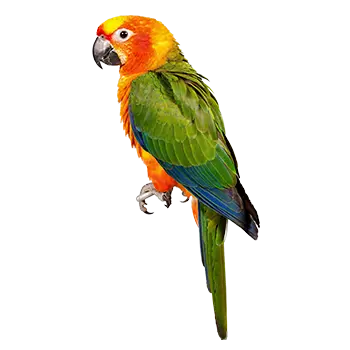

The First 24 Hours

Jenday Conure chicks hatch after an incubation period of approximately 24 to 26 days, arriving into the world as tiny, nearly helpless creatures. A freshly hatched Jenday weighs roughly 5 to 7 grams and is covered in sparse white down that offers almost no insulation. The chick's eyes are sealed shut, its limbs are weak, and it relies entirely on its parents or a human caregiver for warmth, food, and protection. Despite their small size, Jenday chicks are surprisingly vocal from the start, emitting soft begging calls that help parents locate them in the nest.

In breeder-managed clutches where parents are raising the chicks, the hen typically begins feeding within the first few hours after hatching. She regurgitates a thin, nutrient-rich substance from her crop that provides the chick with essential proteins, fats, and beneficial gut flora. The cock bird often assists by feeding the hen so she can remain with the clutch. Interfering with this process unnecessarily can disrupt the pair's natural rhythm, so observation from a respectful distance is preferable during the first day unless a clear problem arises.

For hand-rearing situations, the first feeding should be delayed until the yolk sac has been fully absorbed, which generally occurs between six and twelve hours after the chick emerges from the shell. Offering formula before the yolk sac is depleted can overwhelm the chick's immature digestive system and lead to bacterial infections or crop stasis. The initial hand-feeding should consist of a very thin, well-hydrated formula to gently introduce the crop to processing external nutrition.

Monitor the chick closely throughout this critical window. A healthy newborn Jenday will exhibit a feeding response when the corners of its beak are lightly touched, maintain a pinkish skin tone that indicates adequate circulation, and rest quietly between feeding attempts. Any signs of cyanosis, persistent shivering despite adequate warmth, failure to exhibit a feeding response, or an obviously distended abdomen warrant immediate consultation with an avian veterinarian.

Feeding & Nutrition

Proper nutrition during the newborn period lays the groundwork for everything that follows in a Jenday Conure's life, from the brilliance of its adult plumage to the strength of its skeletal system and the resilience of its immune defenses. Jendays are small conures with fast metabolisms, and their chicks require frequent, carefully prepared meals to sustain the rapid growth rate characteristic of this species. Whether the chicks are parent-raised or hand-fed, close attention to nutritional quality and feeding technique is non-negotiable.

Hand-fed Jenday Conure chicks should receive a high-quality commercial hand-feeding formula specifically designed for parrots. The formula must be freshly mixed for each feeding session and brought to a temperature between 104 and 108 degrees Fahrenheit, verified with a reliable thermometer. Formula that falls below this range can slow crop motility and lead to sour crop, while formula served too hot can cause thermal burns to the delicate crop lining that may not become apparent until significant damage has occurred.

Feeding frequency during the first week is demanding. Newborn Jendays typically require feeding every two to two and a half hours from early morning through late evening. Some breeders provide an additional late-night feeding during the first three to four days, though this can be dropped once the chick demonstrates consistent weight gain. By the second week, feeding intervals can usually be extended to every three hours as the crop's capacity increases. Maintain a detailed log recording every feeding time, the volume of formula consumed, and the chick's morning weight before the first feeding of the day.

The feeding instrument, whether a bent-tip syringe or a small spoon, must be thoroughly cleaned and disinfected between every use. Syringe feeding requires a gentle, steady hand. Deliver the formula slowly from the chick's left side, directing it toward the right side of the mouth where the esophageal opening is located. Allow the chick to swallow at its own pace, following its natural bobbing and pumping rhythm. Forcing formula risks aspiration into the trachea, which can cause fatal pneumonia within hours.

Parent-raised chicks benefit from a diet that the parents select and process themselves, but the breeder's role is far from passive. Ensure the breeding pair has access to a nutritionally complete diet that includes a high-quality pellet base, fresh vegetables, sprouted seeds, and a calcium source such as cuttlebone. The quality of the parents' diet directly determines the quality of what they feed their chicks. Weigh parent-raised chicks daily at a consistent time to confirm steady gains, and be prepared to supplement with hand-feeding if any chick falls behind its siblings or if the parents show signs of neglecting a particular offspring.

Developmental Milestones

Jenday Conure chicks progress through a predictable series of developmental stages during their first weeks, and familiarity with these milestones allows caregivers to identify deviations early. As members of the Aratinga genus, Jendays are altricial at hatching, meaning they are born in a highly undeveloped state and undergo significant physical transformation during the nesting period. Growth is rapid when nutrition and environmental conditions are optimal.

During the first week, the chick's activity is limited almost entirely to feeding responses and sleep. The body is translucent enough that the crop contents and internal organs are partially visible through the skin. Sparse natal down covers the back and head, offering minimal insulation. Weight gain should be measurable daily, with healthy chicks gaining between 5 and 10 percent of their body weight each day during this initial growth surge.

Between days 8 and 14, the eyes begin to open in narrow slits, gradually widening over several days until they are fully open. Pin feathers start to erupt along the wings and tail tract, appearing as small, sheathed quills beneath the skin. The chick becomes more responsive to sound and light, turning its head toward stimuli and producing a wider repertoire of vocalizations beyond the basic feeding begs. Grip strength in the feet improves noticeably, and the chick begins making rudimentary attempts to right itself when placed on its side.

Weeks three through five bring the most dramatic visual transformation. Contour feathers emerge rapidly, and the first hints of the Jenday's characteristic golden-yellow and green coloration become visible beneath the feather sheaths. The chick's body proportions begin to shift as the head, which initially appeared disproportionately large, comes into better balance with the growing body. Wing flapping exercises begin, strengthening the pectoral muscles in preparation for eventual flight. By the end of the fifth week, the chick is substantially feathered, increasingly mobile within the nest box, and beginning to show the curious, bold temperament that defines the Jenday Conure as a species.

Temperature & Environment

Environmental management is the cornerstone of successfully rearing Jenday Conure chicks, particularly during the first two weeks when the chicks have virtually no capacity to regulate their own body temperature. The brooder or nest box serves as an artificial microclimate, and its conditions must be maintained with the same rigor a neonatal intensive care unit would demand. Small conure chicks are especially vulnerable to temperature swings because their high surface-area-to-mass ratio causes rapid heat loss.

For newly hatched Jenday Conures, the brooder temperature should be maintained between 95 and 97 degrees Fahrenheit. A digital thermometer with a probe placed at chick level provides the most accurate readings. Avoid relying on the thermostat setting alone, as ambient room conditions, brooder design, and the number of chicks present all influence the actual temperature at the level where the chicks rest. As feathering progresses, reduce the temperature gradually by one to two degrees every three to four days, reaching approximately 80 to 85 degrees by the fourth or fifth week.

Humidity plays an equally important role and is frequently the factor that less experienced breeders overlook. Relative humidity in the brooder should be maintained between 55 and 65 percent. Insufficient humidity contributes to dehydration, constrictive toe bands from dried skin, and malformed feather development. Excessively high humidity creates conditions favorable for bacterial proliferation and fungal growth, both of which can be devastating to immunologically immature chicks. A standalone digital hygrometer provides reliable monitoring.

The brooder substrate and overall cleanliness deserve careful consideration. During the first two weeks, paper towels or soft cloth liners changed at least twice daily offer a safe, hygienic surface. Avoid particulate bedding materials such as wood shavings, corn cob, or walnut shell during this stage, as chicks may ingest small particles that cause crop impaction or intestinal obstruction. The brooder walls should be smooth and non-porous for easy disinfection. Clean the entire brooder with an avian-safe disinfectant daily, rinsing thoroughly and allowing surfaces to dry completely before returning the chicks.

As the chicks grow and become more mobile, the brooder setup should evolve to accommodate their increasing activity. By the third week, a low perch or textured surface can be introduced to encourage foot development and grip strength. Ensure that the brooder remains draft-free at all stages, as air currents can rapidly chill a chick even when the ambient temperature reads correctly. Position the brooder away from windows, exterior walls, and air conditioning vents.

Early Socialization

Jenday Conures are naturally gregarious, affectionate birds that thrive on social interaction, and the foundations of this social temperament are established during the first weeks of life. Early socialization determines whether a Jenday grows into the confident, outgoing companion the species is celebrated for or develops into a fearful, reactive bird that struggles with new experiences. The effort invested during the newborn period pays dividends for decades, given the Jenday's potential lifespan of 25 to 30 years.

Hand-fed chicks receive continuous socialization through the feeding process itself. Every feeding session is an interaction in which the chick learns to associate human hands, voices, and presence with comfort and sustenance. Speak to the chick in calm, consistent tones during each feeding. Allow it to rest in your cupped hands after eating, absorbing your warmth and the steady rhythm of your breathing. These seemingly simple moments build a neural framework of trust that shapes the bird's response to humans for the rest of its life.

Beginning in the second week as the eyes open, gradually introduce the chick to gentle sensory experiences beyond the brooder. Short handling sessions of five to ten minutes, separate from feeding, help the chick acclimate to being touched, held in different positions, and exposed to the ambient sounds of a household. Introduce these stimuli progressively rather than all at once. A radio playing softly nearby, the sound of dishes in a kitchen, or quiet conversation between household members all contribute to building the chick's tolerance for the sensory environment of a typical home.

For parent-raised Jenday chicks, socialization requires deliberate human involvement beginning around two weeks of age. Brief daily handling sessions allow the chicks to experience human contact while still benefiting from the social and behavioral education their parents provide. The goal is complementary socialization, not replacement of parental rearing. Remove the chick from the nest box for no more than ten to fifteen minutes at a time, and return it promptly if it shows signs of distress or chilling. As the chicks grow, handling sessions can gradually lengthen and include exposure to a broader range of people and gentle stimuli.

Health Screening & Vet Visits

Establishing veterinary care for a Jenday Conure chick as early as possible provides a health baseline that proves invaluable as the bird grows. Avian medicine is a specialized field, and not all veterinary practices have the equipment or expertise to properly evaluate psittacine neonates. Identify a veterinarian who is board-certified in avian practice or who has documented experience with parrot species well before the breeding season begins, so that the relationship is already in place when the chicks arrive.

The first veterinary examination should occur within the first few days of life for hand-raised chicks, or within the first week for parent-raised chicks that are developing normally. The veterinarian will perform a thorough physical assessment, evaluating the chick's hydration status, body condition, skin color, and musculoskeletal development. A crop swab is typically collected to culture for bacterial or fungal overgrowth, and a fecal sample is examined for parasitic organisms. These baseline diagnostics catch subclinical infections before they escalate into life-threatening emergencies.

Depending on the chick's origin and the veterinarian's clinical judgment, additional testing may be recommended. Polymerase chain reaction testing for Psittacine Beak and Feather Disease, Avian Polyomavirus, and Chlamydia psittaci is commonly advised, particularly for chicks from collections where the flock's disease status has not been recently verified. These diseases carry serious implications not only for the individual chick but for any other birds in the household or breeding facility. Identifying a positive result early allows for appropriate isolation, treatment where available, and informed decision-making.

Between formal veterinary appointments, the caregiver serves as the primary health monitor. Daily weight tracking using a gram-scale accurate to at least one gram is the single most sensitive tool for detecting early illness. A Jenday chick that fails to gain weight for two consecutive days, or that loses weight, requires prompt veterinary evaluation even if no other symptoms are apparent. Record the color, consistency, and frequency of droppings at each feeding, noting any deviations from the normal pattern of well-formed dark fecal matter, white urates, and a small volume of clear liquid urine.

When to Worry

Recognizing the difference between normal variation and genuine cause for alarm is one of the most critical skills for anyone raising Jenday Conure chicks. Neonatal birds can deteriorate rapidly, and the window between the first subtle signs of illness and a life-threatening crisis can be measured in hours rather than days. Developing a reliable sense of what constitutes normal for your chick, informed by consistent daily observation and record-keeping, is the best defense against losing a chick to a preventable cause.

Crop function is one of the most important indicators of a newborn Jenday's health. After a feeding, the crop should feel soft, warm, and full without being overly distended. The crop should empty steadily over the following two to three hours, depending on the chick's age and the formula consistency. A crop that remains full or feels doughy after the expected emptying time suggests crop stasis, which can result from formula served at an incorrect temperature, bacterial or fungal infection, dehydration, or an environmental temperature that is too low. Crop stasis is a veterinary emergency if it does not resolve within a few hours of corrective measures such as gentle warmth and hydration.

Changes in droppings provide another critical early warning system. Normal Jenday chick droppings during the hand-feeding period consist of a small, formed fecal portion, a white urate component, and a modest amount of clear liquid. Droppings that turn green, yellow, or contain undigested formula suggest digestive dysfunction or infection. Blood in the droppings is always an emergency. A sudden increase in the liquid component without a corresponding increase in fluid intake may indicate kidney stress or systemic infection.

Behavioral changes often precede visible physical symptoms. A chick that was previously vigorous and responsive at feeding time but becomes lethargic, reluctant to feed, or unusually quiet should be evaluated promptly. Conversely, persistent, inconsolable crying that continues despite adequate feeding and warmth can signal pain or discomfort from an underlying condition. Any audible respiratory sounds such as clicking, wheezing, or gurgling are abnormal and require immediate veterinary attention, as respiratory infections in neonatal parrots progress with alarming speed.

Physical abnormalities to watch for include splayed legs, where one or both legs splay outward rather than tucking beneath the body, which can result from improper brooder substrate or nutritional deficiencies. If caught early in the first week or two, splayed legs can often be corrected with hobble braces and substrate improvements. Beak malformations, asymmetric growth, persistent skin discoloration, and swelling around the eyes or nares are additional findings that warrant veterinary consultation without delay.

Always consult a qualified professional before making any health-related decisions. This content is provided for informational reference only and should not replace professional guidance specific to your animal.