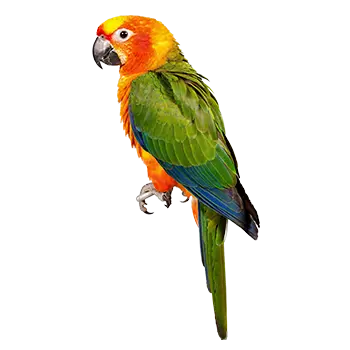

Successful Jenday Conure breeding begins long before the first egg is laid, with careful evaluation of whether the prospective parent birds are physically, genetically, and behaviorally suited for reproduction. Breeding parrots is a serious commitment that demands knowledge, resources, time, and a clear plan for the placement of offspring. Responsible breeders approach the endeavor with the understanding that producing healthy, well-socialized chicks requires far more than placing a male and female together and waiting for nature to take its course.
Jenday Conures reach sexual maturity at approximately two years of age, though most experienced breeders recommend waiting until both birds are at least two to three years old before allowing breeding. Younger birds may be physically capable of producing eggs but often lack the behavioral maturity needed for successful incubation and chick rearing. Both prospective parents should be in excellent health, confirmed through a comprehensive veterinary examination including blood work, disease screening for Psittacine Beak and Feather Disease, Polyomavirus, and Chlamydiosis, and fecal analysis. Birds with active health problems, nutritional deficiencies, or untested disease status should not be bred.
Jenday Conures are monomorphic, meaning males and females are visually indistinguishable, which makes DNA sexing essential for confirming the sex of each bird before pairing. Surgical sexing has largely been replaced by DNA testing from blood or feather samples, which is minimally invasive and highly accurate. Attempting to pair birds without confirmed sex determination wastes time and can create social conflict if two birds of the same sex are housed together with breeding expectations.
Pair compatibility is not guaranteed even when sex is confirmed and both birds are healthy. Jenday Conures are pair-bonding species that form strong mate preferences, and forcing an incompatible pair can result in chronic stress, aggression, or refusal to breed. Introduce prospective pairs gradually, housing them in adjacent cages where they can see and hear each other before sharing a space. Mutual preening, coordinated vocalizations, and proximity-seeking behavior are positive indicators of pair bond formation. Persistent aggression, avoidance, or one bird injuring the other signals incompatibility and the pairing should be dissolved.