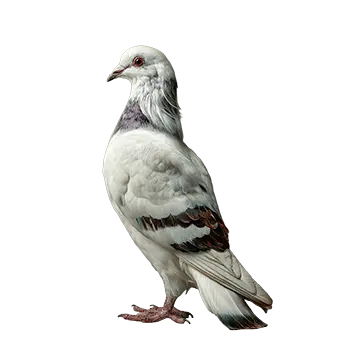

Breeding Jacobin Pigeons begins long before the first egg is laid. Successful breeders invest significant thought into pair selection, balancing genetic complementarity, individual quality, lineage, and practical considerations to produce offspring that advance the standard of the breed. Because the Jacobin is defined almost entirely by its hood structure, pair selection in this breed is more narrowly focused on feather traits than in many other pigeon varieties, though overall health, vigor, and temperament must never be sacrificed in the pursuit of feather perfection.
The ideal breeding pair brings complementary strengths to the match. A cock with exceptional chain height but moderate mane breadth might be paired with a hen whose mane is notably full and symmetrical, with the aim of producing offspring that combine both qualities. Conversely, pairing two birds with the same structural weakness in the hood almost guarantees that the deficiency will be reproduced in the next generation. Experienced Jacobin breeders maintain detailed records of each bird's hood characteristics, body type, color, and show results, as well as the production records of previous pairings, to inform their selection decisions.
Health and vigor must be weighted heavily in pair selection. A bird with an outstanding hood but chronic health problems, poor fertility, or a history of abandoning nests is a poor breeding candidate regardless of its physical beauty. The physical demands of reproduction, including egg production, incubation, and feeding young, are substantial, and both members of the pair must be in robust health to carry out these duties successfully. Evaluate each candidate's body condition, feathering quality, parasite status, and recent health history before pairing.
Age is an important consideration. Jacobin Pigeons typically reach breeding maturity between six and twelve months of age, but most experienced breeders do not pair birds for their first breeding season until they are at least ten to twelve months old and have completed their first adult molt. This allows a more accurate assessment of the bird's hood quality and physical maturity before committing it to the breeding program. At the other end of the age spectrum, fertility and parenting ability decline in senior birds, and most breeders retire birds from active breeding by age seven or eight to avoid the health risks of reproduction in older individuals.
Inbreeding and linebreeding are tools that some Jacobin breeders use to fix desirable traits, but they must be employed with caution and a thorough understanding of the genetic risks. Close inbreeding can concentrate not only the desired hood characteristics but also deleterious recessive genes that affect vigor, fertility, and immune competence. Outcrossing to unrelated lines periodically refreshes genetic diversity and can introduce vitality that tight linebreeding programs sometimes lose.