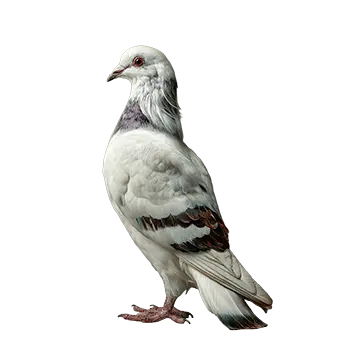

An adult Jacobin Pigeon in its prime years thrives on consistency. Establishing and maintaining a reliable daily routine for feeding, cleaning, health observation, and handling forms the backbone of good husbandry for this ornamental breed. Unlike performance pigeon breeds that require rigorous flight conditioning, the Jacobin's primary demands center on feather preservation, physical health, and behavioral steadiness, all of which benefit from a predictable daily structure.
The day should begin with a visual check of each bird. Observe posture, alertness, and general demeanor before opening feeders or handling any bird. A healthy adult Jacobin is alert, responsive, and moves to its feeding station with purpose. Any bird that remains fluffed, lethargic, or isolated from the group warrants closer examination. Follow the visual check with fresh water, then feed the morning grain ration. Many experienced Jacobin keepers feed twice daily, offering a measured amount in the morning and a smaller supplemental feeding in the late afternoon, rather than providing unlimited free-choice feed that can lead to obesity and selective eating.
Loft cleaning should be performed daily, with a thorough scraping of perches, floors, and nest areas. In Jacobin lofts, cleanliness is not merely a general health measure but a feather quality imperative. The hood feathers trail close to surfaces that the bird contacts during roosting and daily activity, and accumulated droppings or damp bedding will soil, stain, and degrade the hood over time. A daily cleaning schedule keeps the loft environment dry and hygienic, reducing pathogen loads and keeping the birds' plumage in show-ready condition.
Handling should be a regular part of the daily routine even when no shows are imminent. Brief daily handling sessions of two to three minutes per bird maintain the bird's comfort with human contact, allow you to inspect the hood and body condition, and provide an opportunity to check for external parasites, foot injuries, or early signs of illness. Consistent handling also prevents the regression in tameness that can occur when show birds are left unhandled for extended periods between exhibition seasons.