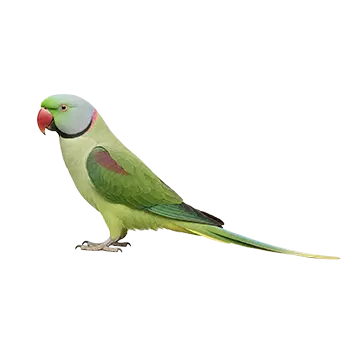

Derbyan Parakeet chicks hatch after an incubation period of approximately 23 to 28 days, emerging as small, nearly helpless creatures with closed eyes and sparse, pale down covering their pinkish skin. A healthy newborn typically weighs between 8 and 12 grams at hatching, making it one of the larger Psittacula chicks but still remarkably fragile. The chick will be wet from the amniotic fluid upon emergence, and the hen or breeder should allow it to dry naturally in the warmth of the nest box or brooder before attempting any handling or intervention.
In parent-raised clutches, the hen will begin feeding the chick within the first several hours after it emerges from the shell. The initial feedings consist of crop milk and partially digested food that deliver essential nutrients, beneficial gut bacteria, and antibodies that help establish the chick's immune system. The cock bird typically feeds the hen during this period, allowing her to remain on the nest and maintain the constant warmth the newborn requires. Disturbing the nest box during these first hours should be avoided unless there is a clear indication that the hen has rejected the chick or is failing to feed.
For hand-raised chicks, the first feeding should not be attempted until the yolk sac has been fully absorbed, which generally takes between eight and twelve hours after hatching. Attempting to feed before the yolk sac is absorbed can cause serious digestive complications, including bacterial infections and crop stasis. The first hand-feeding should be a small volume of thin, well-hydrated formula to introduce the chick's digestive system to external nutrition gradually. Use a calibrated syringe and ensure the formula temperature is between 104 and 108 degrees Fahrenheit.
The brooder environment must be established and stabilized before the chick arrives. For the first 24 hours, maintain the brooder temperature between 96 and 98 degrees Fahrenheit with relative humidity of 60 to 65 percent. Derbyan Parakeets originate from high-altitude regions of the eastern Himalayas and southwestern China, but newborn chicks lack the thermoregulatory capacity of adults and are just as vulnerable to temperature fluctuations as any other psittacine neonate. A digital thermometer and hygrometer placed at chick level inside the brooder provide accurate readings that wall-mounted instruments cannot match.