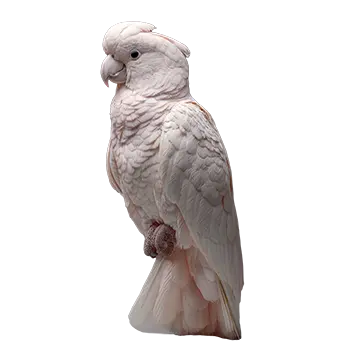

The juvenile phase of a Goffin's Cockatoo begins once the bird is fully feathered and weaned, typically around three to four months of age, and extends through the first two to three years of life. During this time, the bird undergoes significant physical maturation, though growth in overall size slows considerably compared to the rapid changes seen during the neonatal period. The skeletal structure continues to strengthen, flight muscles develop more fully, and the bird achieves its adult weight range of roughly 250 to 400 grams.
One of the most noticeable physical changes during this period is the development of the eyes. Juvenile Goffin's Cockatoos typically have dark brown or black irises that gradually lighten over time. In many individuals, the iris begins transitioning to a lighter brown or reddish-brown hue during the first year, with females often developing a distinctly reddish-brown iris while males tend to retain a darker coloration. This eye color change is one of the few visual cues for determining sex, though it is not entirely reliable and DNA testing remains the most accurate method.
Feather quality and condition are important indicators of health during the juvenile stage. The bird will go through its first major molt, replacing baby feathers with a more mature plumage. This process can be gradual and may cause some discomfort, leading the bird to preen more frequently or become slightly irritable. Ensure the bird receives adequate nutrition and bathing opportunities to support healthy feather development during molting.
Regular weight monitoring should continue through the juvenile period, though daily weigh-ins can transition to weekly checks once the bird is stable and thriving. Sudden weight loss or failure to maintain a healthy weight range can indicate illness, stress, or dietary inadequacy. A kitchen gram scale remains an essential tool for any cockatoo owner during this developmental stage.