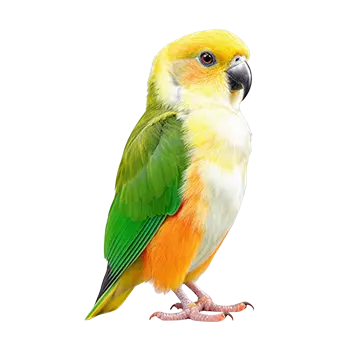

The juvenile stage of a white-bellied caique is a period of remarkable physical transformation. By the time the chick reaches approximately eight to ten weeks, the majority of its adult plumage has emerged, though the colors may appear slightly muted compared to a fully mature bird. The characteristic green wings, white belly, and orange-yellow head and thigh feathers become increasingly vivid as the bird matures through its first year. Juvenile caiques can often be identified by darker or dusky markings on the head that gradually lighten with age.
Weight gain during this stage follows a predictable arc. The bird will approach its adult weight of roughly 150 to 170 grams during the first few months, though some individuals may fluctuate as they transition from hand-feeding formula to solid foods. Monitoring weight regularly remains important during this period, as drops during weaning are normal within a narrow range but sustained losses indicate a problem with the transition.
The beak and feet continue to strengthen throughout the juvenile period. Caiques are famously active birds that use their beaks and feet extensively for climbing, playing, and exploring. Providing appropriate surfaces and textures for the young bird to grip and chew supports healthy development of these structures. The beak may appear slightly oversized relative to the head during early juvenility but will come into proportion as the bird reaches its full adult dimensions.
Flight feathers reach functional length during this stage, and the young caique will begin to develop its flight skills if wing feathers are left intact. Even short, supervised flights within a safe indoor space contribute significantly to muscle development, coordination, and the bird's overall confidence. The physical strength and agility that white-bellied caiques are known for begins to emerge clearly during the juvenile months.