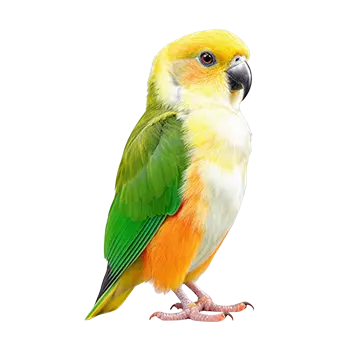

Breeding Readiness

White-bellied caiques reach sexual maturity between two and three years of age, though this does not mean they are immediately ready for breeding. Responsible breeders wait until both the male and female are fully mature, in excellent health, and have been screened for common avian diseases before allowing a breeding attempt. A pre-breeding veterinary examination should include blood work, screening for polyomavirus, psittacine beak and feather disease, and chlamydiosis, as well as a thorough physical assessment.

The pair must also be confirmed as a true male-female pair through DNA sexing, as white-bellied caiques are sexually monomorphic, meaning males and females are virtually identical in external appearance. Relying on behavioral cues alone to determine sex is unreliable and has led to many frustrated breeders discovering they have a same-sex pair only after prolonged failure to produce fertile eggs.

Beyond physical maturity and health clearance, the birds must demonstrate genuine pair bonding. A compatible caique pair will engage in mutual preening, share food, roost close together, and show coordinated behavioral patterns. Introducing two caiques and expecting immediate breeding is unrealistic. Pair bonding can take weeks to months, and in some cases, two individuals simply do not develop the compatibility needed for successful breeding regardless of how long they are housed together.

The breeder's own readiness is equally important. Breeding caiques requires a significant commitment of time, resources, and knowledge. The ability to hand-feed chicks if necessary, access to an avian veterinarian experienced with breeding situations, and a clear plan for the responsible placement of offspring should all be established before breeding is attempted.

Hormonal Cycles & Breeding Triggers

In their native range across South America, white-bellied caiques breed seasonally, typically during the spring months when daylight increases and food resources become more abundant. In captivity, breeding behavior can be triggered or encouraged by manipulating environmental conditions to simulate these natural seasonal changes. Gradually increasing the photoperiod to approximately 12 to 14 hours of light per day, offering a diet enriched with nutrient-dense fresh foods, and providing increased humidity can all serve as breeding triggers.

Hormonal changes in breeding-condition caiques are often dramatic. The birds may become more territorial, especially around the cage and nesting area. Vocalizations frequently increase in volume and frequency. Both males and females may display courtship behaviors including eye pinning, head bobbing, wing fluttering, and regurgitation directed at the mate. These behaviors are normal and expected signs that the pair is cycling into breeding condition.

Not all hormonal surges result in successful breeding attempts, and it is not uncommon for a pair to go through one or more cycles before producing eggs. First-time parents in particular may display all the behavioral signs of breeding readiness without following through to egg laying, or they may lay eggs but fail to incubate them properly. Patience and careful observation are essential, as interfering too early or too aggressively can disrupt the natural process.

It is worth noting that single female caiques kept as pets can also come into breeding condition and may lay infertile eggs even without a male present. Chronic egg laying in single hens can deplete calcium reserves and lead to serious health complications including egg binding. If a pet caique begins laying eggs repeatedly, consult an avian veterinarian about environmental modifications and potential medical interventions to discourage the behavior.

Nesting & Egg Laying

Providing an appropriate nest box is essential for breeding success. White-bellied caiques prefer a deep, enclosed nest box that mimics the tree cavities they use in the wild. A wooden box approximately 10 inches square with a depth of 18 to 24 inches and an entrance hole of about 3 inches in diameter is typically suitable. The interior should be lined with untreated wood shavings or a similar safe substrate that the hen can arrange to her satisfaction.

The nest box should be mounted high on the outside of the cage or enclosure, as caiques feel more secure nesting at elevated positions. Once the box is introduced, the pair will typically begin inspecting and preparing it within days. The hen may spend increasing amounts of time inside the box, and the male often stands guard at or near the entrance. These behaviors indicate the pair is progressing toward egg laying.

White-bellied caiques typically lay clutches of two to four eggs, with each egg laid approximately two days apart. Incubation usually begins after the second or third egg is laid and lasts approximately 25 to 27 days. The hen does the majority of the incubating, leaving the nest only briefly for feeding and elimination, while the male remains nearby and may feed the hen during her time on the eggs.

During the laying and incubation period, the breeding pair should be disturbed as little as possible. Nest box inspections should be brief and conducted only when the hen is off the eggs to eat. Excessive disturbance can cause the pair to abandon the eggs. Maintaining a calm, consistent environment and ensuring the pair has access to ample food and fresh water throughout this period supports the best possible outcome.

Incubation & Hatching

Successful incubation depends on the hen maintaining consistent temperature and humidity within the nest box. The eggs must be kept at approximately 99 to 100 degrees Fahrenheit with adequate humidity to prevent the membranes from drying out. The hen instinctively turns the eggs regularly to ensure even development. Breeders who candle the eggs, which involves briefly shining a small light through the shell to check for embryonic development, should do so sparingly and with a steady hand to avoid damaging the delicate embryo.

Candling at approximately seven to ten days of incubation can reveal whether the eggs are fertile. Fertile eggs will show visible blood vessel networks and a developing embryo, while infertile eggs appear clear or show only a small, stationary spot. Removing clearly infertile eggs after confirmation reduces the hen's incubation burden and allows her to focus her energy on viable eggs.

As the hatch date approaches, the developing chick will begin to pip, creating a small hole in the shell through which it breathes and begins the slow process of breaking free. The hatching process can take 24 to 48 hours from the first pip, and it is critical not to assist the chick unless absolutely necessary and only under veterinary guidance. Premature assistance can cause bleeding from blood vessels in the membrane that have not yet been fully absorbed.

Newly hatched caique chicks are altricial, meaning they are helpless, blind, and nearly featherless. If the parents are attentive and begin feeding the hatchlings promptly, the chicks can be left with the parents for rearing. However, breeders who plan to hand-raise should have their brooder, formula, and feeding equipment prepared well in advance, as the transition from nest to hand-feeding should be executed smoothly and without delay once the decision is made.

Chick Rearing & Parental Care

Parent-raised caique chicks benefit from the natural feeding rhythms, warmth, and behavioral modeling that only the adult birds can provide. Attentive caique parents will brood the chicks closely during the first weeks, maintaining body temperature while the hatchlings develop their own thermoregulatory ability. The hen typically does the majority of the brooding while the male provides food to both the hen and, as the chicks grow, directly to the offspring.

Monitoring chick development without excessive interference is a skill that improves with experience. Brief daily checks of the nest box, ideally when the hen is eating, allow the breeder to assess the chicks' crop fullness, overall appearance, and growth trajectory. Weighing chicks daily with a precise gram scale provides the most objective measure of progress. Healthy parent-raised chicks gain weight steadily, and any stalling or decline should be evaluated promptly.

If the parents are neglecting or injuring the chicks, or if a chick is failing to thrive despite apparently normal parental behavior, the breeder must be prepared to intervene with hand-feeding. This transition should be made as quickly and smoothly as possible to minimize stress on the chick. Having hand-feeding formula, a properly calibrated brooder, and the necessary feeding implements ready at all times during the rearing period is a basic preparedness measure that every breeder should maintain.

As the chicks grow and develop feathers, they will become increasingly active within the nest box and eventually begin to venture to the entrance. This fledging period is exciting but also introduces new risks, as young birds may fall from the nest box before they are fully capable of controlled flight. Ensuring that the enclosure floor is padded with soft material and that there are no hazards at ground level provides a safety net during this transition.

Responsible Breeding Ethics

Breeding white-bellied caiques carries significant ethical responsibilities that extend far beyond the successful production of chicks. The parrot rescue and rehoming community consistently emphasizes that the captive parrot population already exceeds the number of qualified, lifelong homes available. Any breeder should carefully consider this reality and breed only when there is genuine demand from pre-screened, committed adopters who understand the multi-decade commitment that a caique represents.

Health screening of breeding stock is a non-negotiable ethical obligation. Breeding birds that carry known genetic conditions, chronic health problems, or untested disease status puts the resulting chicks and their future owners at risk. Responsible breeders invest in comprehensive veterinary screening and maintain detailed health and lineage records for all breeding birds to support genetic diversity and the overall health of the captive population.

The socialization and early care of chicks has lasting implications for their success as companion animals. Chicks that are properly weaned through abundance weaning rather than forced weaning, well-socialized with human handlers, and given a solid foundation of positive experiences are far more likely to thrive in their permanent homes. Cutting corners on socialization to move chicks out the door faster is a disservice to both the birds and the people who adopt them.

Finally, responsible breeders maintain ongoing relationships with the families who adopt their birds and are willing to take back any bird that can no longer be kept by its owner, regardless of the reason or the bird's age. This safety net prevents caiques from cycling through multiple homes or ending up in rescue situations. Breeding should be motivated by a genuine desire to contribute well-adjusted, healthy birds to loving homes, not by profit or casual curiosity.

Always consult a qualified professional before making any health-related decisions. This content is provided for informational reference only and should not replace professional guidance specific to your animal.