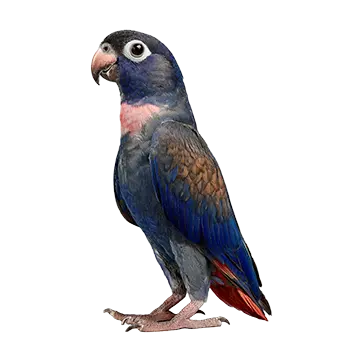

Daily Care & Routine

An adult Bronze-Winged Pionus thrives on consistency. These birds are creatures of habit that draw comfort from a predictable daily schedule, and establishing a reliable routine is one of the most effective ways to minimize stress-related behavioral issues. The daily care rhythm should encompass feeding times, out-of-cage interaction periods, quiet rest time, and a consistent sleep schedule that provides 10 to 12 hours of uninterrupted darkness each night.

Mornings should begin with a fresh offering of food and clean water. Remove any uneaten produce from the previous day, wash the food dishes thoroughly, and replenish with that day's dietary selections. Inspect the cage bottom for droppings, noting their consistency, color, and volume as part of your ongoing health monitoring. A quick visual assessment of the bird itself, checking for bright eyes, smooth plumage held close to the body, alert posture, and a willingness to engage, takes only moments but can catch early signs of illness before they become serious.

Out-of-cage time is not optional for a Bronze-Winged Pionus. These are intelligent, social birds that require daily interaction and physical activity outside the confines of their cage to maintain psychological health. Plan for a minimum of two to three hours of supervised out-of-cage time daily, which can include perching on a play stand while you work nearby, active training sessions, or simply sitting on your shoulder while you go about household tasks. The bird should have a designated play area equipped with perches, toys, and foraging opportunities that is separate from its cage.

Evening routines should wind down gradually, signaling to the bird that sleep is approaching. Reduce stimulation, lower lighting, and speak in quieter tones during the hour before the bird's cage is covered or the room is darkened. Bronze-Winged Pionus parrots require substantial sleep to maintain hormonal balance and immune function, and chronic sleep deprivation is a contributing factor in many behavioral and health problems. A consistent lights-out time, followed each morning by a consistent wake time, anchors the bird's circadian rhythm and supports overall well-being.

Nutrition & Diet Management

The dietary needs of an adult Bronze-Winged Pionus shift from the growth-supporting demands of the juvenile period to a maintenance-focused regimen aimed at sustaining optimal health, preventing obesity, and supporting the energetic demands of the annual molt. Pionus parrots are particularly prone to weight gain in captivity due to the caloric density of many commercial bird foods combined with the reduced activity levels of a caged lifestyle, making dietary management a cornerstone of adult care.

A high-quality pelleted diet should constitute approximately 50 to 60 percent of the adult Bronze-Winged Pionus's daily food intake. Pellets provide balanced nutrition and eliminate the selective feeding problems associated with seed-based diets. If the bird was not raised on pellets, conversion can be challenging but is worth the effort. Gradual transition methods, where pellets are mixed with the existing diet in increasing proportions over several weeks, tend to be more successful than abrupt switches.

Fresh vegetables and leafy greens should make up 30 to 40 percent of the daily diet. Emphasize dark, nutrient-dense greens such as kale, collard greens, dandelion leaves, and broccoli florets. Orange vegetables including sweet potato, butternut squash, and carrots provide beta-carotene, a critical precursor to vitamin A. Vitamin A deficiency is one of the most common nutritional problems in captive parrots and can manifest as respiratory infections, poor feather quality, and compromised immune function. Rotate produce selections regularly to ensure a broad spectrum of micronutrients.

Fruits should be offered sparingly, constituting no more than 5 to 10 percent of the diet. While fruits provide beneficial vitamins and antioxidants, their sugar content can contribute to weight gain and yeast overgrowth if overfed. Seeds and nuts should be reserved primarily for training reinforcement and enrichment activities. A Bronze-Winged Pionus that fills up on sunflower seeds will refuse its pellets and vegetables, creating a self-reinforcing cycle of nutritional imbalance that is difficult to break once established.

Monitor the bird's body weight regularly, ideally with a gram scale that allows you to detect small changes before they become visually obvious. An adult Bronze-Winged Pionus in healthy condition typically weighs between 210 and 280 grams, depending on its individual frame. Consistent weight gain over several months suggests caloric intake is exceeding expenditure and the diet should be adjusted. Conversely, unexplained weight loss warrants a veterinary evaluation to rule out illness.

Enrichment & Mental Stimulation

Mental stimulation is not a luxury for a Bronze-Winged Pionus but a fundamental requirement for psychological health. In the wild, these birds spend a significant portion of their day foraging for food, navigating complex forest environments, and interacting with flock members. Captivity eliminates most of these cognitive challenges, and without adequate enrichment, the bird's intelligence turns inward, often manifesting as feather-destructive behavior, excessive vocalization, stereotypic movements, or withdrawal.

Foraging enrichment is the most natural and effective form of mental stimulation. Rather than simply placing food in an open dish, use foraging toys, puzzle feeders, and hidden food stations that require the bird to work for its meals. Start with simple foraging tasks, such as food wrapped loosely in paper or placed inside a partially closed container, and gradually increase complexity as the bird becomes proficient. The goal is to extend the time the bird spends obtaining its food from minutes to hours, mimicking the time budget of a wild bird.

Toy rotation prevents habituation, which is the point at which a toy stops being interesting because the bird has fully explored it. Maintain a collection of toys organized into groups and rotate them into the cage on a weekly basis. Effective categories include shreddable items such as untreated wood blocks, palm frond pieces, and sisal rope; manipulable toys with moving parts, beads, and interlocking elements; and auditory toys that produce sounds when interacted with. Avoid toys with small removable parts that could be ingested, and inspect all toys regularly for damage that could entangle toes or beaks.

Social enrichment is equally important and comes in multiple forms. Direct interaction with the caregiver through training sessions, gentle handling, and conversation engages the bird's social intelligence. Allowing the bird to observe and participate in household activities from a play stand provides passive social stimulation. Some Bronze-Winged Pionus also benefit from visual access to outdoor activity through a window, which provides a constantly changing visual environment, though care must be taken to prevent overheating from direct sun exposure.

Auditory enrichment can include music, radio programming, or recordings of natural sounds. Bronze-Winged Pionus parrots often respond positively to calm, melodic music and may vocalize along with it. Avoid leaving a television on as background noise for extended periods, as the rapidly changing sounds and high-pitched commercial audio can create stress rather than enrichment. Curated playlists of gentle instrumental music or nature sounds are a better option during periods when the household is quiet.

Behavioral Management

An adult Bronze-Winged Pionus that was well socialized during its juvenile period is typically one of the most easygoing companion parrots available, but even the best-adjusted bird will present behavioral challenges that require thoughtful management. Understanding the motivations behind unwanted behaviors and addressing them constructively is far more effective than attempting to suppress them through punishment, which damages trust and frequently worsens the problem.

Hormonal behavior is a recurring reality for adult parrots and one that catches many owners off guard. During breeding season, which may be triggered by lengthening daylight hours, warm temperatures, or access to perceived nesting sites, a Bronze-Winged Pionus may become territorial, nippy, or unusually vocal. Reducing daylight exposure to 10 to 12 hours, removing any perceived nest cavities such as tents, huts, or enclosed spaces within the cage, and avoiding petting the bird on the back, wings, or tail, which mimics mating behavior, all help moderate hormonal surges without medication.

The species-specific wheezing response of Pionus parrots is something every owner should understand. When stressed, frightened, or overexerted, Bronze-Winged Pionus parrots produce a distinctive audible wheeze that can alarm unfamiliar caregivers into thinking the bird is in respiratory distress. While this response is a normal physiological reaction in the species, it should not be dismissed entirely. If wheezing occurs in the absence of an obvious stressor, persists after the perceived stressor is removed, or is accompanied by tail bobbing, nasal discharge, or lethargy, it may indicate genuine respiratory illness and warrants veterinary evaluation.

Screaming and excessive vocalization in a Bronze-Winged Pionus are relatively uncommon compared to species like cockatoos or Amazons, but when they occur, they almost always indicate an unmet need. Common triggers include insufficient social interaction, boredom, hunger, fear, or a disrupted routine. Address the underlying cause rather than attempting to silence the bird. Yelling at a screaming bird rewards the behavior with attention, the very thing the bird was seeking. Instead, ensure the bird's daily needs for interaction, enrichment, food, and rest are met, and reward quiet or desirable vocalizations with attention and treats.

Biting in an adult Pionus typically falls into two categories: fear-based and territorial. Fear bites occur when the bird feels cornered, surprised, or handled against its will, and are best prevented by reading the bird's body language, which includes pinning eyes, raised nape feathers, lunging postures, and tail fanning, and respecting its signals. Territorial bites are most common around the cage or during hormonal periods and are managed by using step-up training to move the bird away from its cage before interactions, rather than reaching into the cage to retrieve it.

Molt & Feather Care

The annual molt is one of the most physiologically demanding events in an adult Bronze-Winged Pionus's year. During this process, the bird systematically replaces its entire plumage over a period of several weeks to several months. The molt requires substantial metabolic resources, and birds that are nutritionally marginal or under chronic stress may produce feathers of inferior quality, develop stress bars, or experience an abnormally prolonged or irregular molt pattern.

Recognizing a normal molt helps distinguish it from feather-destructive behavior, which is a separate and more concerning issue. During a healthy molt, feathers are shed gradually and symmetrically, and new pin feathers emerge in their place almost immediately. You will find intact, full-length feathers at the bottom of the cage and on the floor around the bird's favorite perches. The bird may appear slightly ragged as old feathers are lost and new ones are still growing in, but there should never be patches of bare skin visible. Bare patches, broken feather shafts, or chewed feather vanes indicate the bird is actively damaging its own plumage and requires behavioral and possibly medical intervention.

Nutritional support during the molt should be enhanced. Increase the proportion of protein-rich foods, as feathers are composed almost entirely of keratin, a protein. Hard-boiled egg, cooked legumes, and sprouted seeds are excellent supplemental protein sources during this period. Ensure adequate vitamin A and calcium intake, and consider consulting your avian veterinarian about whether a molt-specific supplement is appropriate for your bird. Adequate bathing access is also important during the molt, as moisture helps soften the keratin sheaths encasing new pin feathers, facilitating their opening.

Bathing is a critical component of feather maintenance year-round, not only during the molt. Offer your Bronze-Winged Pionus opportunities to bathe at least two to three times per week. Some birds prefer to bathe in a shallow dish, others enjoy being misted with a fine spray bottle using lukewarm water, and some will join their owner in the shower. Whatever method the bird prefers, bathing helps remove feather dust and dander, which Pionus parrots produce in moderate quantities, and supports the integrity of the feather structure by maintaining appropriate moisture levels in the barbs and barbules.

Annual Health Maintenance

Proactive veterinary care is the cornerstone of keeping an adult Bronze-Winged Pionus healthy throughout its prime years. Unlike dogs and cats, parrots are prey animals that instinctively mask signs of illness until a condition is significantly advanced. By the time a bird looks visibly unwell, the disease process may have been developing for days or weeks. Annual wellness examinations are the most reliable way to detect problems early, when they are most treatable.

A comprehensive annual exam for an adult Bronze-Winged Pionus should include a thorough physical examination covering body condition, feather quality, beak and nail condition, joint mobility, and auscultation of the heart and air sacs. Blood work, including a complete blood count and biochemistry panel, provides objective data on organ function, metabolic health, and the presence of infection or inflammation. Fecal analysis screens for parasites and evaluates the balance of the gut microbiome. Depending on the bird's history and any clinical findings, the veterinarian may also recommend radiography, choanal culture, or specific disease testing.

Between annual visits, at-home monitoring remains essential. Continue weekly weigh-ins using a gram-accurate scale, and track the results over time so trends are visible. Observe droppings daily for changes in color, consistency, or volume. Note any shifts in appetite, vocalization patterns, activity level, or social behavior. A bird that suddenly becomes quiet and withdrawn, that fluffs its feathers and sits low on the perch, that stops eating its favorite foods, or that sleeps excessively during daylight hours is giving signals that should not be ignored.

Nail and beak maintenance are ongoing care tasks during the adult years. Natural wood perches and grooming perches help wear the nails and beak to some degree, but most captive Bronze-Winged Pionus parrots will need periodic nail trims performed either by the owner, if trained in the technique, or by the avian veterinarian. Overgrown nails catch on fabrics and toys, causing broken nails that bleed and create entry points for infection. An overgrown or misaligned beak can interfere with eating and may indicate an underlying liver condition or nutritional imbalance.

Vaccination protocols for companion parrots are limited compared to those available for dogs and cats, but avian polyomavirus vaccination may be recommended by your veterinarian depending on the bird's exposure risk and history. Beyond vaccination, disease prevention centers on husbandry practices: clean food and water, good air quality, appropriate humidity levels, quarantine procedures for any new birds entering the household, and limiting exposure to wild birds and their droppings.

Building & Maintaining the Bond

The relationship between an adult Bronze-Winged Pionus and its primary caregiver is one of the most rewarding aspects of keeping this species. Pionus parrots are known for forming deep, loyal attachments, and the Bronze-Winged variety is no exception. However, this bond requires ongoing investment. A relationship that is neglected during the busy adult years, when the bird's behavior is stable and demands seem lower, can erode in ways that are difficult to repair.

Quality interaction matters more than quantity. A focused thirty-minute training and play session where the bird has your full attention is more valuable than three hours of the bird sitting on your shoulder while you scroll through your phone. During your dedicated interaction time, engage the bird directly through speech, eye contact, gentle physical contact, training exercises, or shared activities like watching the bird explore a new toy or foraging station. Bronze-Winged Pionus parrots are perceptive enough to recognize the difference between genuine engagement and passive proximity.

Respect the bird's autonomy and individual personality. Not every Bronze-Winged Pionus wants to cuddle, and not every bird enjoys being the center of attention in a room full of people. Some are bold and outgoing, while others are more reserved and prefer quiet one-on-one interaction. Forcing a naturally reserved bird into situations that overwhelm it damages trust and can trigger defensive behaviors that the owner then misinterprets as aggression. Learn your individual bird's preferences and design your interactions around them.

Routine is itself a form of bonding for a Bronze-Winged Pionus. The daily rituals of morning greetings, shared mealtimes, training sessions, and evening wind-downs create a predictable social structure that the bird relies on and looks forward to. Disruptions to this routine, such as changes in the household, travel, or shifts in the owner's work schedule, can cause stress that manifests as behavioral changes. When routine changes are unavoidable, maintain as many familiar elements as possible and reestablish the full routine as soon as circumstances allow.

Introducing a second bird to the household is a decision that should be approached with care and realistic expectations. While some Bronze-Winged Pionus parrots enjoy the company of another bird, others become jealous, territorial, or withdrawn when they perceive competition for their owner's attention. If a second bird is introduced, it should be housed in a separate cage initially, with introductions proceeding gradually under close supervision. Never assume two birds will become companions simply because they share a species or genus.

Always consult a qualified professional before making any health-related decisions. This content is provided for informational reference only and should not replace professional guidance specific to your animal.