Scottish Collie

Collie

Quick Facts

🐕 Breed Group
Herding Group
📏 Size Category
Large
📏 Height
Males: 24-26 inches, Females: 22-24 inches
⚖️ Weight
Males: 60-75 lbs, Females: 50-65 lbs
⏱️ Life Expectancy
12-14 years
🧣 Coat Type
Double coat (Rough: long, harsh outer coat with dense undercoat; Smooth: short, dense, flat outer coat with dense undercoat)
🎨 Coat Colors
Sable and white, tricolor, blue merle, white
😀 Temperament
Intelligent, loyal, gentle, sensitive, alert
🏃 Exercise Needs
Moderate - at least 60 minutes daily
🎓 Training Difficulty
Easy to moderate - responds best to positive reinforcement
👶 Good with Children
Yes - patient and watchful, though herding nips should be redirected
🐾 Good with Other Pets
Yes - generally sociable with proper introduction

Other Names & Breed Recognition

If you have ever heard someone refer to a Scottish Collie, they were talking about one of the most iconic herding breeds in canine history. The name Scottish Collie is among the oldest designations for this breed, predating the streamlined modern label that kennel clubs eventually settled on. For much of the nineteenth century and well into the early twentieth, this was simply what people called these dogs, because Scotland was where the breed was born and where its identity took shape across centuries of pastoral work in the Highlands. The term carried geographic specificity that the shortened name Collie does not, anchoring the breed firmly in the landscape and culture that produced it.

The breed is also frequently called the Scotch Collie, a closely related term that appeared widely in Victorian-era breed literature and early show catalogs. When these dogs were first exhibited at Birmingham in 1860, they were entered under the class Scotch Sheep-Dogs, a designation that made their national origin unmistakable. The names Scottish Collie and Scotch Collie were used interchangeably throughout the late 1800s, and both appear in historical breed standards and written accounts from that period. The United Kennel Club actually registered the breed as the Scotch Collie until revising the name to simply Collie in 1991, a change that reflected the broader trend toward dropping the geographic prefix from the official record.

Today the breed is registered as the Collie by the American Kennel Club, the United Kennel Club, and the Canadian Kennel Club. The Kennel Club in the United Kingdom registers two separate breeds under the Collie name, distinguishing between the Rough Collie and the Smooth Collie. The Federation Cynologique Internationale similarly recognizes both coat varieties as distinct breeds. Regardless of registry, the underlying dog is the same animal that Scottish shepherds developed to work sheep across some of the most demanding terrain in the British Isles. Other names you may encounter include Lassie Dog, a pop-culture reference that became so widespread it functions as an informal breed identifier, and Farm Collie, which refers more broadly to the working landrace that preceded the modern show type. The Scottish Collie Preservation Society exists specifically to promote the original working form of the breed, using early breed standards from 1885 to 1910 as their reference point. Whether you call this breed the Scottish Collie, the Scotch Collie, or simply the Collie, you are describing the same elegant, intelligent herding dog whose roots run deep into the hills of northern Scotland.

Scottish Collie Organizations & Standards

The breed known historically as the Scottish Collie is governed by a well-established network of kennel clubs and breed organizations that have shaped its development for well over a century. The Collie Club of America, founded in 1886, stands as one of the oldest breed-specific parent clubs in the United States. It maintains the breed standard that the American Kennel Club uses for both the Rough and Smooth varieties, and it oversees specialty shows, performance events, and health initiatives for the breed. The CCA has been instrumental in supporting the Collie Health Foundation, a separate nonprofit organization dedicated to funding research into the genetic conditions that affect the breed and subsidizing health testing for breeders.

In the United Kingdom, The Kennel Club recognizes the Rough Collie and the Smooth Collie as separate breeds, each with its own standard. The British standard calls for a somewhat smaller dog than the American version, with males standing 22 to 24 inches at the shoulder compared to the AKC range of 24 to 26 inches for males. Both standards agree on the fundamental type, calling for a dog of great beauty and dignity with a clean wedge-shaped head, but the specifics of size and weight reflect the divergent paths that British and American breeding programs took over the twentieth century. The Collie was first shown in England at Birmingham in 1860, and the Collie Club in England was established in 1881, making it one of the earliest breed clubs in the world.

The United Kennel Club has recognized the Collie since 1914, originally under the name Scotch Collie before updating the registration to Collie in 1991. The UKC standard specifies males at 24 to 26 inches and 60 to 75 pounds, with females at 22 to 24 inches and 50 to 65 pounds. The Federation Cynologique Internationale recognizes both coat varieties separately under Group 1, Section 1, classifying them as Sheepdogs. The Canadian Kennel Club also recognizes the breed in its Herding Group.

Health testing for breeding stock is a major focus of the organized breed community. The Collie Club of America, working with the Orthopedic Foundation for Animals, has established CHIC certification requirements that include three mandatory DNA tests: Multi-Drug Resistance 1, Progressive Retinal Atrophy rcd2, and Dermatomyositis across all three loci. The Collie Health Foundation additionally recommends Collie Eye Anomaly genetic screening, hip and elbow radiographs submitted to OFA or PennHIP, and testing for hypothyroidism, canine cyclic neutropenia, and degenerative myelopathy. These testing protocols represent the breed community's commitment to reducing the incidence of inherited conditions that have affected the Scottish Collie throughout its modern history.

Kennel Club Recognition

  • American Kennel Club (AKC): Recognized in 1885, Herding Group
  • United Kennel Club (UKC): Recognized, Herding Dog
  • Canadian Kennel Club (CKC): Recognized, Herding Dogs
  • FCI: Recognized, Group 1: Sheepdogs and Cattledogs
  • The Kennel Club (UK): Recognized, Pastoral

Scottish Collie Physical Description

The Scottish Collie is a dog built for purpose, and that purpose was moving sheep across miles of rough Highland terrain in weather that would send most people indoors. Everything about the breed's physical structure reflects this heritage. The body is firm and muscular, slightly longer than it is tall, giving the dog a rectangular silhouette that allows for efficient, ground-covering movement. Males typically stand 24 to 26 inches at the shoulder and weigh between 60 and 75 pounds, while females range from 22 to 24 inches and 50 to 65 pounds. This is not a massive dog, but it is a substantial one, built to sustain effort over hours rather than to overpower.

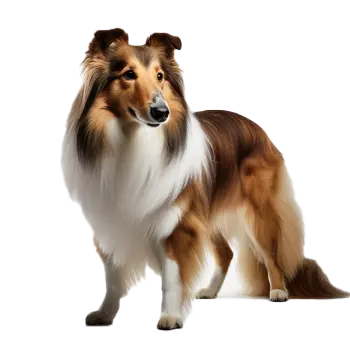
The head is the breed's most distinctive feature and the element that breeders and judges prioritize above almost everything else. Viewed from the front or in profile, the head forms a smooth, well-blunted wedge shape, tapering gradually from the ears to the tip of the nose without abrupt transitions. The skull is flat between the ears, and the stop is slight but perceptible. The muzzle is long and rounded, never appearing snipey or heavy. The eyes are medium-sized, almond-shaped, and set obliquely, contributing to the gentle, intelligent expression that defines the breed. Eye color is typically dark brown, except in blue merles where one or both eyes may carry blue or blue-flecked coloring. The ears are carried semi-erect when the dog is alert, with the upper third folding forward naturally, giving the face an attentive and inquisitive quality.

The neck is long and arched, carried with an upright bearing that gives the Scottish Collie its characteristic air of dignity. The chest is deep, extending to the elbows, providing ample lung capacity for a dog that was expected to work all day. The ribs are well-sprung behind properly sloped shoulders, and the back is strong and level with a slight rise over the loin. The croup slopes gently to give a finished, rounded appearance to the hindquarters. The legs are straight and muscular without being heavy, with oval feet that are well-padded and compact, the toes arched and held closely together. The tail is long, reaching at least to the hock, and is carried low at rest with a slight upward swirl at the tip. When the dog is animated the tail may rise, but it should never curl over the back.

The Rough variety carries the coat that most people picture when they think of this breed. The outer coat is long, straight, and harsh in texture, standing away from the body and supported by a dense, soft undercoat. The ruff around the neck is profuse, giving the dog a mane-like appearance. The legs carry feathering, the hindquarters display a generous frill, and the tail is heavily coated. The Smooth variety shares the same body structure but wears a short, dense, flat-lying coat that still includes an obvious undercoat. Both varieties come in four recognized color patterns: sable and white, ranging from golden to deep mahogany; tricolor, which combines black, white, and rich tan markings; blue merle, a mottled blue-gray with black patches and usually tan points; and white, where the body is predominantly white with colored markings on the head. All color patterns typically display the breed's characteristic white markings on the collar, chest, legs, feet, and tail tip, with some individuals carrying a white blaze on the face.

The Scottish Collie in motion is a picture of effortless athleticism. The gait is smooth and rhythmic, with the front legs tracking close together and the rear legs driving powerfully from well-angulated hips. As speed increases, the dog single-tracks, bringing its feet inward toward the center line. There is nothing choppy or labored about a well-built Collie moving at a trot. The movement speaks directly to the breed's working origins, where covering ground efficiently was not optional but essential.

Affectionate With Family
The Scottish Collie bonds deeply with every member of the household and seeks out physical closeness and emotional connection throughout the day. This breed genuinely thrives on companionship and becomes visibly unhappy when separated from its people for extended periods.
Good With Young Children
Patient and naturally watchful around young children, the Scottish Collie has a well-earned reputation as a family-friendly breed. Occasional herding nips directed at running toddlers should be redirected early through consistent training.
Good With Other Dogs
Most Scottish Collies get along well with other dogs when properly socialized, though their reserved temperament means introductions should be handled calmly. Same-sex tensions can surface occasionally but are not a defining characteristic of the breed.
Shedding Level
The Scottish Collie sheds consistently year-round and heavily during seasonal coat blows in spring and fall. Owners should expect significant fur management regardless of whether they have the Rough or Smooth variety.
Coat Grooming Frequency
The Rough variety demands regular brushing sessions several times per week to prevent matting, while the Smooth variety is somewhat less demanding. Neither coat type is low-maintenance, but grooming becomes manageable with a consistent routine.
Drooling Level
The Scottish Collie is not a drooling breed. Its clean, wedge-shaped muzzle and tight lip structure mean that slobber is essentially a non-issue in daily life.
Coat Type
The breed comes in two distinct coat varieties. The Rough carries a long, harsh outer coat over a dense undercoat, while the Smooth wears a shorter, flat-lying coat with a similarly dense undercoat beneath.
Openness To Strangers
Scottish Collies tend to be polite but initially reserved with unfamiliar people. They assess newcomers before warming up, a trait rooted in their guardian heritage rather than in any aggressive tendency.
Playfulness Level
This breed maintains a playful spirit well into adulthood and readily engages in games of fetch, chase, and interactive play. Their intelligence means they also enjoy puzzle-based activities that challenge them mentally.
Watchdog/Protective Nature
The Scottish Collie is a vigilant watchdog that alerts its family to anything unusual in the environment. Their vocal nature means they will sound the alarm reliably, though owners may need to manage the volume of their alerts.
Adaptability Level
The breed adapts reasonably well to different living situations provided its exercise and companionship needs are met. Major changes in routine or environment can cause stress in a breed this emotionally sensitive.
Trainability Level
Scottish Collies are highly trainable dogs that learn quickly and retain what they have been taught. Their eagerness to please and natural intelligence make them responsive students when training is conducted with patience and positive methods.

Scottish Collie History & Development

The name Scottish Collie tells you exactly where this breed came from, and for most of the breed's documented history, that geographic label was simply how people identified these dogs. The Collie's roots lie in the Scottish Highlands, where herding dogs were bred for centuries to manage sheep and cattle across steep, rocky, and often mist-shrouded terrain. These were working dogs first and foremost, shaped by the demands of the landscape rather than by written standards or show ring aesthetics. The word Collie itself is debated among etymologists, with theories ranging from the Anglo-Saxon word Coll meaning black, to the Scots term for the black-faced Colley sheep these dogs tended, to a Gaelic root meaning useful or even a general term for a young dog.

The designation Scottish Collie or Scotch Collie became common in the early to mid-nineteenth century, particularly as the breed began appearing in English literature and dog fancy circles. When Collies were first exhibited at the Birmingham dog show in 1860, they were entered as Scotch Sheep-Dogs, making the national attribution explicit. This was not a marketing choice but a factual description. These were Scottish dogs, developed in Scotland, doing Scottish work. The name distinguished them from the many other regional herding types found across Britain at the time.

The breed's trajectory changed dramatically in the 1860s when Queen Victoria visited the Scottish Highlands and took an immediate liking to the Collies she encountered there. She brought several back to her royal kennels, maintaining both Rough and Smooth varieties as well as white Collies. Victoria's patronage ignited a fashion craze among the English upper class, and the Scottish Collie rapidly transitioned from a working farm dog to a sought-after companion and show dog. English breeders took the lead in refining the breed's appearance, developing the elegant head and profuse coat that characterize the modern Rough Collie. England is often credited as the breed's nurturing ground, even though Scotland remains its birthplace.

The Collie Club in England was founded in 1881, and the Collie Club of America followed in 1886. Early breed standards were written during this period, and the first official Collie standard in the United States established the framework that continues to guide breeding decisions today. Imports from England dominated American show rings through the early twentieth century, building the foundation for what would become a distinctly American line of Collies. The breed received its greatest popular boost in 1940 with the publication of Eric Knight's novel Lassie Come-Home, followed by the 1943 film and the long-running television series. These stories cemented the Collie in the public imagination as the quintessential loyal family dog, and the popularity of the breed soared.

As the breed gained international recognition, the geographic prefix gradually fell away from official registries. The United Kennel Club dropped Scotch Collie in favor of Collie in 1991, and the American Kennel Club has long registered the breed simply as Collie. Yet the name Scottish Collie persists in informal usage and in organizations like the Scottish Collie Preservation Society, which advocates for returning the breed to its original, more moderate working form. The SCPS uses breed standards from 1885 to 1910 as their guide, arguing that the modern show Collie has drifted significantly from the functional dog that worked the Scottish hills. Whether one agrees with that position or not, the continued use of Scottish Collie as a name reflects a meaningful connection to the breed's origins and a recognition that this dog's identity is inseparable from the land where it was forged.

Scottish Collie Temperament & Personality

The Scottish Collie's temperament is rooted in centuries of working alongside shepherds who needed a dog that was responsive, biddable, and capable of independent judgment. This is not a breed that simply follows commands mechanically. Collies read situations, anticipate what needs to happen next, and act on that assessment. That intelligence made them indispensable on Highland farms, and it remains the defining feature of the breed's personality today. A Collie that is given nothing meaningful to do will find ways to occupy itself, and those self-directed activities frequently include nuisance barking, digging, or attempting to herd anything that moves, including children, other pets, and passing joggers.

The breed's emotional sensitivity runs deep. Collies form powerful bonds with their families and are remarkably attuned to the moods and energy of the people around them. This sensitivity cuts both ways. A Collie in a calm, stable household will be a confident and relaxed companion. A Collie in a chaotic or tense environment will absorb that stress and may become anxious, clingy, or reactive. Harsh training methods shut this breed down completely. The Collie does not respond to intimidation or force. It responds to clear communication, consistency, and the kind of patient repetition that builds trust. Trainers who mistake the breed's softness for weakness will find themselves working with a dog that has simply stopped trying.

Collies are typically gentle and tolerant with children, which is one reason the breed has long been associated with families. Their herding instinct sometimes manifests as nipping at the heels of running children, a behavior that needs to be redirected early rather than punished. The intent behind the nipping is organizational, not aggressive, but small children may not appreciate the distinction. Supervised interaction and early training to redirect herding behaviors onto appropriate outlets will prevent this from becoming a persistent issue.

With strangers, the Scottish Collie tends to be polite but initially reserved. This is not the breed that launches itself at every visitor. Collies typically assess new people before committing to interaction, a wariness that reflects their guardian instincts. While they are not aggressive toward strangers under normal circumstances, they are alert watchdogs and will sound the alarm when something seems out of place. The alarm barking is the behavioral trait that owners most frequently cite as a challenge. Collies have a strong voice and are not reluctant to use it. If left alone for long periods with nothing to occupy them, barking can escalate from occasional alerts to sustained, compulsive vocalizing that will test the patience of neighbors and owners alike.

With other dogs, Collies are generally sociable when properly introduced, though individual temperament varies. They are not typically dog-aggressive, but neither are they universally gregarious. Early socialization matters for this breed, particularly because their sensitivity means that negative experiences with other dogs can produce lasting wariness. Same-sex tensions can occur but are not a hallmark of the breed. The Collie's prey drive is moderate. They may chase small animals that run, but this is herding instinct rather than predatory aggression, and it is usually manageable with training. The Scottish Collie at its best is a devoted, perceptive, and gentle companion that thrives on partnership with its people. It is not a breed for owners who want a dog that entertains itself in the backyard. It needs engagement, purpose, and a meaningful role in the household to be genuinely content.

Scottish Collie Family Life & Living Requirements

The Scottish Collie adapts well to family life provided that the family understands what this breed needs and is prepared to deliver it consistently. This is a dog that wants to be part of the household's daily rhythm, not a peripheral presence confined to the yard. Collies do best when they have regular access to their people, and they suffer when isolated or left alone for extended periods. A Collie that spends its days in a crate or a fenced yard while the family is away at work and school will develop behavioral problems, including excessive barking, anxiety-driven destructiveness, and withdrawal.

Families with children will find the Scottish Collie to be a patient and watchful companion. The breed has a documented affinity for young people, and their gentle temperament makes them well-suited to households with kids of various ages. That said, the herding nip is a real consideration with toddlers and small children. Teaching the dog that heeling behaviors are not appropriate with humans needs to start early and remain consistent. Children should also be taught to interact with the dog respectfully, as Collies are sensitive enough to become stressed by rough handling or high-pitched screaming.

The breed's size places it squarely in the medium-to-large category, and while Collies are not as physically imposing as some working breeds, they do need adequate space. A house with a fenced yard is ideal, though the breed can manage in smaller living situations if it receives sufficient daily exercise. Apartment living is possible but not optimal, particularly for the Rough variety, whose coat management and exercise needs are easier to address with ready outdoor access. Collies are not high-energy in the frantic sense that some herding breeds display, but they do need regular physical activity and mental engagement to remain balanced.

Multi-pet households are generally compatible with the Scottish Collie's disposition. They coexist well with other dogs when properly introduced, and many Collies live comfortably alongside cats and smaller pets. Their herding instinct may prompt them to circle or follow other animals, which is usually more amusing than problematic, but it should be monitored with very small or fragile pets. The Collie's watchdog tendencies make it a reliable alert system for the household, though owners should be prepared to manage barking so that alertness does not become a source of frustration for the family or the neighbors.

Scottish Collie Training & Exercise Needs

Training a Scottish Collie is one of the genuine pleasures of owning this breed, provided you approach it with the right mindset. These dogs are highly intelligent and eager to work with their handler, but they have a soft temperament that requires patience rather than pressure. Positive reinforcement methods produce the best results with Collies. They respond well to praise, treats, and play-based rewards. Corrections need to be calm and minimal, because a harsh verbal reprimand or physical correction will cause most Collies to shut down emotionally, and a shut-down Collie is not a learning Collie. The goal is a training relationship built on mutual trust, where the dog offers behaviors willingly because it finds the process rewarding.

Early socialization is essential for the breed. Collies that are not exposed to a wide range of people, environments, sounds, and situations during their first few months may develop shyness, which can become a persistent temperament issue. The breed's natural reserve with strangers will deepen into genuine timidity if the puppy is not given opportunities to learn that the world is generally a safe and interesting place. Puppy classes, controlled exposure to novel environments, and positive experiences with unfamiliar people all contribute to building confidence in a young Scottish Collie.

The breed excels in a variety of structured activities beyond basic obedience. Collies perform well in herding trials, agility, rally, and therapy work. Their sensitivity to human emotion makes them particularly effective therapy dogs, and their intelligence allows them to master complex obedience routines with relative ease. Mental stimulation is as important as physical exercise for this breed. Puzzle toys, scent work, and training sessions that challenge the dog to think through problems will keep a Collie's mind sharp and reduce the likelihood of boredom-driven misbehavior.

Exercise requirements for the Scottish Collie are moderate compared to the highest-energy herding breeds but still meaningful. A Collie needs at least an hour of daily activity, which can include walks, off-leash play in a secure area, hiking, or structured games like fetch. This is not a breed that will be satisfied with a quick trip around the block. However, it is also not a breed that requires the relentless, intense exercise that a Border Collie or Belgian Malinois demands. The Scottish Collie hits a middle ground, active enough to be a willing partner for outdoor adventures but calm enough to settle in the house when the day's activities are done. Puppies should not be over-exercised, as their growing joints need protection from repetitive high-impact activity until they mature.

Scottish Collie Health Concerns

The Scottish Collie is generally a healthy and resilient breed, but it carries several inherited conditions that prospective owners and breeders need to understand thoroughly. Collie Eye Anomaly is the most prevalent genetic condition in the breed. CEA affects the development of the choroid and retina in the back of the eye and is present from birth. A board-certified veterinary ophthalmologist can diagnose CEA in puppies as young as five to six weeks of age. The condition ranges from mild, causing no functional vision impairment, to severe, which can result in retinal detachment and blindness before the dog reaches two years of age. There is no treatment for CEA, making genetic testing and early screening the only tools available to reduce its incidence.

Beyond these primary genetic concerns, the Scottish Collie is susceptible to bloat, a potentially fatal condition in which the stomach distends with gas and may rotate on its axis. Deep-chested breeds like the Collie carry elevated risk, and owners should be familiar with the signs, which include restlessness, unproductive retching, and a visibly swollen abdomen. Hip dysplasia occurs in the breed but at lower rates than in many comparably sized breeds. Canine cyclic neutropenia is a rare but serious blood disorder that is usually fatal in affected puppies. Hypothyroidism has also been documented in the breed and is manageable with daily medication once diagnosed through blood screening.

Common Health Issues

  • Collie Eye Anomaly (CEA) - A congenital defect affecting the choroid and retina that is present from birth and ranges from mild with no vision impact to severe with retinal detachment causing blindness, typically before age two. There is no treatment, making genetic testing and early ophthalmologic screening at five to six weeks essential.
  • Multi-Drug Resistance 1 (MDR1) Mutation - A genetic defect in the P-glycoprotein responsible for drug transport across the blood-brain barrier, causing dangerous sensitivity to ivermectin, loperamide, and certain chemotherapy drugs. DNA testing identifies affected dogs so veterinarians can select safe medication alternatives.
  • Progressive Retinal Atrophy rcd2 (PRA-rcd2) - An inherited degenerative eye disease that progressively destroys the retina, leading to vision loss and eventual blindness. Symptoms can appear in young dogs, and a DNA test is available to identify carriers and affected individuals.
  • Dermatomyositis (DMS) - An autoimmune inflammatory condition affecting skin and muscle tissue, typically presenting before six months of age with hair loss, crusting, and skin redness, sometimes progressing to muscle weakness. Severity varies and some dogs require lifelong immunosuppressive therapy. DNA testing identifies risk alleles across three associated loci.
  • Gastric Dilatation-Volvulus (Bloat/GDV) - A life-threatening emergency in which the stomach fills with gas and may twist on its axis, cutting off blood supply. The Collie's deep chest conformation increases susceptibility, and owners should recognize warning signs including restlessness, unproductive retching, and abdominal distension.
  • Hip Dysplasia - A developmental condition where the hip joint forms improperly, causing abnormal wear, inflammation, and eventual arthritis. The Collie experiences this at lower rates than many breeds of similar size, but screening through OFA or PennHIP radiographs is recommended for breeding stock.
  • Hypothyroidism - An endocrine disorder in which the thyroid gland produces insufficient hormone, leading to symptoms including lethargy, weight gain, coat changes, and skin problems. Diagnosed through blood screening and managed with daily thyroid hormone supplementation.
  • Canine Cyclic Neutropenia (Gray Collie Syndrome) - A rare inherited blood disorder causing cyclical drops in neutrophil counts, leaving affected puppies severely immunocompromised. The condition is usually fatal in young dogs and is associated with a diluted gray coat color.

Preventive Care & Health Monitoring

  • MDR1 DNA testing should be performed on every Scottish Collie so that the dog's veterinarian can avoid prescribing medications that may trigger severe adverse neurological reactions in affected individuals. - MDR1 DNA testing should be performed on every Scottish Collie so that the dog's veterinarian can avoid prescribing medications that may trigger severe adverse neurological reactions in affected individuals.
  • PRA-rcd2 DNA testing identifies carriers and affected dogs - Allowing breeders to make informed pairing decisions and owners to monitor for early signs of vision changes.
  • DMS DNA testing across all three risk loci provides a risk profile that helps breeders reduce the incidence of this autoimmune condition and prepares owners of at-risk dogs for potential early symptom recognition. - DMS DNA testing across all three risk loci provides a risk profile that helps breeders reduce the incidence of this autoimmune condition and prepares owners of at-risk dogs for potential early symptom recognition.
  • Collie Eye Anomaly screening by a board-certified veterinary ophthalmologist should be completed in puppies between five and eight weeks of age - As this is the window when the condition is most reliably diagnosed.
  • Hip and elbow radiographs submitted to OFA or PennHIP for evaluation are recommended for all breeding stock - With radiographs taken after the dog reaches two years of age for OFA certification.
  • Annual thyroid screening through blood panels helps detect hypothyroidism early - Allowing timely initiation of hormone supplementation before clinical symptoms become advanced.
  • Bloat prevention strategies include feeding smaller meals twice daily rather than one large meal - Avoiding vigorous exercise immediately before and after eating, and discussing prophylactic gastropexy with your veterinarian for dogs identified as high risk.

Scottish Collie Grooming & Maintenance

Grooming a Scottish Collie depends significantly on which coat variety you have, but both the Rough and Smooth types require consistent attention to stay healthy and looking their best. The Rough Collie's abundant double coat is the more demanding of the two. The outer coat is long, straight, and harsh in texture, designed to repel moisture and protect against weather extremes. Beneath it lies a dense, soft undercoat that provides insulation. This coat needs thorough brushing at least two to three times per week to prevent matting, particularly behind the ears, in the armpits, and along the hindquarters where the fur is longest. A pin brush and a long-toothed metal comb are the essential tools. Working through the coat methodically, lifting sections to brush from the skin outward, ensures that the undercoat does not pack into impenetrable mats.

Shedding is a significant reality with this breed. Rough Collies blow their undercoat heavily twice a year, typically in spring and fall, during which daily brushing is necessary to manage the volume of loose fur. Even outside of these seasonal sheds, the breed drops a steady amount of hair year-round. The Smooth Collie sheds comparably but is easier to groom because the shorter outer coat does not tangle or mat. A firm bristle brush and a shedding rake will keep the Smooth variety's coat in good order with brushing sessions two to three times weekly.

Bathing should be done as needed rather than on a rigid schedule. Most Collies do well with a bath every six to eight weeks, or when the coat becomes soiled or develops an odor. Using a quality dog shampoo that does not strip the coat's natural oils is important, as overly harsh products can dry out the skin and damage coat texture. The ears should be checked during grooming sessions for wax buildup, debris, or signs of infection such as redness, odor, or excessive discharge. Collies are not more prone to ear infections than most breeds, but routine inspection prevents minor issues from becoming serious.

Nail trimming should happen every two to three weeks, or whenever the nails are audibly clicking on hard floors. Dental care is a frequently overlooked aspect of Collie maintenance. Regular tooth brushing, ideally several times per week, helps prevent the tartar buildup and gum disease that affect most dogs over time. Providing appropriate chew items also supports dental health between brushing sessions.