
Growth & Physical Development

The juvenile period in Collies spans roughly from three months to about twelve to eighteen months of age, during which the gangly puppy transforms into a recognizable young adult. Growth in Collies tends to be steady rather than explosive, but there are noticeable spurts during which the puppy may seem disproportionate, with legs that appear too long for the body or a head that seems too narrow for its frame. These awkward phases are entirely normal and will resolve as the dog matures into its adult proportions.

Male Collies typically reach their full height by around twelve months but continue to fill out in chest and muscle mass until they are roughly two years old. Females generally mature slightly earlier. During this growth period, it is essential to monitor the puppy's body condition regularly. A juvenile Collie should be lean but not ribby, with a visible waist when viewed from above and a slight tuck in the abdomen when viewed from the side. Overfeeding during growth is a common mistake that can contribute to skeletal problems.

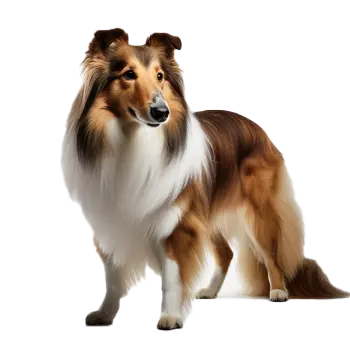
The Collie's iconic coat begins its transformation during adolescence. Puppies are born with a soft, relatively short coat that gradually gives way to the dense double coat of adulthood. Rough Collies will begin developing their characteristic mane and feathering around four to six months, while Smooth Collies develop their dense flat coat during the same period. Regular brushing should become part of the weekly routine during this transition to prevent matting and to accustom the dog to grooming.

Bone and joint development deserve particular attention in a growing Collie. Because they are a large breed, their skeletal system takes longer to fully mineralize and close its growth plates, typically not completing this process until fourteen to eighteen months of age. Activities that place excessive stress on developing joints, such as repetitive jumping, extended running on hard surfaces, or rough play with much larger dogs, should be moderated during this period to reduce the risk of orthopedic injuries.

Nutrition & Diet Transition

Feeding a juvenile Collie correctly supports healthy growth without encouraging the rapid weight gain that can stress developing bones and joints. By eight weeks of age, puppies should be fully weaned and eating a high-quality puppy food formulated for large breeds. Large-breed puppy formulas are designed with carefully controlled calcium-to-phosphorus ratios that support steady skeletal development without promoting the dangerously fast growth associated with orthopedic disorders.

Feeding schedules typically start with three meals per day for puppies up to about six months of age, transitioning to two meals per day thereafter. Free-feeding, or leaving food available at all times, is generally discouraged for Collies because it makes it difficult to monitor intake and can lead to overeating. Measuring each meal and adjusting portions based on the puppy's body condition and growth rate is a far more effective approach.

The transition from puppy food to adult food usually occurs between twelve and eighteen months of age, depending on the individual dog's rate of maturation. This switch should be made gradually over the course of seven to ten days, mixing increasing proportions of the new food with decreasing amounts of the old to avoid digestive upset. Your veterinarian can help determine the ideal timing based on the dog's growth curve and overall condition.

Treats are an important training tool during adolescence, but they should be factored into the dog's total daily caloric intake. High-value training treats should be small, soft, and quick to eat so they do not interrupt the flow of a training session. Avoid feeding table scraps or rich human foods, which can cause gastrointestinal distress and establish begging habits that are difficult to break. Fresh water should always be available, and intake may increase noticeably during growth spurts or periods of high activity.

Behavioral Changes

Collie adolescence brings a wave of behavioral changes that can catch even experienced dog owners off guard. The sweet, eager-to-please puppy may suddenly develop a stubborn streak, testing boundaries and seemingly forgetting commands it had previously mastered. This is a normal part of canine cognitive development, analogous to the testing behaviors seen in human teenagers, and it does not mean that earlier training has been lost.

Collies are a herding breed, and adolescence is when herding instincts often emerge in full force. A juvenile Collie may begin nipping at the heels of running children, circling family members, or attempting to herd other household pets. While these behaviors are hardwired and not aggressive in nature, they need to be redirected promptly and consistently. Providing appropriate outlets for herding drive, such as structured games and activities that channel the instinct productively, is far more effective than punishment.

Fear periods are another hallmark of adolescence in Collies. During these windows, which can occur around eight to eleven weeks and again between six and fourteen months, a previously confident puppy may suddenly become wary of objects, sounds, or situations it had previously accepted without concern. Collies are particularly sensitive during these phases, and forcing a fearful puppy to confront the source of its anxiety can create lasting phobias. Patient, positive exposure at the dog's own pace is the best approach.

Some juvenile Collies develop nuisance barking as they find their voice and discover the satisfaction of vocalizing. Collies are naturally alert and communicative, and barking at perceived intrusions or changes in the environment is part of their heritage. Teaching a reliable quiet command and ensuring the dog receives adequate mental and physical stimulation can prevent barking from becoming an entrenched habit.

Training Priorities

Training a juvenile Collie is one of the most rewarding experiences in dog ownership, provided the approach aligns with the breed's temperament. Collies are exceptionally intelligent and eager to work with their handlers, but they are also sensitive to harsh corrections. Positive reinforcement methods, using treats, praise, and play as rewards for desired behavior, produce far better results with this breed than compulsion-based techniques, which can damage the Collie's trust and willingness to engage.

Basic obedience commands such as sit, down, stay, come, and leash manners should be solidified during the juvenile period. Even if these commands were introduced during early puppyhood, adolescence is the time to proof them against distractions and in a variety of environments. A Collie that performs a reliable recall in the backyard may ignore the command entirely at a busy park, so gradually increasing the level of distraction during training sessions builds genuine reliability.

Leash training deserves special emphasis with Collies, as their herding heritage can make them reactive to movement on walks. A juvenile Collie that lunges toward bicycles, joggers, or squirrels is not being disobedient but is responding to deeply ingrained chase instincts. Teaching the dog to check in with the handler and to redirect its attention on cue transforms walks from a battle of wills into a cooperative experience.

Beyond basic obedience, juvenile Collies benefit enormously from activities that engage their minds. Puzzle toys, scent work, trick training, and introductory agility all provide the cognitive stimulation that this intelligent breed craves. A Collie that is mentally under-stimulated will find its own entertainment, often in the form of destructive chewing, digging, or excessive barking. Structured mental challenges channel that intelligence into productive and enjoyable pursuits.

Exercise & Activity

Balancing exercise with the physical limitations of a growing Collie is essential during the juvenile period. While adolescent Collies have seemingly boundless energy, their developing skeletal systems are vulnerable to overuse injuries. A common guideline suggests roughly five minutes of structured exercise per month of age, twice daily, though this is a starting point rather than a rigid rule. Free play in a safe, enclosed area where the puppy can set its own pace is generally less risky than forced exercise like jogging or extended hiking.

Swimming is an excellent low-impact exercise option for Collies that enjoy water, as it builds cardiovascular fitness and muscle strength without stressing the joints. Introduction to water should be gradual and positive, never involving throwing a reluctant puppy into a pool or lake. Some Collies take to water naturally, while others prefer to stay dry, and both preferences should be respected.

Mental exercise is just as important as physical activity for this highly intelligent breed. A thirty-minute training session or puzzle-solving activity can tire a juvenile Collie as effectively as an hour of physical play. Incorporating training into daily activities, such as asking for a sit before meals or a down-stay while preparing food, provides ongoing mental engagement without requiring dedicated exercise sessions.

As the Collie approaches twelve months of age and the growth plates begin to close, the intensity and duration of exercise can be gradually increased. Longer walks, introductory jogging on soft surfaces, and more demanding activities like herding trials or competitive agility can be introduced. However, any new activity should be ramped up slowly, and the dog should be monitored for signs of soreness or fatigue after each session. Building an athletic Collie is a marathon, not a sprint.

Spay/Neuter Considerations

The decision of whether and when to spay or neuter a Collie is one that should be made in consultation with a veterinarian who understands the breed's specific health profile. Current research suggests that early spaying or neutering, performed before the dog reaches skeletal maturity, may be associated with an increased risk of certain orthopedic conditions and some cancers in large breeds. These findings have shifted the conversation toward delaying the procedure in breeds like the Collie.

For male Collies, some veterinarians now recommend waiting until at least twelve to eighteen months of age before neutering, allowing the dog to benefit from the hormonal influences that support bone density, muscle development, and growth plate closure. For females, the timing decision is often weighed against the risk of pyometra and mammary tumors, which increase with each heat cycle the dog experiences. Some owners opt for an ovary-sparing spay, which eliminates the risk of pyometra while preserving hormonal function.

Behavioral considerations also play a role in the timing decision. Intact male Collies may develop marking behaviors, roaming tendencies, and increased reactivity toward other intact males during adolescence. Intact females will experience heat cycles approximately every six to eight months, requiring management to prevent unwanted pregnancy. These factors should be weighed against the potential health benefits of delayed alteration.

Regardless of the chosen timing, the surgical procedure itself is routine and recovery is typically straightforward. Post-operative care involves restricting activity for ten to fourteen days, monitoring the incision site for signs of infection or excessive licking, and following the veterinarian's instructions regarding pain management and follow-up appointments. An appropriately fitted recovery collar or suit can prevent the dog from interfering with the incision during healing.

Socialization & Exposure

Continued socialization during the juvenile period is critical for producing a well-adjusted adult Collie. While the primary socialization window closes around twelve to fourteen weeks of age, the experiences a Collie has during adolescence continue to shape its responses to the world for the rest of its life. Dogs that are isolated or under-socialized during this period may develop anxiety, fearfulness, or reactivity that becomes increasingly difficult to address as the dog matures.

Exposure should encompass a wide range of people, including individuals of different ages, body types, and appearances. A Collie that has only interacted with its immediate family may become suspicious or anxious around strangers, delivery workers, or visitors. Organized puppy socialization classes provide controlled environments for positive interactions with other dogs and people, and they offer the added benefit of professional guidance in reading canine body language and managing introductions.

Environmental exposure is equally important. Taking the juvenile Collie to a variety of locations, including pet-friendly stores, parks, quiet neighborhoods, and busier urban settings, helps build a catalog of experiences that the dog draws upon when encountering new situations later in life. Each outing should be kept positive and pressure-free, with the handler ready to create distance from anything that causes the dog visible stress.

Socialization with other animals should be approached thoughtfully, especially given the Collie's herding instincts. Structured interactions with calm, well-socialized adult dogs can teach a juvenile Collie appropriate greeting behaviors and play styles. Introductions to cats, livestock, or small animals should be carefully supervised and managed to prevent the herding drive from escalating into chasing. Positive early experiences with a variety of species help the Collie develop into the tolerant, gentle companion the breed is known for.

Always consult a qualified professional before making any health-related decisions. This content is provided for informational reference only and should not replace professional guidance specific to your animal.