Laeken

Belgian Laekenois

Quick Facts

🐕 Breed Group
Herding Group
📏 Size Category
Medium to Large
📏 Height
Males: 24-26 inches, Females: 22-24 inches
⚖️ Weight
Males: 55-65 lbs, Females: 44-55 lbs
⏱️ Life Expectancy
10-12 years
🧣 Coat Type
Rough, wiry double coat
🎨 Coat Colors
Fawn to mahogany with traces of black overlay
😀 Temperament
Alert, intelligent, protective, devoted
🏃 Exercise Needs
High
🎓 Training Difficulty
Moderate
👶 Good with Children
Yes, with socialization
🐾 Good with Other Pets
Yes, with early introduction

Other Names & Breed Recognition

Laeken is the name you will hear most often among breed enthusiasts and fanciers who live with these remarkable dogs day in and day out. Derived directly from the town of Laeken near Brussels where this variety first gained prominence, the shortened name captures a familiarity and affection that only comes from knowing a breed on a personal level. When someone at a dog show or a Belgian Shepherd gathering says they own a Laeken, everyone in the room understands exactly which dog they mean, and they usually want to hear more because these dogs are genuinely rare.

The formal registered name is Belgian Laekenois, pronounced roughly as LAK-in-wah, and this is the designation used by the American Kennel Club, which granted full recognition on July 1, 2020, making it the 196th breed in their registry. The pronunciation itself tells you something about the breed's Belgian-French roots and the region from which it sprang. In much of Europe, this dog is not recognized as a separate breed at all but rather as one of four coat varieties of the Belgian Shepherd Dog, known in French as the Chien de Berger Belge. The Kennel Club in the United Kingdom registers it under the Pastoral Group as the Belgian Shepherd Dog (Laekenois), and the Federation Cynologique Internationale classifies all four Belgian varieties under a single breed umbrella.

The other three varieties sharing that common ancestry are the Groenendael, known in the United States as the Belgian Sheepdog, with its striking long black coat; the Tervuren, also long-coated but in rich fawn to mahogany shades with black overlay; and the Malinois, short-coated and fawn with a black mask. What sets the Laeken apart from its siblings is the rough, wiry coat texture that gives the dog an unmistakable tousled, almost disheveled appearance. That coat was no accident of fashion but a practical development for a dog that spent long hours outdoors guarding livestock and linen drying fields in all weather conditions.

Among those who work closely with the breed, you may also hear it referred to simply as a Belgian or a Laek. In its home country of Belgium, there is less emphasis on distinguishing between the four varieties by separate names since they are considered a single breed, and the Laeken variety has historically been the least numerous. Whether you call this dog a Laeken, a Laekenois, or a Belgian Shepherd of the Laeken variety, you are referring to the same alert, intelligent, fiercely devoted herding dog that has survived world wars and near extinction to emerge as one of the most treasured rare breeds in the modern dog world.

Laeken Organizations & Standards

The primary breed club for the Laeken in the United States is the American Belgian Laekenois Association, which serves as the AKC parent club and has been instrumental in guiding the breed from the Miscellaneous Class, where it sat from 2011, all the way to full Herding Group recognition in 2020. The ABLA sets breeding guidelines, promotes responsible ownership, and organizes events that showcase the Laeken's working versatility. Their efforts over several decades to build the breed's population in North America, where the total number of Laekenois has historically hovered around just a few hundred, represent one of the more dedicated preservation stories in the purebred dog world.

In Canada, the Belgian Shepherd Dog Club of Canada oversees all four Belgian varieties under one organizational roof, reflecting the FCI perspective that these are coat variants of a single breed rather than four separate breeds. The BSDCC organizes conformation events, working trials, and educational programming that covers the Laeken alongside the Malinois, Tervuren, and Groenendael. The Belgian Shepherd Dog Association of Great Britain fulfills a similar role in the United Kingdom, where the breed falls under The Kennel Club's Pastoral Group and is shown as the Belgian Shepherd Dog (Laekenois).

The breed standard used by the AKC describes the Laeken as strong, agile, and well-muscled with a square proportion and proud carriage. Males should stand between 24 and 26 inches at the shoulder and females between 22 and 24 inches, with the body length from point of shoulder to point of buttock approximately equal to the height at the withers. The coat is the breed's signature feature in the standard, specified as rough, dry, and slightly tangled, approximately two and a half inches long across the body. The acceptable color range runs from fawn through red to mahogany, with some black shading permitted on the muzzle and tail. White markings are allowed only on the chest and toe tips.

Health testing requirements established through the Canine Health Information Center program call for Laeken breeding stock to undergo hip evaluation, elbow evaluation, a cardiac exam, an ophthalmologist evaluation, a thyroid evaluation, and a dentition exam before producing litters. These CHIC requirements reflect the conditions that have been documented in the breed's relatively small gene pool. Breeders who fulfill all required screenings and make results publicly available earn a CHIC number for their dogs, providing transparency for prospective puppy buyers. The emphasis on comprehensive testing in such a small population demonstrates the breed community's commitment to protecting the Laeken's long-term genetic health rather than simply increasing numbers at any cost.

Kennel Club Recognition

  • American Kennel Club (AKC): Recognized in 2020, Herding Group
  • United Kennel Club (UKC): Recognized, Herding Dog
  • Canadian Kennel Club (CKC): Recognized, Herding Dogs
  • FCI: Recognized, Sheepdogs and Cattledogs
  • The Kennel Club (UK): Recognized, Pastoral

Laeken Physical Description

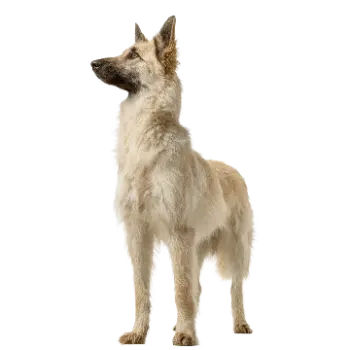
The first thing anyone notices about a Laeken is that coat. Where its Belgian siblings sport sleek short hair or flowing long locks, the Laeken wears a rough, tousled jacket that looks like the dog just came in from a windy day on the farm and cannot be bothered to tidy up. That disheveled appearance is entirely by design. The harsh, dry texture of the outer coat, paired with a dense undercoat, creates a natural armor against rain, cold, thorny underbrush, and the general wear and tear of outdoor working life. The hair measures roughly two and a half inches across the body, slightly shorter on the legs and head but never trimmed to a smooth or sculpted finish.

The muzzle carries a distinctive beard and mustache formed by the longer facial furnishings, giving the Laeken an expression that manages to be both serious and slightly scruffy at the same time. The eyes are dark brown, medium-sized, and slightly almond-shaped, set into the skull with an intelligent, questioning gaze that seems to constantly assess the surroundings. Ears are stiffly erect, triangular in shape, and set high on the head, contributing to the breed's perpetually alert silhouette. The overall impression of the head is long and lean without being narrow, with a moderate stop between the forehead and the muzzle.

The body underneath that rumpled coat is athletic and built for endurance rather than raw power. The Laeken stands squarely proportioned, meaning the distance from the ground to the withers roughly equals the length of the body from chest to hip. The chest is deep but not overly broad, dropping to the level of the elbows and providing plenty of lung capacity for sustained work. The topline runs level from the withers to the croup, with a slight slope toward the tail. Ribs are well sprung but not barrel-shaped, allowing for efficient movement without the rotational roll that comes with a wider chest.

Legs are straight and well-boned, providing a solid foundation without appearing heavy or coarse. The feet are round, tight, and well-padded, built for covering ground over varied terrain. Rear angulation is moderate, providing sufficient drive for the effortless trotting gait that is characteristic of all four Belgian Shepherd varieties. When the Laeken moves, it should appear light on its feet, covering ground with an easy, elastic stride that could be maintained for hours without visible fatigue.

Color ranges from fawn to mahogany, and many Laekens show traces of black shading on the muzzle and sometimes on the tail. The overall impression should be warm-toned and earthy, reflecting the breed's agrarian heritage. Some dogs carry a lighter fawn while others lean toward a deeper reddish mahogany, and both ends of the spectrum are equally correct. White markings are permitted only as a small patch on the chest and on the tips of the toes. The tail is strong at the base, reaches at least to the hock, and hangs in a slight curve when the dog is relaxed. In motion, the tail rises but should not curl over the back.

Sexual dimorphism is evident in the Laeken and is specifically addressed in the breed standard. Males project a distinctly masculine appearance with a broader head, thicker neck, and more substantial bone, while females are visibly feminine with a lighter frame and more refined features. Both sexes should convey strength, agility, and a readiness for action, standing between 22 and 26 inches at the shoulder and weighing anywhere from 44 to 65 pounds depending on sex and individual build. The overall impression the Laeken should leave is one of a rustic, capable working dog whose every physical trait serves a practical purpose rather than mere aesthetics.

Affectionate With Family
Laekens form powerful bonds with their household and crave direct involvement in daily routines. They are openly demonstrative with loved ones and will follow their favorite people from room to room.
Good With Young Children
While devoted to family children, Laekens carry herding instincts that can include nipping at heels during play. Supervision and early training help channel these behaviors constructively.
Good With Other Dogs
Laekens can coexist with other dogs when properly socialized from puppyhood, though some individuals may display same-sex tension or resource guarding tendencies.
Shedding Level
The wiry coat sheds moderately throughout the year, with heavier seasonal shedding once or twice annually when the topcoat loosens and needs to be stripped.
Coat Grooming Frequency
Weekly brushing keeps the coat tidy between hand-stripping sessions. The wiry texture resists matting better than softer coats but still benefits from regular attention.
Drooling Level
Laekens are a dry-mouthed breed with virtually no drooling tendency. Owners will not encounter slobber on furniture, clothing, or hands.
Coat Type
The defining Laeken coat is rough, harsh, and naturally tousled, measuring approximately two and a half inches in length with a distinct beard on the muzzle.
Openness To Strangers
Laekens are naturally reserved around unfamiliar people, preferring to observe before engaging. They do not show fear but take their time warming up to newcomers.
Playfulness Level
This breed retains a strong play drive well into adulthood, especially when activities involve problem-solving or physical challenges that engage both body and mind.
Watchdog/Protective Nature
Guarding is deeply embedded in the Laeken's heritage. They are instinctively alert to changes in their environment and will position themselves between their family and any perceived threat.
Adaptability Level
Laekens can adjust to various living situations provided their exercise and mental stimulation needs are consistently met. Abrupt changes in routine may cause stress without gradual transition.
Trainability Level
Intelligent and eager to work with a trusted handler, Laekens respond well to positive reinforcement. They do best with a confident owner who provides clear, consistent direction.

Laeken History & Development

The name Laeken ties this breed to a specific place and a specific moment in Belgian history. The town of Laeken, situated on the outskirts of Brussels, was home to the Chateau de Laeken, a royal residence of Queen Marie Henriette, who took a particular fondness for the rough-coated shepherd dogs that worked the surrounding farms and fields. That royal patronage helped distinguish the Laeken variety from the other Belgian shepherd types at a time when the differences between them were just beginning to be formally recognized. Before the late 19th century, Belgian shepherds were loosely categorized working dogs that varied in coat type from region to region, and nobody paid much attention to standardizing those differences.

That changed in 1891 when Professor Adolphe Reul of the Belgian School of Veterinary Sciences examined 117 Belgian shepherd dogs and established a classification system based on coat type, color, and regional origin. The newly formed Belgian Shepherd Club adopted this framework, and the Laeken variety was named for its home territory. The rough-coated dogs from the Laeken region had been working as livestock guardians and, notably, as protectors of linen laid out to dry in open fields, a common textile practice in the area. Their natural alertness and territorial instincts made them ideally suited for this work, and their coarse coat shed rain and dirt without requiring constant grooming.

World War I brought a dramatic shift in the Laeken's story. The breed's intelligence, courage, and trainability drew the attention of the Belgian military, and Laekens were deployed as messenger dogs, carrying communications across battlefields where human runners faced too great a risk. Their service continued through World War II, where their contributions as military working dogs earned them respect but also devastated their numbers. Reports indicate that during the Second World War, occupying forces placed bounties on Belgian Shepherds, further depleting an already small population.

The postwar recovery was painfully slow for the Laeken variety. While the Malinois and Groenendael varieties regained their numbers relatively quickly due to broader popularity, the Laeken remained the least known and least bred of the four Belgian types. In Belgium and throughout Europe, dedicated fanciers worked to rebuild the population from a very narrow genetic base, a challenge that continues to shape breeding decisions today. The worldwide population of Laekenois has been compared unfavorably to that of wild pandas, with estimates suggesting roughly a thousand individuals globally at various points in recent decades.

In the United States, the Laeken's journey toward recognition was long and deliberate. The AKC accepted the breed into its Foundation Stock Service, then moved it to the Miscellaneous Class in 2011, where it competed in limited events while the American Belgian Laekenois Association worked to build a sufficient population and meet the requirements for full recognition. That milestone came on July 1, 2020, when the Laeken became the AKC's 196th recognized breed and entered the Herding Group. The timing coincided with the global pandemic, which delayed the breed's debut at major shows, but fanciers celebrated the achievement as the culmination of decades of careful breeding and advocacy. Today the Laeken remains exceptionally rare in North America, with fewer than a few hundred dogs registered, making every breeding decision a matter of preservation as much as improvement.

Laeken Temperament & Personality

Living with a Laeken means living with a dog that watches everything, processes constantly, and forms opinions about every person, animal, and situation it encounters. This is not a breed that drifts passively through life. The Laeken's working heritage as a guardian of livestock and property runs deep in its behavioral DNA, producing a dog that is instinctively alert, naturally territorial, and deeply invested in the safety of its household. That vigilance is one of the breed's greatest strengths, but it also means the Laeken requires an owner who understands how to channel protective instincts constructively rather than allowing them to escalate unchecked.

Within the family, the Laeken is openly affectionate and surprisingly demonstrative for a breed that presents such a reserved face to the outside world. These dogs typically choose one person as their primary attachment figure, though they show genuine warmth to everyone in the household. They want to be involved in whatever you are doing, whether that means following you to the kitchen, lying at your feet while you work, or supervising household chores with an intensity that suggests they could take over the task if you would just give them the chance. This attachment is not clingy dependence but rather a working partnership mentality, the same drive that once had them shadowing shepherds across Belgian farmland.

Stranger reserve is a documented and expected feature of the breed, not a flaw to be trained away. The AKC standard specifically describes the Laeken as watchful, attentive, and reserved with strangers while being affectionate and possessive with those it knows well. A well-bred Laeken should observe a new person with calm curiosity, neither rushing forward to greet them nor shrinking away in fear. Extreme shyness is actually a disqualifying fault in the breed standard, and unprovoked aggression is equally unacceptable. The ideal Laeken temperament sits in a measured middle ground where the dog is confident enough to assess a situation without overreacting.

Behavioral challenges that surface in Laekens almost always trace back to insufficient stimulation, inadequate socialization, or unclear leadership. A bored Laeken is a destructive Laeken, and this breed's intelligence means it will find creative ways to entertain itself if you fail to provide outlets. Chewing, digging, excessive barking, and fence-line pacing are all common complaints from owners who underestimated how much mental engagement this breed requires. Same-sex aggression can occur in some individuals, particularly if early socialization with other dogs was limited, and the breed's natural herding instincts may manifest as heel-nipping during play, especially with running children.

The flip side of that intensity is a dog that thrives when given a job and a clear framework for behavior. Laekens that participate in structured activities such as obedience, agility, herding trials, tracking, or scent work tend to be calmer and more settled at home because their mental and physical energy has been directed productively. Experienced Belgian Shepherd owners often describe the Laeken's temperament as slightly softer and more approachable than the Malinois, less hair-trigger in reactivity, but still very much a working dog that demands respect for its intelligence and drive.

Laeken Family Life & Living Requirements

Bringing a Laeken into a family requires an honest assessment of your household's activity level, experience with working breeds, and willingness to invest time in training and socialization throughout the dog's life. This is not a low-maintenance breed that will happily occupy a corner of the house and ask nothing of you. The Laeken needs to be a participant in family life, not an accessory to it, and families who embrace that dynamic are rewarded with a loyal, watchful companion that takes its role as household protector seriously.

With children, the Laeken can be an excellent companion provided certain ground rules are established from the start. The breed's herding instinct may prompt nipping at running feet, and young children who cannot understand why the dog is chasing them will become frustrated or frightened. Older children who learn to interact respectfully with the dog, understand its signals, and participate in training activities often develop an especially strong bond with the Laeken. Supervision during interactions with toddlers and very young kids is essential, not because the breed is aggressive but because its instinct to control movement through nipping is deeply ingrained and requires consistent redirection.

Housing considerations for the Laeken center on space and stimulation rather than square footage alone. A house with a securely fenced yard is ideal, but the fence needs to be substantial because Laekens are athletic enough to clear a low barrier and motivated enough to try if something interesting is happening on the other side. That said, the breed can adapt to apartment or smaller home living if the owner is committed to providing multiple daily exercise sessions and plenty of mental enrichment. A Laeken that gets two hours of meaningful activity each day and has puzzle toys, training sessions, and regular outings will settle more peacefully than one that has a large yard but is left alone in it with nothing to do.

This breed does not tolerate extended isolation well. Laekens left alone for eight or more hours regularly may develop separation anxiety, destructive behavior, or excessive vocalization. They were bred to work alongside humans, and that partnership mentality means they genuinely suffer when cut off from their people for long stretches. Households where someone works from home or where schedules allow for midday breaks tend to be the best fit. If extended absences are unavoidable, doggy daycare or a reliable dog walker can help bridge the gap, though the Laeken's reserve with strangers means the caregiver should be someone the dog has learned to trust.

Multi-pet households can work well with proper introductions. Laekens generally coexist peacefully with cats and other animals they have been raised alongside, though their herding instinct may prompt them to chase smaller animals that run. Introductions to resident pets should be gradual and supervised, and the Laeken's territorial nature means it may need time to accept a new animal's presence in its space.

Laeken Training & Exercise Needs

Training a Laeken is an exercise in mutual respect. These dogs are intelligent enough to learn complex tasks quickly and sensitive enough to shut down completely if handled harshly. Positive reinforcement is not just the recommended approach for this breed, it is the only approach that produces reliable, lasting results. Corrections that might roll off a more phlegmatic breed can create lasting wariness in a Laeken, damaging the trust-based relationship that is the foundation of everything you will accomplish together. This does not mean being permissive or failing to set boundaries. It means being clear, consistent, and fair in your expectations while rewarding the behavior you want.

Early socialization is arguably the most critical training investment you will make with a Laeken. The breed's natural reserve with strangers and protective instincts mean that a dog who has not been exposed to a wide variety of people, places, sounds, and situations during the first few months of life may become overly suspicious or reactive as an adult. Puppy socialization classes, controlled introductions to new environments, and positive experiences with friendly strangers all help build the confidence that allows a Laeken to distinguish between genuine threats and everyday novelty. Breeders familiar with the breed emphasize that this socialization window closes relatively early and that remedial socialization in an adult Laeken is significantly more difficult.

Exercise requirements for the Laeken are substantial and non-negotiable. Plan on a minimum of 90 minutes to two hours of physical activity daily, split across multiple sessions. Long walks, jogging, hiking, and off-leash running in safe, enclosed areas all serve the purpose, but physical exercise alone is not enough. Laekens need mental challenges to feel satisfied. Structured training sessions, puzzle feeders, nose work games, and activities that require the dog to think and solve problems are essential components of a complete exercise program. A Laeken that is physically tired but mentally understimulated will still find ways to cause trouble.

The breed excels in a range of competitive dog sports. Agility plays to the Laeken's natural athleticism and responsiveness. Herding trials tap directly into its ancestral instincts. Tracking and scent work leverage the breed's keen nose and concentration. Obedience and rally provide the structure and communication practice that strengthen the handler-dog bond. Many Laeken owners find that rotating through different activities keeps the dog engaged and prevents the boredom that comes from doing the same thing day after day.

One important consideration for training is the Laeken's tendency to bond most strongly with one handler. While the dog will respond to other family members, the primary trainer often gets the most reliable performance. Consistency across all household members in commands, expectations, and reward patterns helps prevent confusion, but the person who invests the most training time will typically enjoy the closest working relationship with the dog.

Laeken Health Concerns

The Laeken benefits from the general hardiness associated with working breeds that were developed for function rather than appearance, but its extremely small gene pool introduces health considerations that prospective owners need to understand. With a global population estimated at roughly a thousand individuals, the breeding pool is narrow enough that certain conditions have become established concerns requiring active screening.

Gastric dilatation-volvulus, commonly known as bloat, is a risk for deep-chested breeds of the Laeken's size. This life-threatening condition occurs when the stomach fills with gas and rotates on its axis, cutting off blood supply to the stomach and surrounding organs. Without emergency surgical intervention, bloat is fatal within hours. Feeding multiple smaller meals rather than one large meal, avoiding vigorous exercise immediately after eating, and using slow-feeder bowls are common preventive strategies.

Common Health Issues

  • Hip dysplasia is a developmental condition where the hip joint forms improperly - Causing the ball and socket to grind rather than glide smoothly. Affected Laekens typically show stiffness after exercise, reluctance to climb stairs, and progressive lameness that worsens without management.
  • Elbow dysplasia involves abnormal development of the elbow joint - Leading to cartilage damage, joint inflammation, and chronic lameness in the front legs. This condition often appears in growing dogs between six months and two years of age and may require surgical intervention.
  • Progressive retinal atrophy is a group of inherited eye diseases that cause gradual deterioration of the retina's photoreceptor cells. Vision loss typically begins with poor night vision and progresses to complete blindness over months to years - With no currently available cure.
  • Epilepsy causes recurrent seizures ranging from brief focal episodes to prolonged generalized convulsions. The condition can appear at any age and is managed with daily anticonvulsant medication - Though some dogs require multiple drugs to achieve adequate seizure control.
  • Hypothyroidism results from insufficient thyroid hormone production - Causing symptoms such as unexplained weight gain, coat thinning, lethargy, and cold intolerance. The condition is diagnosed through blood testing and managed effectively with daily synthetic thyroid hormone supplementation.
  • Gastric dilatation-volvulus occurs when the stomach fills with gas and rotates - Trapping contents and cutting off blood flow. This is a life-threatening emergency requiring immediate surgical correction, and deep-chested breeds like the Laeken carry elevated risk.
  • Cataracts cause a clouding of the eye's natural lens - Progressively reducing vision clarity. In the Laeken, cataracts may develop at various ages and can sometimes be addressed surgically through lens replacement if the dog is otherwise healthy.

Preventive Care & Health Monitoring

  • Hip evaluation through OFA radiographs or PennHIP assessment should be performed on all Laekens intended for breeding - With results submitted to the public database to support breed-wide transparency and informed pairing decisions.
  • Elbow evaluation via OFA radiographic screening identifies developmental abnormalities in the elbow joint before breeding - Dogs with evidence of dysplasia should be removed from breeding programs to reduce the condition's prevalence in the breed's limited gene pool.
  • Annual ophthalmologist evaluations by a board-certified veterinary ophthalmologist screen for progressive retinal atrophy - Cataracts, retinal dysplasia, and other ocular conditions documented in the breed. Results should be registered with the Canine Eye Registry Foundation.
  • Thyroid evaluation through a complete thyroid panel detects hypothyroidism - Which has been documented in Belgian Shepherds including the Laeken variety. Testing is recommended before breeding and periodically throughout the dog's life to catch developing deficiency.
  • Cardiac examination by a veterinary cardiologist screens for structural heart abnormalities. While cardiac disease is not the most prevalent concern in the Laeken - The CHIC protocol includes this screening as a precautionary measure given the breed's small population.
  • Dentition examination assesses the completeness and alignment of the teeth - An area flagged as a breed-specific concern. Breeding dogs should have full dentition evaluated to help maintain proper dental genetics within the population.
  • Bloat prevention protocols include feeding two or three smaller meals daily instead of one large meal - Using slow-feeder bowls to reduce gulping, avoiding vigorous exercise within an hour of eating, and discussing prophylactic gastropexy with your veterinarian.

Laeken Grooming & Maintenance

The Laeken's distinctive wiry coat requires a grooming approach that differs substantially from what you might use on any other Belgian Shepherd variety. The rough, tousled texture that gives the breed its characteristic look is maintained not through clipping or scissoring but through hand-stripping, a process where dead outer coat is manually pulled or stripped away to encourage new growth of the correct harsh texture. Most Laekens need hand-stripping once or twice per year, typically when the topcoat begins to part, lift away from the body, or shed in loose clumps. If you are not familiar with hand-stripping, connecting with experienced rough-coated breed owners or a groomer who specializes in wire-coated breeds is highly recommended, because clipping or trimming with scissors will alter the coat texture and may produce a softer, less weather-resistant coat over time.

Between stripping sessions, weekly brushing with a slicker brush or a medium-toothed comb keeps the coat free of debris and prevents the modest tangles that can form in the beard and leg furnishings. Despite its rumpled appearance, the Laeken coat is surprisingly low-maintenance on a daily basis. The harsh texture naturally repels dirt, and the coat dries quickly after getting wet, so frequent bathing is neither necessary nor recommended. Over-bathing strips the natural oils that give the coat its characteristic dry, slightly rough feel. When a bath is needed, a mild dog shampoo followed by thorough drying is sufficient, and conditioners should be avoided as they soften the coat texture.

Beyond coat care, the Laeken shares the same general maintenance needs as any active medium to large breed. Nails should be trimmed regularly, roughly every two to three weeks or whenever you can hear them clicking on hard floors. Overgrown nails alter the dog's gait and can cause discomfort or contribute to structural problems over time. Ears should be checked weekly for redness, odor, or debris, particularly since the erect ear shape, while well-ventilated, can still collect dust and pollen during outdoor activities. Teeth require attention as well, and daily brushing with a canine-specific toothpaste is the gold standard for preventing periodontal disease, which is one of the most common health issues across all dog breeds.

The Laeken's dentition exam as part of the CHIC health testing protocol is noteworthy because dental issues have been flagged as a breed concern. Owners should establish a dental care routine early in the dog's life, getting the puppy accustomed to having its mouth handled and teeth brushed while it is still young and receptive. Regular dental chews and annual professional dental cleanings supplement the home care routine and help ensure the dog maintains a full, healthy set of teeth throughout its life.