Gypsy Dog

Bedlington Terrier

Quick Facts

🐕 Breed Group
Terrier Group
📏 Size Category
Small to Medium
📏 Height
Males: 16-17.5 inches, Females: 15-16.5 inches
⚖️ Weight
Males: 17-23 lbs, Females: 17-23 lbs
⏱️ Life Expectancy
11-16 years
🧣 Coat Type
Crisp, curly mix of hard and soft hair
🎨 Coat Colors
Blue, sandy, liver, blue and tan, sandy and tan, liver and tan
😀 Temperament
Loyal, spirited, affectionate, tenacious
🏃 Exercise Needs
Moderate
🎓 Training Difficulty
Moderate
👶 Good with Children
Yes
🐾 Good with Other Pets
Moderate, can be dog-aggressive

Other Names & Breed Recognition

Gypsy Dog is one of the oldest names attached to the breed we now call the Bedlington Terrier, and it tells you something important about where these dogs came from and who shaped them. Before they were show dogs with sculptured coats and a place in the terrier ring, they were working animals in the hands of Romani travelers who moved through the northern English countryside. The Romani used these dogs for poaching rabbits, hares, and other small game, and the dogs earned a reputation as swift, silent, and devastatingly efficient hunters. The name Gypsy Dog stuck because it described exactly who kept these dogs and what they did with them.

The connection between the breed and Romani communities runs deep enough that it shaped the dog's fundamental character. These were not kennel dogs or estate dogs. They were camp dogs, traveling companions, and working partners that needed to be athletic enough to catch game, tough enough to handle other dogs, and calm enough to settle quietly around a fire at the end of the day. That combination of fierceness and gentleness is still the hallmark of the breed, and understanding the Gypsy Dog heritage helps explain why.

The breed is more formally known as the Bedlington Terrier, named after the mining town of Bedlington in Northumberland where the breed was refined in the early 1800s. The first dog officially called a Bedlington Terrier was a dog named Piper, owned by Joseph Ainsley, in 1825. Before that formalization, the dogs went by several regional names including Rothbury Terrier, Northumberland Fox Terrier, and of course Gypsy Dog. Each name reflected a different community's relationship with the same animal.

Today the Bedlington Terrier is recognized across all major registries. The American Kennel Club placed the breed in the Terrier Group upon recognition in 1886. The Kennel Club in the United Kingdom, the United Kennel Club, the Canadian Kennel Club, and the FCI all recognize the breed. The name Gypsy Dog is rarely used in formal breed contexts anymore, but it persists in breed histories and among enthusiasts who appreciate the working origins that gave this lamb-shaped terrier its remarkable combination of speed, courage, and devotion.

Gypsy Dog Organizations & Standards

The Bedlington Terrier Club of America is the AKC parent club and the primary organization for the breed in the United States. In the United Kingdom, the National Bedlington Terrier Club and the Midland Bedlington Terrier Club maintain the breed's interests and promote responsible ownership. These organizations share a commitment to preserving the breed's health and working character even as the vast majority of modern Bedlingtons serve as companions rather than hunting dogs.

The breed standard describes a dog that is graceful, lithe, and muscular, with none of the heaviness you might associate with other terriers. The ideal height is approximately 16 to 17.5 inches for males and 15 to 16.5 inches for females, with weight proportionate to height at roughly 17 to 23 pounds. The standard emphasizes balance and athletic capability above all else. The body should be slightly longer than tall, with a distinctive roached topline that gives the breed its unique silhouette. The head is narrow and deep, topped by the signature pear-shaped skull covered with a profuse topknot of lighter-colored hair.

The standard allows three primary coat colors with their tan-pointed variations: blue, sandy, and liver. Puppies are born darker and lighten as they mature, which is a characteristic feature of the breed. Blue puppies are born black, sandy puppies are born dark brown, and liver puppies are born chocolate. The coat texture is described as a mixture of hard and soft hair that stands well out from the skin and has a crisp, curly quality. The grooming pattern that gives the Bedlington its lamb-like appearance is a show ring convention rather than a standard requirement, but it has become so identified with the breed that most people cannot picture a Bedlington without it.

Health testing is taken seriously within the breed community, particularly given the significance of copper toxicosis as a breed-specific condition. The Orthopedic Foundation for Animals recommends that all Bedlington Terriers be screened through a copper toxicosis DNA test, patellar evaluation, ophthalmologist examination, and cardiac evaluation before breeding. The COMMD1 gene test allows breeders to identify clear, carrier, and affected dogs and make breeding decisions that reduce the incidence of this potentially fatal liver condition. Additional genetic research has identified the ATP7B variant as another contributing factor, expanding the tools available for responsible breeders.

Kennel Club Recognition

  • American Kennel Club (AKC): Recognized in 1886, Terrier Group
  • United Kennel Club (UKC): Recognized, Terrier
  • Canadian Kennel Club (CKC): Recognized, Terriers
  • FCI: Recognized, Group 3: Terriers
  • The Kennel Club (UK): Recognized, Terrier

Gypsy Dog Physical Description

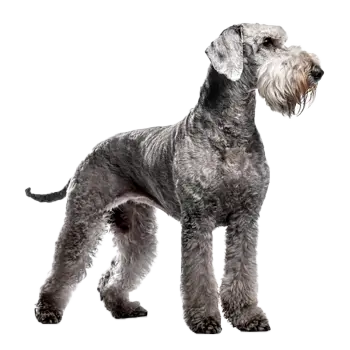
There is no other dog on earth that looks quite like a Bedlington Terrier, and the Gypsy Dog name only adds to the mystique of this unusual animal. At first glance, you might mistake one for a small lamb, and that comparison has followed the breed for well over a century. The narrow, wedge-shaped head is covered with a profuse topknot of soft, nearly white hair that contrasts with the body coat and gives the face an expression that is simultaneously sweet and slightly mischievous. The eyes are small, bright, and triangular, set deep into the skull and carrying an expression of alert intelligence.

The ears are thin, triangular, and set low on the head, hanging close to the cheeks with a velvety texture at the tips. They are covered with short, fine hair except for a silky tassel at the very end. The head and ear combination is one of the breed's most distinctive features, and it contributes to the gentle, almost ethereal look that belies the tough terrier underneath.

The body tells a different story than the face. Under that curly coat is a surprisingly athletic and muscular frame built for speed and endurance. The topline has a distinctive arch over the loin that is unique among terrier breeds and gives the Bedlington its characteristic silhouette. This arched back is not a structural flaw but a deliberate feature that contributes to the breed's remarkable agility and the whippet-like gallop that the Romani prized in their Gypsy Dogs. The chest is deep and moderately narrow, the ribs are flat, and the tuck-up is pronounced, all features that support a dog built more for sprinting than for brute-force earthwork.

The legs are longer than you might expect for a terrier, with the hind legs appearing slightly longer than the front. This construction gives the Bedlington its distinctive gait, which is springy and light with a signature bounce that breed enthusiasts call characteristic. The feet are long and hare-shaped with thick pads, another feature that points to the breed's running heritage rather than digging.

The coat is one of the most unusual in the dog world. It consists of a mixture of hard and soft hair that grows in a thick, crisp texture and stands away from the skin rather than lying flat. It does not shed in the conventional sense but grows continuously, which means regular trimming is essential. The traditional show trim sculpts the coat to accentuate the breed's lines, creating the lamb-like appearance that has become the breed's visual signature. Colors include blue, liver, and sandy, each with an optional tan point pattern. Puppies are born considerably darker than their adult color, and the gradual lightening process can take two years or more to complete.

The tail is low-set, thick at the root, and tapers to a point. It is moderately long and carried in a gentle curve but never over the back. In movement, the tail may rise slightly but should not become a flag. The overall outline when the dog is standing naturally is one of graceful curves rather than sharp angles, from the arched topline through the tucked abdomen to the gently rounded hindquarters.

Size-wise, the Gypsy Dog is a small-to-medium terrier. Males typically stand around 16 to 17.5 inches at the shoulder, and females are slightly smaller. Weight ranges from 17 to 23 pounds for both sexes. Despite the delicate appearance, there is real substance under that coat, and a Bedlington in proper condition is a firm, muscular dog with considerably more power than its lamb costume suggests. When a Gypsy Dog breaks into a full sprint across an open field, the Whippet ancestry becomes unmistakable, and you understand immediately why the Romani valued these dogs as coursing partners capable of running down rabbits on open ground.

Affectionate With Family
Gypsy Dogs attach deeply to their family and thrive on close contact. They are the kind of dog that wants to be in your lap, on your bed, and right beside you at all times.
Good With Young Children
Patient and playful with children when raised alongside them. Their moderate size and sturdy build make them good playmates for kids who understand gentle handling.
Good With Other Dogs
This breed carries a strong terrier temperament and will not back down from a challenge. Socialization helps, but same-sex aggression can be persistent.
Shedding Level
One of the lowest-shedding breeds available. The coat grows continuously rather than going through heavy shed cycles, making regular trimming essential.
Coat Grooming Frequency
The curly coat requires regular brushing and professional grooming every six to eight weeks to maintain its shape and prevent matting.
Drooling Level
Bedlington Terriers produce virtually no drool. This is a clean-mouthed breed that does not leave dampness on furniture or clothing.
Coat Type
The coat is a distinctive mixture of hard and soft hair that stands away from the skin in a crisp, curly texture. It does not lie flat.
Openness To Strangers
Generally friendly with new people but maintains an alert watchfulness. They warm up quickly once they sense no threat to their family.
Playfulness Level
Gypsy Dogs are lively and playful, capable of surprising bursts of speed and agility. Their clownish antics can entertain a household for hours.
Watchdog/Protective Nature
Alert and quick to sound the alarm when something unusual occurs. Despite their gentle appearance, they take guarding their home seriously.
Adaptability Level
Adapts well to various living situations including apartments, provided exercise needs are met. Their moderate size and calm indoor demeanor are advantages.
Trainability Level
Intelligent and capable of learning quickly, but carries the typical terrier independence. Training sessions need to feel engaging rather than repetitive.

Gypsy Dog History & Development

The name Gypsy Dog connects the Bedlington Terrier to a period in its history before breed clubs, show rings, and stud books existed. The Romani people who traveled through Northumberland and the border regions of England and Scotland kept small, fast terriers that could catch rabbits and other small game to feed the camp. These dogs needed to work silently so as not to attract attention from landowners, and they needed enough speed to run down prey in open country. The dogs that eventually became the Bedlington Terrier were perfectly suited to this life, and the Romani communities played a significant role in developing and maintaining the type.

The historical record is spotty because the Romani did not keep written breeding records, but the dogs they produced were well-known enough to have a reputation throughout the region. Local miners, nail-makers, and other working people in and around the town of Bedlington adopted the same type of dog for their own purposes, which included ratting, rabbit coursing, and badger work. The breed's ancestry likely includes crosses with Whippets, which would explain the arched back, hare feet, and sprinting ability, as well as Otterhound and Dandie Dinmont Terrier blood.

The transition from Gypsy Dog to Bedlington Terrier happened gradually during the early nineteenth century as the breed moved from itinerant camps and mining communities into the hands of fanciers who valued the dog's unique appearance and spirited temperament. The miners of Bedlington and surrounding towns adopted the same type of dog for ratting in the coal pits and for weekend rabbit coursing matches, and it was through these working-class communities that the breed gained enough consistency of type to warrant a formal name. The first dog officially called a Bedlington Terrier was Piper, bred by Joseph Ainsley in 1825. Piper was renowned for his gameness and was reportedly still working at fourteen years old despite being nearly blind and toothless. The Bedlington Terrier Club was established in England in 1877, making it one of the oldest breed clubs in existence.

The Gypsy Dog name faded from common use as the breed gained respectability in the show ring and among middle-class dog fanciers who valued the breed's unusual appearance and manageable temperament. The show ring transformation was dramatic. Dogs that had been rough-coated working terriers were groomed into the sculptured, lamb-like figures that became the breed's visual identity. But the working qualities that the Romani developed never disappeared. Even today, Bedlington Terriers retain the prey drive, speed, and toughness that made them effective poaching dogs. The breed was recognized by the American Kennel Club in 1886 and has maintained a small but devoted following in the United States ever since.

The name Gypsy Dog survives in breed literature and among historians who recognize the Romani contribution to the breed's development. It serves as a reminder that the sweet-faced, lamb-coated dog in the show ring descends from a much scrappier lineage, one shaped by necessity, resourcefulness, and the partnership between working people and their dogs.

Gypsy Dog Temperament & Personality

The Bedlington Terrier's temperament is a study in contrasts, and the Gypsy Dog heritage explains much of it. This is a dog that can lie at your feet in absolute relaxation for hours and then, in the time it takes to spot a squirrel through the window, transform into something swift, focused, and utterly serious. Breed enthusiasts often say that the Bedlington is a dog in sheep's clothing, and the description is more accurate than most breed cliches. Under that soft, curly coat lives a genuine terrier with all the determination, courage, and independent thinking that implies.

With their people, Gypsy Dogs are deeply affectionate and remarkably attuned to household moods. They have a sensitivity that sets them apart from many other terrier breeds and makes them responsive to tone of voice and emotional energy. Harsh training methods will shut a Bedlington down rather than correct it. They want to cooperate, and they do best with handlers who recognize that cooperation is a two-way street. If you approach training as a partnership rather than a dictatorship, a Bedlington will meet you more than halfway.

The breed's relationship with other dogs is where the terrier fire becomes most visible. Bedlingtons can be dog-aggressive, particularly with same-sex dogs, and they will not back down from a confrontation regardless of the size difference. This is not a breed you can assume will be passive at the dog park. Early socialization helps moderate this tendency, and many Bedlingtons live happily in multi-dog homes, but the potential for conflict is real and should be managed honestly. Ignoring this trait or assuming your dog is different without evidence leads to situations that are stressful for everyone involved.

Prey drive is another area where the Gypsy Dog heritage shows clearly. These dogs were bred to chase and catch fast-moving game, and that instinct remains strong. Squirrels, rabbits, cats that run, and other small animals can trigger an instant pursuit response that overrides recall training. A fenced yard is essential, and off-leash time in unsecured areas is risky regardless of how reliable your dog seems in other contexts.

What makes the Bedlington genuinely special as a companion is the balance between the terrier intensity and the almost regal calm they display at home. A well-exercised, mentally engaged Gypsy Dog is one of the most pleasant house dogs you can find. They are clean, quiet, and content to settle into the rhythms of your household. They are also clownish and entertaining when the mood strikes, capable of making you laugh with unexpected antics that seem deliberately timed for maximum effect. The breed has a sense of humor, if a dog can be said to have one, and living with a Bedlington is never boring.

Gypsy Dog Family Life & Living Requirements

The Gypsy Dog's moderate size and adaptable nature make it one of the more versatile terriers when it comes to living situations. A Bedlington can thrive in an apartment, a suburban house, or a rural property, provided its exercise and companionship needs are met. The breed is calm indoors and does not tend toward the restless pacing or demand barking that some higher-energy terriers display when kept in smaller spaces. That said, every Bedlington needs daily outdoor time to stretch its legs and engage its mind, and a fenced yard is strongly preferred for safe off-leash play.

Families with children generally find the Bedlington to be a patient and playful companion. The breed's sturdier build means it can handle the energetic play style of older kids without being overwhelmed, and most Bedlingtons genuinely enjoy the activity and attention children bring. With toddlers and very young children, supervision is important, not because the breed is snappy but because young children can be unpredictable in ways that may startle a dog that is resting or eating. Teaching children to approach the dog calmly and to respect quiet time goes a long way.

The breed's relationship with other household animals requires thoughtful management. Bedlingtons raised with cats from puppyhood can learn to coexist, but the prey drive is real, and a cat that bolts may trigger a chase response that is difficult to interrupt. Small pets like rabbits, guinea pigs, and hamsters are at genuine risk around an unsupervised Bedlington. With other dogs, the picture depends heavily on individual temperament and socialization history. Many Bedlingtons do well with housemates of the opposite sex, while same-sex pairings sometimes require ongoing management.

One of the most appealing aspects of living with a Gypsy Dog is the breed's sensitivity to its owner's emotions. Bedlingtons are perceptive dogs that pick up on stress, sadness, and joy with remarkable accuracy. They tend to be comforting without being pushy, settling beside you during difficult moments and perking up with playful energy when the mood lightens. This emotional intelligence makes them outstanding companions for people who want a dog that feels genuinely connected to the household rather than just living in it. The Romani did not keep these dogs purely for utility, and that centuries-old bond between dog and human partner remains the core of the breed's appeal.

Gypsy Dog Training & Exercise Needs

Training a Bedlington Terrier works best when you think of it as a conversation rather than a command structure. These dogs are intelligent, quick to learn, and genuinely willing to work with you, but they have a terrier's independent streak and a sensitivity that requires you to be thoughtful about your approach. Positive reinforcement delivered with consistency and good timing produces excellent results. Harsh corrections, loud voices, or physically forceful methods will damage the relationship and make the dog reluctant to engage. A Bedlington that does not trust its handler becomes evasive rather than defiant, and rebuilding that trust takes patience.

Socialization is especially important during the first four months and should expose the puppy to a wide range of people, animals, sounds, and environments. This early investment pays dividends throughout the dog's life, particularly in managing the breed's potential for dog aggression. Puppy classes that use positive methods provide both socialization and foundational obedience in a structured setting. The goal is not to eliminate the terrier temperament but to give the dog the confidence and social skills to navigate the world without defaulting to reactivity.

Exercise needs for the Gypsy Dog are moderate compared to many sporting or herding breeds, but they are not optional. A daily walk of thirty to forty-five minutes plus some active play or free running in a fenced area keeps most Bedlingtons content. The breed has genuine speed and agility when it decides to run, and watching a Bedlington in full gallop reveals the Whippet influence that gives these dogs their athletic build. Dog sports including agility, earthdog trials, and rally obedience are excellent outlets that challenge both the body and the brain.

Mental stimulation matters as much as physical exercise for this breed. Bedlingtons are thinkers, and a dog that gets plenty of physical activity but no mental engagement will find ways to entertain itself that you probably will not appreciate. Puzzle toys, scent games, and training sessions that introduce new skills keep the mind sharp and the behavior manageable. The breed is naturally curious and enjoys problem-solving, so activities that tap into that curiosity produce a more satisfied and cooperative dog.

Expect the adolescent period to test your patience. Bedlingtons mature at their own pace, and a teenage dog will selectively forget things it knew perfectly well at twelve weeks. Consistency through this phase, without escalating to frustration or punishment, is the key. The mature Bedlington that emerges on the other side is a reliable, well-mannered companion that still retains enough spark to keep life interesting.

Gypsy Dog Health Concerns

Copper toxicosis is the single most significant health concern in the Bedlington Terrier and the one that every prospective owner must understand before acquiring a dog. This is an inherited metabolic disorder where the liver cannot properly excrete copper through bile, leading to progressive copper accumulation that causes liver inflammation, chronic hepatitis, and potentially fatal cirrhosis. The condition is linked to a deletion in the COMMD1 gene, and a DNA test is available that identifies clear, carrier, and affected dogs. More recently, the ATP7B variant has been identified as an additional genetic contributor, meaning some dogs that test clear for COMMD1 may still carry risk. Responsible breeders test for both variants and plan their pairings to avoid producing affected puppies.

Renal cortical hypoplasia is a developmental kidney condition that can affect Bedlingtons, causing symptoms like increased thirst, excessive urination, and poor growth. Management is supportive rather than curative, focusing on dietary modification and hydration to reduce stress on the kidneys. Overall, the Bedlington's lifespan of 11 to 16 years is strong for a purebred dog, and breeders who test diligently for copper toxicosis and screen for other conditions are producing healthier dogs with each generation.

Common Health Issues

  • Copper toxicosis is the breed's most critical health concern - Caused by mutations in the COMMD1 gene and potentially the ATP7B variant, leading to progressive copper accumulation in the liver that can cause chronic hepatitis, cirrhosis, and fatal liver failure if unmanaged.
  • Patellar luxation involves the kneecap slipping from its normal position in the groove of the femur - Causing intermittent lameness and a skipping gait that may require surgical correction in moderate to severe cases.
  • Retinal dysplasia - Including the severe total retinal dysplasia form, involves abnormal development or detachment of the retinal tissue, leading to impaired vision that is typically apparent in puppies and has no treatment.
  • Renal cortical hypoplasia is a developmental kidney condition causing incomplete kidney formation - Leading to increased thirst, excessive urination, and compromised kidney function that requires lifelong dietary management.
  • Distichiasis involves abnormal eyelashes growing from the eyelid margin that contact and irritate the cornea - Potentially causing redness, tearing, and corneal damage if left untreated.
  • Progressive retinal atrophy causes gradual deterioration of the retinal photoreceptor cells - Beginning with reduced vision in low light and progressing to complete blindness over time.

Preventive Care & Health Monitoring

  • COMMD1 and ATP7B genetic testing should be completed on all breeding stock to identify clear - Carrier, and affected dogs before any mating decisions are made, as copper toxicosis prevention depends entirely on informed breeding practices.
  • Patellar evaluation through OFA screening identifies dogs with abnormal kneecap tracking and allows breeders to select against the condition in their breeding programs. - Patellar evaluation through OFA screening identifies dogs with abnormal kneecap tracking and allows breeders to select against the condition in their breeding programs.
  • Annual ophthalmologist examinations by a board-certified ACVO specialist screen for retinal dysplasia - Distichiasis, progressive retinal atrophy, and other eye conditions documented in the breed.
  • Cardiac evaluation is part of the recommended screening protocol and helps identify congenital or acquired heart conditions that may affect the dog's long-term health. - Cardiac evaluation is part of the recommended screening protocol and helps identify congenital or acquired heart conditions that may affect the dog's long-term health.
  • Dietary copper management is essential for dogs identified as carriers or affected through genetic testing - Involving selection of dog foods with controlled copper levels and avoidance of copper-rich supplements.
  • Regular liver enzyme monitoring through blood work helps detect early signs of copper accumulation or liver stress in dogs with known genetic risk - Allowing intervention before clinical symptoms develop.

Gypsy Dog Grooming & Maintenance

The Bedlington Terrier's coat is one of its most distinctive features and one of the primary commitments that comes with owning one. The mixture of hard and soft hair grows continuously rather than shedding in seasonal cycles, which means the coat needs regular trimming to maintain shape and prevent matting. Most owners take their Bedlington to a professional groomer every six to eight weeks for the full trim that maintains the breed's characteristic lamb-like silhouette. Between grooming appointments, brushing two to three times a week with a slicker brush keeps the coat free of tangles and debris.

The traditional Bedlington trim is distinctive and takes some skill to execute well. The coat is scissored close on the body and legs, leaving longer hair on the head to form the signature topknot and rounded ear tassels. The face is trimmed clean to emphasize the breed's refined head shape, and the legs are shaped to accentuate the graceful, slightly arched outline of the body. Learning to do a basic maintenance trim at home can save money between professional appointments, and many breed clubs offer grooming workshops for owners who want to develop this skill.

Because the coat does not shed in the traditional sense, Bedlingtons are often considered a good choice for people with allergies. No dog is truly hypoallergenic, but the minimal shedding does reduce the amount of dander and loose hair in the environment compared to heavy-shedding breeds. This was not a consideration for the Romani who kept Gypsy Dogs, of course, but it is a practical benefit that modern owners appreciate.

Ear care is important because the ears hang close to the head and the silky tassels can trap moisture and debris. Weekly checks for redness, odor, or wax buildup help prevent infections. The ears should be cleaned with a veterinary-approved solution as needed and dried thoroughly after bathing or swimming. Nail trimming follows the standard schedule of every two to three weeks. Dental care is especially important in the Bedlington, as the breed is not exempt from the dental issues common in smaller dogs. Regular brushing, ideally daily, combined with periodic veterinary dental evaluations keeps the teeth and gums healthy throughout the dog's life.

The overall grooming commitment for a Bedlington is higher than average but manageable with a consistent routine. The reward is a dog that looks striking, sheds minimally, and remains clean and comfortable in its own skin. For owners willing to invest the time or the professional grooming costs, the maintenance is straightforward and becomes part of the rhythm of living with this unique breed.