Bracco Italian Pointer

Bracco Italiano

Quick Facts

🐕 Breed Group
Sporting Group (AKC), Gun Dog Group (UKC), FCI Group 7 Section 1.1
📏 Size Category
Large
📏 Height
Males: 23-27 inches, Females: 21-25 inches
⚖️ Weight
Males: 55-90 pounds, Females: 55-80 pounds
⏱️ Life Expectancy
10-14 years
🧣 Coat Type
Short, dense, and glossy single coat
🎨 Coat Colors
White, white and orange, white and chestnut, orange roan, chestnut roan
😀 Temperament
Affectionate, intelligent, docile, eager to please, loyal, energetic
🏃 Exercise Needs
High
🎓 Training Difficulty
Moderate - sensitive but willing learner
👶 Good with Children
Yes
🐾 Good with Other Pets
Yes - sociable with proper introductions; moderate prey drive with small animals

Other Names & Breed Recognition

Bracco Italian Pointer is one of the English-language names used for the breed formally known as the Bracco Italiano, Italy's ancient and distinguished pointing dog. The name is a straightforward translation that combines the Italian breed designation with the English functional descriptor, making the breed's purpose immediately clear to English-speaking audiences unfamiliar with Italian cynological terminology. Other names that appear in breed literature and historical references include Italian Pointer, Italian Pointing Dog, and Italian Setter, though the latter has fallen out of favor as it implies a working style distinct from the breed's actual pointing heritage. In Italian, the plural form is Bracchi Italiani, and this usage appears regularly in show catalogs, breed publications, and conversation among fanciers.

The name Italian Pointer gained traction primarily in English-speaking countries where buyers and hunters encountered the breed through imports during the late twentieth century. When the first Bracchi arrived in the United States in the 1990s, owners and breeders frequently found themselves explaining what the dog was to people who had never seen one. Calling it an Italian Pointer provided instant context, placing the breed within a familiar category alongside English Pointers, German Shorthaired Pointers, and other pointing breeds that American hunters already knew. The name stuck in casual usage even as the formal Italian designation remained the standard in registry documents and breed club communications.

The breed carries recognition from every major kennel club worldwide, uniformly under the name Bracco Italiano. The Federation Cynologique Internationale accepted the breed in 1956 under Group 7, Section 1.1, classifying it among the Continental Pointing Dogs of the Bracco type. The United Kennel Club recognized the breed in 2006 within its Gun Dog Group. The American Kennel Club granted full recognition in 2022, making the Bracco Italiano its 200th registered breed and placing it in the Sporting Group. The Kennel Club in the United Kingdom recognizes the breed in the Gundog Group, and the Canadian Kennel Club includes it among its Sporting Dogs.

Regardless of which name you encounter, the dog in question is the same breed: a large, powerful, distinctively headed pointing dog with roots stretching back to the fourth or fifth century on the Italian peninsula. The Bracco Italian Pointer designation appears most often in informal conversation, classified advertising, and popular media rather than in official breed documentation, but it is a perfectly accurate and widely understood way to refer to this breed.

Bracco Italian Pointer Organizations & Standards

The Bracco Italiano Club of America serves as the AKC parent club for the breed in the United States. Founded in 2007, the club worked for fifteen years to achieve full AKC recognition, an effort that culminated in the breed's acceptance into the Sporting Group on June 29, 2022 as the organization's 200th registered breed. The club promotes responsible breeding, provides breed education to judges and the public, supports rescue efforts for displaced Bracchi, and maintains a Code of Ethics that members agree to follow regarding health testing, puppy placement, and lifelong breeder responsibility for dogs they produce.

The breed standard as maintained by the AKC describes the Bracco Italiano as a strong, active, sturdy dog of noble appearance with a distinctive sculpted head, deep chest, and powerful, athletic build. The standard calls for an almost square body proportion, with the length from the point of the chest to the point of the buttock approximately equal to or slightly greater than the height at the withers. The head is a defining breed characteristic: long and angular with a pronounced occiput, a visible median furrow along the skull, chiseling beneath the eyes, and well-developed, pendulous upper lips. The expression should be soft and intelligent, conveying the breed's gentle temperament. Coat colors are restricted to white, white and orange, white and chestnut, and the roan variations of orange and chestnut.

The FCI standard, which serves as the foundation for breed evaluation in most countries outside North America, specifies similar structural and temperamental requirements while placing particular emphasis on the breed's movement. The characteristic Bracco trot is considered a breed hallmark: an extended, effortless, ground-covering gait driven by powerful rear extension that gives the impression of the dog floating across the terrain. This movement reflects the breed's working heritage as a methodical hunter that covers ground at a sustainable pace rather than the galloping style employed by English-type pointers. The standard requires that physical conformation support this distinctive movement pattern, with correct angulation, balanced proportions, and adequate bone and muscle enabling all-day performance in the field.

The Societa Amatori Bracco Italiano, the breed's parent organization in Italy, was established in 1949 and has served as the custodian of the breed standard and the driving force behind preservation efforts since the breed's near-extinction following the World Wars. This Italian society works closely with the Ente Nazionale della Cinofilia Italiana, the Italian national kennel club that first registered a Bracco Italiano when it was founded in 1882, making the breed the very first entry in the Italian stud book. The historical significance of that first registration underscores the breed's central place in Italian canine heritage.

Kennel Club Recognition

  • American Kennel Club (AKC): Recognized in 2022, Sporting Group
  • United Kennel Club (UKC): Recognized in 2006, Gun Dog Group
  • Canadian Kennel Club (CKC): Recognized, Sporting Dogs
  • FCI: Recognized in 1956, Group 7 - Pointing Dogs
  • The Kennel Club (UK): Recognized, Gundog

Bracco Italian Pointer Physical Description

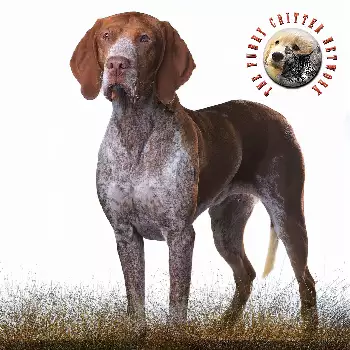
The Bracco Italian Pointer is a large, powerfully built pointing dog that presents a striking combination of strength, elegance, and distinctiveness. Standing 23 to 27 inches at the shoulder for males and 21 to 25 inches for females, with weights ranging from 55 to 90 pounds depending on height and sex, this is a substantial sporting dog that carries more bone and substance than many other pointing breeds. The overall silhouette is nearly square, with the body length from chest to rump approximately equal to the height at the withers, creating a balanced, athletic profile that speaks to the breed's dual role as a tireless field worker and composed house companion.

The head is the breed's most immediately recognizable feature and one of its most important distinguishing characteristics. It is long and angular, narrow at the zygomatic arches, with a pronounced occiput at the back of the skull and a visible median furrow running from the occiput toward the moderately defined stop. The muzzle is deep and broad, equal in length to the skull, and ends in a large nose that ranges from flesh-colored to deep brown depending on coat color. The upper lips are well developed and pendulous, falling below the lower jaw line and creating the jowly appearance that contributes to the breed's serious, dignified expression. The eyes are oval, set in a semi-lateral position, and range from ochre to darker shades of amber or brown. The ears are long, set well back on the skull at the level of the zygomatic arch, and hang close to the cheeks with a slight inward curl at the tips.

The body is well muscled and deep through the chest, with a prominent forechest and ribs that extend well back, providing ample lung capacity for sustained field work. The topline is level or rises slightly from the withers toward the croup, and the loin is well muscled and broad. The tail is traditionally docked in countries where the practice is permitted, carried horizontally or slightly below the topline during movement, though many dogs in countries with docking bans now carry their natural tails. The limbs are strong and straight with well-developed musculature, prominent joints, and tough, oval feet with well-arched toes and hard pads suited to varied terrain.

The coat is short, dense, and glossy, lying close to the body and providing practical protection without excessive grooming demands. Accepted color patterns include solid white, white with orange markings, white with chestnut markings, orange roan, and chestnut roan. The markings may appear as large patches, smaller ticking, or the fine intermixing of white and colored hairs that constitutes roan patterning. Black coloring in any form, tricolor patterns, and tan markings are disqualifying faults. The overall impression is of a powerful, noble hunting dog built for endurance rather than speed, with enough substance and angulation to maintain its characteristic extended trot across varied terrain throughout a long day in the field.

Affectionate With Family
The Bracco Italian Pointer is an exceptionally affectionate breed that forms deep, lasting bonds with every member of its household. This is a dog that craves human contact and will follow its family from room to room, lean against legs, and rest its substantial head in any available lap. Unlike some sporting breeds that direct their devotion primarily toward one handler, the Bracco distributes its affection generously across the entire family unit.
Good With Young Children
The Bracco Italian Pointer's gentle, patient temperament makes it a naturally good companion for children of all ages. Its sturdy build means it can tolerate the unpredictable movements of young children without the fragility concerns that accompany smaller breeds. Supervision is still warranted given the dog's size and enthusiasm, as an excited Bracco can inadvertently knock over a toddler during exuberant greetings, but the breed's inherent gentleness and lack of sharp reactivity make these incidents rare.
Good With Other Dogs
The Bracco Italian Pointer is a sociable breed that generally gets along well with other dogs, particularly when properly socialized from puppyhood. Its heritage as a pack-oriented hunting dog contributes to a cooperative rather than competitive attitude around other canines. Same-sex aggression is uncommon in this breed, and most Bracchi integrate smoothly into multi-dog households, often seeking out canine companionship for play and rest alike.
Shedding Level
The Bracco Italian Pointer sheds moderately throughout the year, with a noticeable increase during seasonal coat changes in spring and autumn. The short, dense coat releases hair consistently but not excessively, and regular brushing keeps shedding manageable. Owners should expect to find some hair on furniture and clothing but nothing approaching the volume produced by heavy-shedding breeds like Labrador Retrievers or German Shepherds.
Coat Grooming Frequency
The Bracco Italian Pointer's short, glossy coat is one of the breed's most low-maintenance features. Weekly brushing with a hound glove or bristle brush removes dead hair, distributes skin oils, and keeps the coat looking sleek. The breed does not require professional grooming, clipping, or trimming. The primary grooming attention this breed demands goes to its long, pendulous ears and facial folds rather than its coat.
Drooling Level
The Bracco Italian Pointer drools more than the average dog due to its pendulous upper lips and loose flews, though it falls short of the heavy drooling associated with breeds like Bloodhounds or Saint Bernards. Drooling tends to increase around mealtimes, after drinking water, and during physical exertion or warm weather. Owners who are particular about their furnishings should keep a towel handy but need not worry about constant wet spots throughout the house.
Coat Type
The Bracco Italian Pointer carries a short, dense, glossy single coat that lies close to the body and provides adequate weather protection for a working gun dog. The coat is slightly shorter and finer on the head, ears, and fronts of the legs, while the body coat is dense enough to resist underbrush and light rain. This practical coat served the breed well across the varied terrain of the Italian countryside where it developed its hunting skills.
Openness To Strangers
The Bracco Italian Pointer is a genuinely friendly breed that approaches most strangers with curiosity and a wagging tail rather than suspicion or reserve. While individual dogs may show brief initial assessment when encountering someone new, the breed lacks the aloofness or wariness found in many guardian breeds. This sociability extends to visitors in the home, guests at outdoor events, and strangers encountered during walks, making the Bracco a poor choice for anyone seeking a standoffish watchdog.
Playfulness Level
The Bracco Italian Pointer maintains a playful, sometimes clownish disposition well into adulthood. It enjoys retrieving games, interactive toys, and spirited romps with family members or other dogs. The breed has a reputation for entertaining its family with goofy antics and expressive facial contortions that take advantage of its loose skin and soulful eyes. Playfulness tends to come in enthusiastic bursts followed by equally committed periods of rest and relaxation.
Watchdog/Protective Nature
The Bracco Italian Pointer lacks the territorial instinct and suspicion of strangers that define effective watchdog breeds. While it may bark to announce the arrival of someone at the door, the greeting that follows is more likely to involve a wagging tail and an offered head for petting than any defensive posturing. This breed was developed to work cooperatively with humans in the field, not to guard property, and its temperament reflects that heritage clearly.
Adaptability Level
The Bracco Italian Pointer adapts well to different living situations provided its substantial exercise needs are met, but it is not an inherently flexible breed when it comes to confined spaces or sedentary lifestyles. A large home with a securely fenced yard is ideal, though the breed can manage in smaller quarters if given ample daily outdoor exercise. The Bracco does not tolerate long periods of isolation well and can develop separation anxiety and destructive habits when left alone frequently.
Trainability Level
The Bracco Italian Pointer is an intelligent, willing learner that responds exceptionally well to patient, positive training methods. The breed's desire to please its handler and its natural hunting instincts provide strong motivation for learning, and most Bracchi pick up commands and routines efficiently. Harsh corrections or heavy-handed methods are counterproductive with this sensitive breed and will produce a shut-down dog that refuses to engage rather than a compliant one.

Bracco Italian Pointer History & Development

The Bracco Italiano is widely regarded as one of the oldest pointing breeds in Europe, with a history that reaches back to the fourth or fifth century on the Italian peninsula. The precise origins of the breed are lost to antiquity, but the prevailing theory holds that early ancestors resulted from crosses between the Segugio Italiano, an ancient Italian hound with exceptional scenting ability, and the now-extinct Asiatic Mastiff or a similar molosser type that contributed substance, bone, and a more deliberate working pace. This combination produced a large, heavy-boned hunting dog with a powerful nose and an instinctive tendency to pause and indicate the presence of game rather than pursuing it directly, the foundational behavior from which all pointing breeds derive their working identity.

By the Renaissance period, the Bracco Italiano had established itself as a prized possession of Italian nobility and a favored hunting companion across the Italian states. The Medici and Gonzaga families are historically documented as patrons of the breed, maintaining kennels of Bracchi and gifting them to foreign royalty as diplomatic tokens. Dogs resembling the modern Bracco appear in Italian paintings and tapestries from the fourteenth and fifteenth centuries, depicted in hunting scenes alongside mounted nobles and in domestic settings with aristocratic families. During this period, two distinct regional types existed: the heavier, more powerfully built Bracco from the Piedmont region in northern Italy, typically white and orange in coloring, and the lighter, more agile type from Lombardy, often white and chestnut. These two types would eventually merge into the single breed standard recognized today.

The breed's fortunes declined significantly during the eighteenth and nineteenth centuries as hunting fashions shifted, aristocratic patronage waned, and indiscriminate crossbreeding degraded the original type. By the early twentieth century, the Bracco Italiano had become rare even within Italy. The devastating impact of the two World Wars further threatened the breed's survival, and by the late 1940s, the population had reached critically low numbers. The formation of the Societa Amatori Bracco Italiano in 1949 and the approval of a formal breed standard by the Ente Nazionale della Cinofilia Italiana that same year marked the beginning of a deliberate rescue effort. Dedicated Italian breeders worked to consolidate the remaining Piedmontese and Lombardy types into a single unified breed, selecting for health, temperament, and working ability while preserving the distinctive physical characteristics that defined the Bracco.

The breed's introduction to North America occurred in the 1990s, when the first Bracchi Italiani were imported by American hunters and breed enthusiasts drawn to the breed's unique combination of pointing instinct, retrieving ability, and gentle domestic temperament. The AKC Foundation Stock Service accepted the breed in 2001, and the Bracco Italiano Club of America formed in 2007 to promote the breed and work toward full AKC recognition. That goal was achieved on June 29, 2022, when the Bracco Italiano became the AKC's 200th registered breed, entering the Sporting Group. Today there are an estimated 700 to 800 Bracchi in the United States, making it still a rare breed whose enthusiasts take considerable pride in its ancient heritage and its recovery from near-extinction.

The breed's historical significance within Italian cynology is underscored by the fact that the very first dog entered in the stud book of the Kennel Club Italiano when it was founded in 1882 was a Bracco Italiano. That distinction places the breed at the literal foundation of organized dog breeding in Italy and cements its status as the country's most historically important native sporting breed.

Bracco Italian Pointer Temperament & Personality

The Bracco Italian Pointer possesses a temperament that many owners describe as the ideal balance between an eager sporting dog and a calm, affectionate household companion. In the field, the breed displays focused intensity, methodical quartering behavior, a powerful nose, and an instinctive pointing response that requires minimal training to develop. At home, the same dog transforms into a relaxed, gentle, and deeply people-oriented companion that wants nothing more than to be near its family. This duality of character is one of the breed's most celebrated qualities and a key reason why experienced sporting dog owners who discover the Bracco often become devoted advocates for the breed.

The breed's affectionate nature is genuine and pervasive. A Bracco will seek out physical contact throughout the day, leaning against legs, resting its head on feet, and claiming any available lap space despite its considerable size. This need for human connection is not mere friendliness but a deep-seated trait that reflects centuries of development as a companion to Italian nobility. The breed does not thrive in environments where it is relegated to a kennel or separated from its family for extended periods. A Bracco left alone too frequently or too long will develop anxiety, restlessness, and potentially destructive behaviors that stem from genuine emotional distress rather than disobedience.

Intelligence in the Bracco is thoughtful rather than frenetic. The breed processes information deliberately, assessing situations before reacting and demonstrating a problem-solving capacity that experienced trainers recognize as genuine cognitive ability rather than simple obedience. This thoughtfulness extends to the breed's interactions with people: the Bracco reads human emotions with notable accuracy and adjusts its behavior accordingly, offering quiet companionship during subdued moments and animated engagement when the household energy rises. The breed's expressive face, with its soulful eyes, pendulous ears, and mobile brow, communicates a range of emotions that make it one of the more readable sporting breeds.

The Bracco is a notably vocal breed, though its vocalizations tend toward conversational rather than nuisance barking. Many Bracchi will vocalize with low grumbles, groans, and sighs to express their opinions, request attention, or comment on events in the household. This expressive communication charmed Italian aristocrats centuries ago and continues to delight modern owners who appreciate a dog with personality and presence. The breed is not typically aggressive, territorial, or suspicious of strangers, maintaining instead an open, friendly attitude toward most people it encounters while reserving its deepest devotion for its immediate family.

Bracco Italian Pointer Family Life & Living Requirements

The Bracco Italian Pointer thrives in a family environment where it receives ample attention, adequate exercise, and inclusion in daily household activities. This is emphatically not a backyard dog or a breed suited to living in isolation from its people. The Bracco's heritage as a companion to Italian noble families produced a dog that expects to be part of the household fabric, present for meals, involved in family gatherings, and sleeping within proximity to its people. Families that welcome the Bracco into their daily routine will be rewarded with a devoted, gentle companion that enhances every aspect of home life.

The breed's size and energy level make a home with a securely fenced yard the most suitable living arrangement. A Bracco can manage in a smaller space provided it receives sufficient daily exercise, but the breed genuinely benefits from having outdoor access where it can move freely, explore scents, and burn off energy between structured exercise sessions. The fence should be sturdy and at least five feet tall, as the Bracco is an athletic dog capable of clearing lower barriers when sufficiently motivated by a scent or a squirrel. Apartment living is possible but far from ideal, and owners in such settings must commit to multiple daily outings of meaningful duration and intensity to keep the dog physically and mentally satisfied.

The Bracco's gentle, patient temperament makes it an excellent family dog for households with children. The breed's substantial build provides resilience against the inadvertent roughness of young children, while its inherently soft mouth and calm demeanor reduce the risk of accidental nipping or reactive behavior. Children old enough to participate in training, play sessions, and outdoor activities will find the Bracco an enthusiastic and tireless companion. As with any large breed, supervision is appropriate with very young children simply due to the size differential, but the breed's instinct is to be careful and protective around small family members rather than boisterous or careless.

The Bracco generally coexists well with other pets in the household, including other dogs and, with proper introduction, cats and other animals. Its pack-oriented hunting heritage predisposes it toward cooperative behavior with other dogs rather than competitive or aggressive interactions. The breed does possess a prey drive that can be triggered by small, fast-moving animals, so introductions to cats and pocket pets should be managed carefully, and unsupervised access to small livestock should be avoided until the individual dog's reliability has been established. Most Bracchi that grow up alongside cats and other household animals learn to regard them as family rather than quarry.

Bracco Italian Pointer Training & Exercise Needs

The Bracco Italian Pointer is an intelligent, sensitive breed that responds exceptionally well to positive, reward-based training methods and poorly to harsh corrections or forceful handling. The breed's desire to please its handler is genuine and strong, providing a natural foundation for training that experienced handlers leverage with patience and consistency. A Bracco that trusts its handler will work willingly and with evident enthusiasm; one that has been intimidated or punished will shut down emotionally and become increasingly difficult to reach. This sensitivity is not fragility but rather an expression of the breed's deep connection to its people and its ability to read human intention with remarkable accuracy.

Early socialization is essential for the Bracco and should begin the moment the puppy arrives in its new home. Exposure to varied environments, people of different ages and appearances, other animals, traffic sounds, household appliances, and novel surfaces builds the confident, adaptable adult dog that the breed is meant to be. Puppy classes provide structured socialization opportunities and introduce foundational obedience skills in a group setting that benefits both the dog and the owner. The breed's natural sociability means that most Bracchi take to socialization readily, but the window for primary socialization closes around sixteen weeks, making early effort critical.

Exercise requirements for the Bracco are substantial and non-negotiable. This is a working sporting breed that was developed to hunt across varied terrain for extended periods, and its physical and mental needs reflect that heritage. An adult Bracco requires a minimum of one to two hours of vigorous exercise daily, which may include long runs, hiking, swimming, retrieving games, and off-leash exploration in safe, enclosed areas. The breed excels in organized canine sports including field trials, hunt tests, agility, tracking, and rally obedience, all of which provide the physical activity and mental engagement that keep the Bracco in peak condition and prevent the behavioral problems that arise from insufficient stimulation.

A Bracco that does not receive adequate exercise will find its own outlets, and those outlets will rarely align with the owner's preferences. Bored, under-exercised Bracchi are known to chew furniture, dig holes in landscaping, raid trash containers, and vocalize excessively. These behaviors are not signs of a bad dog but rather the predictable consequences of a high-energy sporting breed whose needs are not being met. Prospective owners who cannot commit to the daily exercise requirements of a large, active gun dog should consider a less demanding breed rather than expecting the Bracco to adapt to a sedentary lifestyle it was never designed for.

Bracco Italian Pointer Health Concerns

The Bracco Italian Pointer is generally considered a robust and healthy breed, particularly when compared to some other large sporting dogs that have been more heavily affected by popular breeding pressures. The breed's relative rarity has provided some insulation against the overbreeding that concentrates genetic problems in more popular lines, though the small founding population and historical bottlenecks that accompanied the breed's near-extinction after the World Wars mean that genetic diversity is limited and responsible breeding decisions carry significant weight. Life expectancy for the breed ranges from ten to fourteen years, a respectable span for a dog of this size.

Hip and elbow dysplasia are the most significant orthopedic concerns in the Bracco Italiano. Both conditions involve abnormal joint development during the growth phase, leading to instability, cartilage deterioration, and progressive osteoarthritis. The breed's size, weight, and athletic demands make sound joints essential for quality of life, and screening radiographs evaluated by the OFA or PennHIP should be part of every breeding program. Puppies from screened parents still require careful management during their growth period, including appropriate nutrition, controlled exercise on soft surfaces, and avoidance of high-impact activities on hard ground until the growth plates have closed. Some Bracco puppies develop bowed front legs during rapid growth phases, a condition that often self-corrects with controlled activity but should be monitored by a veterinarian.

Gastric dilatation-volvulus is a serious and potentially fatal emergency that affects deep-chested breeds including the Bracco Italiano. In this condition, the stomach fills with gas, fluid, or food and then rotates on its mesenteric axis, trapping the contents and cutting off blood supply to the stomach wall and sometimes the spleen. The condition progresses rapidly and can be fatal within hours without emergency surgical intervention. Preventive measures include feeding multiple smaller meals rather than one large daily meal, using slow-feeder bowls, avoiding vigorous exercise immediately before and after eating, and considering prophylactic gastropexy during spay or neuter surgery.

Renal amyloidosis has been documented in certain Bracco bloodlines and represents one of the more breed-specific health concerns. This condition involves the deposition of abnormal amyloid protein in the kidneys, progressively compromising renal function and potentially leading to kidney failure. The hereditary nature of the condition means that affected dogs and their close relatives should be excluded from breeding programs. Annual blood work that includes kidney function markers such as BUN, creatinine, and SDMA provides early detection capability, and breeders should be transparent about kidney health history in their lines.

Eye conditions including entropion and ectropion are seen with some frequency in the Bracco, largely owing to the breed's loose facial skin and heavy head structure. Entropion, in which the eyelid rolls inward against the cornea, causes irritation, tearing, and potential corneal damage if uncorrected. Ectropion, the outward drooping of the lower lid, exposes the conjunctiva to environmental irritants and debris. Both conditions are correctable through surgical intervention, and annual eye examinations by a board-certified veterinary ophthalmologist help identify developing problems before they cause significant discomfort or damage.

Common Health Issues

  • Hip dysplasia - A common orthopedic condition in large breeds where abnormal development of the hip joint leads to instability, cartilage damage, and progressive arthritis; screening radiographs evaluated by the OFA or PennHIP are recommended for all breeding stock to reduce incidence in subsequent generations.
  • Elbow dysplasia - A developmental disorder involving abnormal growth of the elbow joint components that can cause forelimb lameness, pain, and degenerative joint disease; OFA evaluation is recommended for breeding dogs, and early detection allows for management strategies that improve long-term comfort.
  • Gastric dilatation-volvulus (bloat/GDV) - A life-threatening emergency in which the stomach fills with gas and rotates on its axis, cutting off blood supply and causing rapid systemic shock; the Bracco's deep chest conformation places it at elevated risk, and owners should learn to recognize early signs including unproductive retching, restlessness, and abdominal distension.
  • Renal amyloidosis - A hereditary kidney condition documented in certain Bracco Italiano bloodlines in which abnormal amyloid protein deposits accumulate in kidney tissue, progressively impairing function and potentially leading to renal failure; annual blood work and urinalysis help monitor kidney health.
  • Entropion - An eyelid condition in which the lid margin rolls inward, causing the eyelashes and skin to rub against the corneal surface and produce irritation, tearing, and potential ulceration; surgical correction is straightforward and typically resolves the issue permanently.
  • Ectropion - The opposite of entropion, this condition involves the lower eyelid drooping outward and exposing the conjunctival tissue to environmental irritants, debris, and drying; the Bracco's loose facial skin predisposes it to this condition, which ranges from cosmetic to clinically significant.
  • Ear infections (otitis externa) - The Bracco's long, pendulous ears create a warm, moist environment within the ear canal that promotes bacterial and yeast overgrowth; chronic or recurrent infections are common without diligent preventive ear care and regular cleaning.

Preventive Care & Health Monitoring

  • OFA hip and elbow evaluations for breeding stock - Radiographic screening of hips and elbows with results submitted to the Orthopedic Foundation for Animals helps responsible breeders make informed mating decisions and reduces the prevalence of dysplasia in the breed.
  • Annual blood chemistry panel including kidney values - Regular monitoring of BUN, creatinine, and SDMA levels allows early detection of renal compromise, which is particularly important given the documented occurrence of hereditary kidney disease in certain Bracco lines.
  • Prophylactic gastropexy consideration - Surgical tacking of the stomach to the abdominal wall during spay or neuter procedures significantly reduces the risk of gastric volvulus in deep-chested breeds like the Bracco; discuss timing and approach with your veterinarian.
  • Weekly ear cleaning and inspection - The Bracco's long, heavy ears require consistent cleaning with a veterinarian-approved ear solution to remove moisture and debris that accumulate in the ear canal; inspect for redness, odor, or discharge that may indicate developing infection.
  • Annual ophthalmologic examination - Screening by a board-certified veterinary ophthalmologist detects entropion, ectropion, progressive retinal atrophy, and cataracts early enough for effective management or surgical correction.
  • Feeding management to reduce bloat risk - Feed two or three smaller meals daily rather than one large meal, use a slow-feeder bowl, avoid vigorous exercise for at least one hour before and after meals, and ensure fresh water is always available without encouraging rapid gulping.

Bracco Italian Pointer Grooming & Maintenance

The Bracco Italian Pointer's short, dense coat is one of the breed's most appealing features from a maintenance perspective, requiring far less grooming effort than the longer-coated sporting breeds. A weekly brushing session with a bristle brush, rubber curry, or hound glove removes dead hair, distributes natural skin oils, and keeps the coat looking its best. During seasonal coat changes in spring and autumn, shedding increases noticeably and more frequent brushing helps contain the additional loose hair. Bathing is needed only occasionally, typically every six to eight weeks or when the dog has gotten particularly dirty during outdoor activities, and a mild dog shampoo that does not strip the coat's natural oils is the best choice.

Ear care is the single most important grooming priority for the Bracco and demands more attention than the coat itself. The breed's long, pendulous ears hang close to the head and create a warm, enclosed environment within the ear canal that promotes the growth of bacteria and yeast. Without regular preventive care, ear infections become a chronic and recurring problem that causes discomfort, head shaking, and potential hearing damage. Weekly cleaning with a veterinarian-recommended ear solution, careful drying after swimming or bathing, and routine inspection for redness, swelling, or abnormal discharge are essential components of Bracco ownership. Dogs that swim regularly or spend significant time in wet conditions may need more frequent cleaning.

The Bracco's loose facial skin and pendulous lips require attention as well, though less frequently than the ears. The folds and flews can trap moisture, food debris, and drool, creating conditions favorable for skin irritation and bacterial infection. A daily wipe of the face with a clean, damp cloth keeps these areas clean and comfortable. After meals and water sessions, a quick check and wipe of the lip folds prevents the buildup that leads to odor and irritation. Tear staining is occasionally an issue in lighter-colored dogs, and keeping the area around the eyes clean helps minimize discoloration.

Routine maintenance items that apply to all breeds carry particular importance for the Bracco. Nail trimming should occur every two to three weeks, as overgrown nails interfere with the breed's characteristic trotting gait and can cause discomfort and structural problems over time. Dental care is especially important given the breed's predisposition to dental disease; daily tooth brushing with a veterinary dentifrice, supplemented by appropriate dental chews and professional cleanings as recommended by your veterinarian, helps maintain oral health and prevents the systemic consequences of advanced periodontal disease. Regular inspection of the feet, checking for cuts, foreign objects lodged between the toes, and pad wear, is advisable for an active sporting breed that spends significant time working on varied terrain.