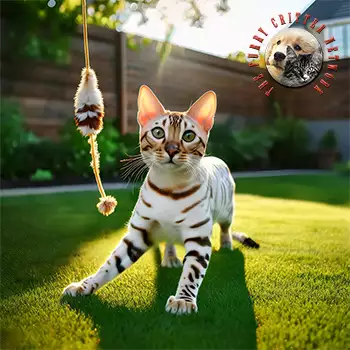

Growth & Physical Development

Bengal kittens enter their juvenile phase around twelve weeks of age and continue developing through approximately eighteen months, though some Bengals do not reach their full adult size until closer to two years. During this extended growth period, a Bengal will transition from a compact, round-faced kitten into a sleek, muscular adolescent with the athletic build that defines the breed. Males typically grow larger than females, with adult males averaging 10 to 15 pounds and females ranging from 8 to 12 pounds.

The most dramatic physical changes occur between three and six months of age. Kittens become noticeably leggier and may look somewhat gangly as their limbs grow faster than the rest of their body catches up. The distinctive Bengal coat also undergoes a transformation during this period. Many Bengal kittens experience a phase known as the fuzzies — a period where their coat temporarily dulls and loses its clarity of pattern. This is completely normal and typically resolves by six to eight months, revealing the vivid rosettes or marbling of the adult coat.

Between six and twelve months, growth continues but at a slower pace. Muscle development becomes more pronounced, particularly across the shoulders and hindquarters. The Bengal's powerful rear legs, which give the breed its characteristic athletic gait and impressive jumping ability, fill out substantially during this stage. Regular body condition assessments help ensure the growing cat is maintaining a healthy weight — you should be able to feel the ribs easily without seeing them prominently.

Dental development is another key milestone during the juvenile period. Kittens begin losing their baby teeth around three to four months of age, with the full set of 30 adult teeth typically in place by six to seven months. Some kittens experience discomfort during teething and may chew on inappropriate objects. Providing appropriate chew toys and checking the mouth periodically for retained baby teeth helps manage this transition smoothly.

Nutrition & Diet Transition

Juvenile Bengals have high metabolic demands driven by rapid growth and exceptional energy levels. From weaning through approximately twelve months of age, kittens should be fed a high-quality food specifically formulated for growth. Kitten formulations provide the increased protein, fat, and calorie density that developing bodies require, along with appropriate ratios of calcium and phosphorus for proper skeletal development.

Feeding frequency should match the kitten's age and appetite. From three to six months, most Bengal kittens thrive on three to four meals per day. This can be reduced to two to three meals between six and twelve months. Free feeding — leaving food available at all times — is generally not recommended for Bengals, as their hearty appetites can lead to overconsumption and excess weight gain, even during their high-growth phase.

The transition from kitten food to adult food should be gradual and typically occurs around twelve months of age, though your veterinarian may recommend extending kitten food slightly longer for Bengals that are still actively growing. The switch should happen over seven to ten days, gradually increasing the proportion of adult food mixed with the kitten formula. Abrupt diet changes commonly cause digestive upset including loose stools and decreased appetite.

Fresh water must be available at all times. Bengals are famously attracted to water, and many juvenile Bengals will play in their water bowls, splash water across the floor, or attempt to join their owners in the shower. While this behavior is endearing, it means water bowls may need frequent refilling and placement on waterproof surfaces. A pet fountain can satisfy their fascination with moving water while encouraging adequate hydration.

Behavioral Changes

The adolescent period in Bengals is often the most challenging time for owners, as the breed's naturally high energy, intelligence, and strong-willed personality are amplified by the hormonal and developmental changes of youth. Bengal adolescents are extraordinarily active — they climb everything, investigate every cupboard, and may test boundaries in ways that would be unusual for less driven breeds. Understanding that this behavior is normal for the breed helps owners respond with patience rather than frustration.

Between four and eight months, many Bengals begin exhibiting territorial behaviors. Unneutered males may start urine spraying as early as five months, and both sexes may become more assertive about claiming preferred resting spots or resources. In multi-cat households, the adolescent Bengal may begin challenging established social hierarchies, leading to temporary increases in inter-cat tension. Providing abundant vertical space, multiple feeding stations, and separate litter boxes helps reduce resource competition.

Bengals are vocal cats, and adolescence often brings an increase in the volume and frequency of their communications. They may develop a repertoire of chirps, trills, and demanding yowls that they deploy strategically to get attention, food, or access to restricted areas. While this chattiness is part of the breed's charm, it can become excessive if inadvertently reinforced. Responding to calm behavior and ignoring demand vocalizations helps shape more reasonable communication patterns.

Destructive behavior during adolescence is frequently a sign of inadequate mental and physical stimulation rather than a behavioral disorder. Bengal adolescents that knock items off shelves, shred curtains, or dismantle household objects are often simply bored. These are exceptionally intelligent cats that need engagement and challenges. Addressing the root cause — insufficient enrichment — is far more effective than punishing the symptoms.

Training & Enrichment

Bengals are among the most trainable cat breeds, and the juvenile period is the ideal time to establish a foundation of cooperative behaviors. Positive reinforcement training using small, high-value food rewards works exceptionally well with this food-motivated breed. Basic behaviors such as sit, come, high-five, and targeting a hand or stick can be taught in short, frequent sessions of five to ten minutes. Bengals often learn faster than their owners expect and become visibly bored with excessive repetition.

Clicker training is particularly effective for Bengals because their sharp intelligence responds well to the precise communication that a clicker provides. The sound marks the exact moment the cat performs the desired behavior, making it clear what is being rewarded. Many Bengal owners progress beyond basics to teach complex tricks, agility course navigation, and even leash walking — all of which channel the breed's energy into positive outlets.

Environmental enrichment is not optional for adolescent Bengals — it is essential for their psychological wellbeing. Tall cat trees, wall-mounted shelving that creates elevated pathways, puzzle feeders that make meals a mental challenge, and interactive toys that mimic prey movements all help satisfy the Bengal's need for stimulation. Rotating toys regularly prevents habituation, and dedicating at least two structured play sessions of fifteen to twenty minutes daily helps burn excess energy.

Leash training can begin as early as twelve weeks using a properly fitted harness. Start indoors, allowing the kitten to wear the harness for short periods while associating it with treats and play. Once comfortable, attach the leash and let the kitten lead the way around the house. Outdoor excursions can begin once the kitten is fully vaccinated, starting in quiet, low-traffic areas. Many Bengals take to leash walking enthusiastically and come to anticipate outdoor adventures as a highlight of their routine.

Exercise & Activity

The exercise needs of a juvenile Bengal cannot be overstated. These are among the most athletic and energetic domestic cat breeds, and an adolescent Bengal without adequate physical outlets will find its own entertainment — often at the expense of furniture, household objects, and the owner's peace of mind. A minimum of thirty to forty-five minutes of active, interactive play per day is recommended, divided across multiple sessions.

Interactive play should mimic natural hunting sequences: stalk, chase, pounce, catch, and consume. Wand toys with feathered or fur-like attachments trigger strong predatory responses. Move the toy in ways that simulate prey behavior — darting, pausing, hiding behind obstacles — rather than waving it aimlessly. End each play session with a successful catch followed by a small food reward to complete the hunting cycle and provide psychological satisfaction.

Bengals are exceptional climbers and jumpers, and providing vertical exercise opportunities is just as important as horizontal space. Cat trees that reach ceiling height, wall shelves installed at varying levels, and enclosed catios that offer safe outdoor access all encourage the climbing and leaping that Bengals naturally crave. Some owners install running wheels designed for cats, which many Bengals learn to use enthusiastically and which provide excellent cardiovascular exercise.

Water play is a unique exercise opportunity for the breed. Many Bengals will chase ice cubes across a tile floor, bat at dripping faucets, or wade in shallow trays of water. Some owners set up supervised splash stations using shallow storage bins with a small amount of water and floating toys. This taps into the Bengal's unusual attraction to water — a trait thought to derive from the breed's Asian Leopard Cat ancestry — and provides both physical activity and mental stimulation.

Spay & Neuter Considerations

The timing of spay and neuter surgery for Bengals is a decision that should be made in consultation with your veterinarian, taking into account the individual cat's development and your household circumstances. Many veterinarians recommend spaying or neutering between four and six months of age, before the onset of sexual maturity and its associated behaviors. Some breeders perform early spay or neuter before kittens leave for their new homes, while others prefer to wait.

The behavioral benefits of timely neutering in male Bengals are significant. Intact males commonly begin urine spraying between five and eight months of age, and once established, this behavior can persist even after neutering. Intact males are also more likely to exhibit roaming behavior, inter-cat aggression, and loud vocalization. Neutering before the onset of these behaviors generally prevents them from developing, though individual variation exists.

For female Bengals, spaying before the first heat cycle eliminates the risk of unplanned pregnancy and significantly reduces the risk of mammary tumors later in life. Female Bengals in heat are exceptionally vocal and persistent in their efforts to reach potential mates, which can be disruptive for the household. The heat cycle can recur every two to three weeks during the breeding season if the cat is not bred, causing ongoing stress for the cat and her owners.

Post-surgical recovery is typically straightforward for young, healthy cats. Most kittens are back to their normal activity levels within a few days, though your veterinarian will recommend restricting vigorous jumping and play for a specified recovery period. Monitor the incision site daily for signs of swelling, redness, or discharge, and use an e-collar if the cat attempts to lick or chew at the surgical site. Follow all veterinary instructions regarding pain management and follow-up appointments.

Socialization & Exposure

While the most sensitive socialization window closes around seven weeks of age, continued socialization throughout the juvenile period remains critically important for Bengals. Cats that are not exposed to varied people, environments, and experiences during their first year are more likely to develop fear-based behaviors that can be difficult to modify later. The Bengal's active and curious nature makes them generally receptive to new experiences when introduced thoughtfully.

Expose juvenile Bengals to a wide range of people including visitors to the home, individuals wearing hats or glasses, people of different ages, and anyone who looks or sounds different from the cat's primary family. Each positive interaction reinforces the lesson that unfamiliar people are not threats. Keep initial encounters calm and allow the cat to approach on its own terms. Forcing interaction with a reluctant cat builds negative associations rather than confidence.

Household sounds and activities that the cat will encounter throughout its life should be normalized during the juvenile period. Vacuum cleaners, blenders, doorbells, television sounds, and the comings and goings of daily life should all become routine background rather than sources of alarm. If a particular sound triggers fearfulness, desensitize gradually by playing the sound at low volume during pleasant activities and slowly increasing the volume over days or weeks.

If the household includes other pets, careful and gradual introductions are essential. Bengal adolescents are generally social with other cats and can coexist well with cat-friendly dogs, but rushed introductions frequently result in lasting antagonism. Use scent swapping, visual barriers, and supervised short interactions that are ended on a positive note. Patience during the introduction process pays dividends in long-term household harmony.

Carrier training and positive veterinary experiences are often overlooked aspects of socialization that have lifelong benefits. Teach the juvenile Bengal that the carrier is a comfortable resting spot by leaving it out with cozy bedding inside, feeding treats in it, and taking short car rides that do not end at the veterinary clinic. Ask your veterinary team about happy visits — brief trips to the clinic for treats and gentle handling without any procedures — which help prevent the veterinary anxiety that plagues many cats throughout their lives.

Always consult a qualified professional before making any health-related decisions. This content is provided for informational reference only and should not replace professional guidance specific to your animal.