Pale-headed Rosella Species Guide - Furry Critter Network

Pale-headed Rosella

Quick Facts

🔬 Scientific Name
Platycercus adscitus
📊 Care Level
Intermediate
😊 Temperament
Active, Friendly, Playful
📏 Adult Size
11-13 inches
⏱️ Lifespan
15-20 years
🔊 Noise Level
Moderate
🗣️ Talking Ability
Limited
🍽️ Diet Type
Pellet-based
🌍 Origin
Northeastern Australia
🏠 Min Cage Size
32x24x32 inches
📐 Size
Medium

Pale-headed Rosella - Names & Recognition

The Pale-headed Rosella (Platycercus adscitus) is also commonly known as the Blue-cheeked Rosella, Blue Rosella, or Mealy Rosella, with these alternative names referencing the distinctive blue cheek patches that contrast with their pale yellow head. In some regional dialects and older literature, they appear as the White-cheeked Rosella, though this name is less commonly used today. The species name 'adscitus' derives from Latin meaning 'adopted' or 'associated,' though the specific etymology behind this nomenclature choice remains unclear in ornithological literature.

Taxonomically, the Pale-headed Rosella belongs to the genus Platycercus within the family Psittaculidae, classified among the broadtail parrots native to Australia. Two subspecies are recognized: Platycercus adscitus adscitus, the nominate subspecies found in southeastern Queensland and northeastern New South Wales, and Platycercus adscitus palliceps, inhabiting northern Queensland and the Cape York Peninsula. The northern subspecies (palliceps) displays paler overall coloration with less intense blue cheek patches and lighter yellow head coloring compared to the southern nominate form.

Historically, taxonomic placement of Pale-headed Rosellas underwent some debate, with early classifications occasionally grouping them as subspecies of the Eastern Rosella due to superficial plumage similarities and geographic proximity. Modern genetic analysis confirmed their status as distinct species with separate evolutionary lineages. The relationship between Pale-headed and Eastern Rosellas remains close, with occasional hybridization occurring in narrow contact zones where their ranges overlap in northern New South Wales.

In aviculture, Pale-headed Rosellas are moderately common in Australia but less frequently seen in international bird keeping compared to Eastern or Crimson Rosellas. Color mutations remain relatively rare in captivity, with wild-type coloration predominating in breeding programs. Occasional lutino and cinnamon mutations have been reported in avicultural literature, though these remain uncommon compared to mutations established in Eastern Rosellas. Captive breeding programs focus primarily on maintaining the species' natural coloration and genetic diversity rather than developing novel color morphs.

Pale-headed Rosella Physical Description

The Pale-headed Rosella measures 11-13 inches (28-33 cm) in total length, positioning it among the medium-sized members of the rosella family. Adults typically weigh between 3.5-4.5 ounces (100-130 grams), displaying a streamlined, athletic build suited to their active lifestyle. The species exhibits subtle sexual dimorphism, with males generally showing slightly brighter coloration and marginally larger size than females, though differences can be challenging to detect without direct comparison of breeding pairs.

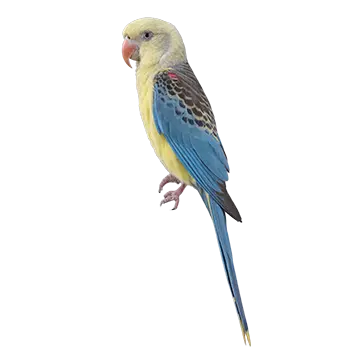
The most distinctive feature of Pale-headed Rosellas is their namesake pale yellow to cream-colored head, which appears almost white in some individuals, particularly in the northern subspecies. This pale head contrasts dramatically with vibrant blue cheek patches extending from below the eyes to the neck sides. The crown may show slight blue-green washing in some individuals, creating subtle color gradation. The upper breast displays pale yellow coloration that transitions gradually to white or very pale cream on the lower breast and belly, creating an overall light appearance compared to other rosella species.

The back, wings, and mantle present predominantly black feathering with bright yellow-green scalloping creating the characteristic scaled pattern typical of rosellas. The wing coverts display complex patterns with red shoulder patches bordered by yellow and blue, while primary and secondary flight feathers show rich blue coloration on outer webs, creating striking flashes during flight. The rump presents bright yellow-green coloration, highly visible during flight and landing displays. The tail is predominantly blue-green with white outer edges on lateral tail feathers, creating distinctive patterns during flight and territorial displays.

The beak is pale gray to white, robust and well-adapted for their seed-cracking lifestyle. The eyes are dark brown surrounded by pale gray to white eye-rings that become more prominent with age. The legs and feet display gray-brown coloration with strong zygodactyl toes providing excellent grip for climbing branches and manipulating food items during foraging. The overall impression is of a strikingly pale bird compared to the more colorful red-and-green appearance of Eastern and Crimson Rosellas.

Female Pale-headed Rosellas typically show slightly duller overall coloration with less extensive and less vibrant blue on the cheek patches. The pale yellow of the head may appear more cream-colored rather than bright yellow. Breast colors tend toward paler shades, and the scalloping on the back may show less contrast. These differences are subtle and often impossible to determine reliably without DNA sexing or behavioral observation during breeding season.

Juvenile Pale-headed Rosellas appear substantially different from adults, displaying predominantly green plumage with minimal pale coloring on the head. Young birds show olive-green rather than pale yellow head coloring, and the distinctive blue cheek patches are either absent or very faint. The breast appears green to olive rather than the pale cream of adults. Juveniles develop adult coloration gradually through successive molts over 12-16 months, with the pale head and blue cheeks emerging progressively. Full adult plumage typically appears by 15-18 months of age, with males developing slightly more intense coloration than females as they reach breeding maturity.

Affection Level
Pale-headed Rosellas develop strong bonds with their caregivers and actively seek interaction. Hand-raised birds are particularly affectionate, enjoying head scratches and physical contact with trusted humans. They demonstrate loyalty to their primary caregiver while remaining friendly with other family members, showing affection through soft vocalizations and choosing to spend time near their people.
Sociability
These rosellas are highly social birds that thrive on regular interaction with their human family. They enjoy being part of household activities and become distressed without adequate social stimulation. Pale-headed Rosellas do well as single pets receiving substantial daily attention or in bonded pairs. They actively seek engagement rather than simply tolerating interaction like more independent species.
Vocalization
Pale-headed Rosellas produce pleasant whistles and melodic calls at moderate volumes suitable for most living situations. They vocalize primarily during morning and evening activity peaks but remain quieter than conures or cockatoos. While they rarely learn to talk, they can master whistled tunes and mimic household sounds. Their calls are musical rather than harsh or piercing.
Intelligence
These intelligent birds demonstrate excellent problem-solving abilities and rapid learning capacity. Pale-headed Rosellas excel at puzzle toys, can learn complex trick sequences, and show remarkable memory for routines and training cues. They require regular mental stimulation through varied enrichment activities, training sessions, and environmental novelty to prevent boredom and associated behavioral problems.
Exercise Needs
Pale-headed Rosellas are highly active birds requiring extensive daily exercise and flight time. They need minimum 3-4 hours outside their cage in bird-proofed areas for flying, climbing, and exploring. These athletic parrots maintain physical fitness through vigorous play, foraging activities, and investigative behaviors. Insufficient exercise leads to obesity and behavioral issues.
Maintenance Level
These rosellas require moderate maintenance including daily cage cleaning, regular bathing opportunities, and varied diet preparation. They produce moderate mess from food scatter and active play behaviors. Nail and beak maintenance is needed periodically. Their active nature means more frequent toy replacement compared to calmer species. Overall care requirements are manageable for committed owners.
Trainability
Pale-headed Rosellas respond exceptionally well to positive reinforcement training, learning quickly when properly motivated. They master step-up, recall, target training, and various tricks with consistent practice. Food motivation and natural curiosity make training sessions enjoyable for both bird and owner. They remember learned behaviors reliably once established through patient, consistent practice.
Independence
Pale-headed Rosellas show limited independence compared to many parrot species, preferring company over solitude. While they can entertain themselves with toys for short periods, they require substantial daily interaction to maintain psychological wellbeing. This species suits owners who can provide frequent attention throughout the day rather than working professionals with limited availability.

Natural Habitat & Range

The Pale-headed Rosella is endemic to northeastern Australia, with its range extending from southeastern Queensland through the coastal and inland regions to Cape York Peninsula in the north, and south into northeastern New South Wales. The northern subspecies (palliceps) occupies tropical regions of far northern Queensland including Cape York, while the nominate subspecies (adscitus) inhabits the more temperate coastal and inland regions from central Queensland to northern New South Wales. This distribution places them in diverse climatic zones from tropical monsoonal regions to warm temperate areas.

Pale-headed Rosellas occupy a variety of woodland habitats including open eucalyptus forests, coastal woodlands, inland savanna woodlands, river red gum forests along watercourses, and modified agricultural landscapes with scattered trees. They show particular affinity for areas near watercourses and wetlands, regularly visiting rivers, creeks, and farm dams for drinking and bathing. The species has adapted well to human-modified landscapes, commonly inhabiting farmland, parks, gardens, and suburban areas where suitable nesting sites and food sources remain available. Elevation range extends from sea level to approximately 3,900 feet (1,200 meters) in highland areas.

Climate across their range varies from tropical monsoonal in the north with distinct wet and dry seasons to warm temperate in southern regions with more evenly distributed rainfall. This climatic diversity influences their behavioral patterns and breeding cycles, with northern populations breeding during the dry season (April-September) when resources concentrate around permanent water sources, while southern populations breed during spring (August-December) when increasing temperatures and rainfall stimulate plant growth and seed production.

Wild Pale-headed Rosellas feed primarily on seeds from grasses, eucalyptus, acacia, and various native plants, supplemented with fruits including native figs and mistletoe berries, flowers, nectar, blossoms, and occasionally insects and their larvae. Foraging occurs primarily on the ground during morning and late afternoon hours, with birds feeding on grass seeds in open areas, agricultural grain spillage near farms, and seeds from native plants. They spend midday hours resting in tree canopies, sheltering from heat and preening their feathers.

Social behavior patterns show seasonal variation. During breeding season, pairs separate from flocks to establish and defend nesting territories centered on suitable tree hollows. Both parents participate actively in incubation, chick feeding, and nest defense. Pale-headed Rosellas can be quite aggressive toward other cavity-nesting species competing for limited hollow resources. Outside breeding season, they form flocks ranging from small family groups of 6-12 birds to larger aggregations of 30-50 individuals where food is abundant. These flocks display complex social hierarchies and coordinated movements between feeding and roosting sites.

Nesting occurs in tree hollows in eucalyptus, particularly preferring older trees with established cavities. Competition for suitable nesting sites can be intense, with Pale-headed Rosellas competing against other rosella species, lorikeets, cockatoos, and various other hollow-dependent wildlife. Clutch size typically ranges from 4-6 eggs, with incubation lasting approximately 20 days. Chicks fledge at 5-6 weeks old but remain with parents for several additional weeks learning foraging skills and social behaviors.

Conservation status is classified as Least Concern by the IUCN, with stable or slightly increasing populations estimated at 100,000-500,000 individuals. The species has adapted successfully to agricultural landscapes and shows resilience to moderate habitat modification. However, loss of old-growth trees with suitable nesting hollows represents the primary conservation concern, as competition for limited cavities can limit breeding success in heavily cleared areas. Pale-headed Rosellas benefit from nest box programs in some regions, readily adopting artificial cavities when natural hollows are scarce. Climate change may impact northern populations through altered rainfall patterns affecting breeding success and food availability.

Temperament

Pale-headed Rosellas possess lively, engaging personalities that make them popular companions among rosella enthusiasts. Their temperament strikes a balance between the boldness of Eastern Rosellas and the calmness of Crimson Rosellas, showing curiosity and friendliness without excessive aggression or shyness. Hand-raised individuals develop into affectionate, interactive pets that actively seek human attention and participation in household activities. Their playful nature and willingness to engage make them entertaining companions for owners who can provide the substantial interaction these social birds require.

Personality expression in Pale-headed Rosellas centers on active engagement rather than passive observation. These birds vocalize to call their people, bring toys to share during playtime, investigate new objects with obvious curiosity, and position themselves prominently to observe family activities. They show affection through soft chirps directed at favored individuals, gentle nibbling behaviors, soliciting head scratches by lowering their heads and fluffing neck feathers, and choosing to spend time on or near their preferred person. Unlike more reserved species, Pale-headed Rosellas clearly communicate their desire for interaction through behavior and vocalizations.

Social requirements for this species rank higher than most rosellas. Pale-headed Rosellas become stressed and may develop behavioral problems including feather plucking or excessive screaming when deprived of adequate social interaction. They require minimum 2-3 hours daily of direct interaction including training, play, grooming, and shared activities. Simple proximity without active engagement is insufficient—these birds want participation and attention from their human flock. This makes them less suitable for working professionals with limited availability but ideal for retirees, work-from-home individuals, or families with members home throughout the day.

Interaction style with humans reflects their active, engaged nature. Pale-headed Rosellas enjoy physical contact including head and neck scratches, supervised shoulder time where they can observe activities from an elevated perch, interactive play with toys alongside their owners, training sessions teaching new tricks or behaviors, and inclusion in household routines through conversation and proximity. They appreciate structured activity more than simple companionship, preferring owners who actively engage rather than merely providing presence.

Noise levels in Pale-headed Rosellas fall into the moderate category for parrots. They vocalize regularly throughout the day with particular intensity during dawn and dusk activity peaks. Their calls consist of pleasant whistles, contact calls to locate flock members (including human family), and excited vocalizations during play or feeding time. While significantly quieter than conures, cockatoos, or macaws, they produce more frequent and louder sounds than Bourke's Parakeets or finches. Most households find their noise levels acceptable, though apartment dwellers should consider neighbor tolerance for regular bird vocalizations.

Mood indicators in Pale-headed Rosellas are clearly expressed through body language and vocalizations. Content birds display smooth feathering, bright alert eyes, and engage actively with their environment through play, foraging, and interaction. They produce soft contact calls and move confidently throughout their space. Happy birds may hang upside down while playing, vigorously shake their heads after bathing, and perform wing-stretching displays. Stressed or unhappy rosellas show fluffed feathers, reduced activity levels, withdrawn behavior avoiding interaction, increased vocalizations particularly screaming, and potentially aggressive responses to approach attempts.

Behavioral quirks commonly observed in Pale-headed Rosellas include intense bathing behaviors where they thoroughly soak themselves with obvious pleasure, sometimes multiple times daily. Many develop specific toy preferences, favoring certain objects over others and becoming distressed if favorite items are removed. They often display curiosity about human activities, investigating papers, keyboards, or food items with beaks and feet. Some individuals develop amusing habits like rearranging cage items in preferred configurations, collecting specific objects, or performing distinctive morning greeting displays for their favorite people.

Playfulness ranks high in this species compared to many parrots. Pale-headed Rosellas actively engage with toys, swinging from perches, manipulating puzzle feeders, and investigating novel objects. They enjoy games with their owners including gentle chasing games where the bird flies between perches as the owner follows, fetch-style games retrieving small objects, and hide-and-seek activities around furniture or cage areas. This playful disposition requires owners who appreciate and encourage active interaction rather than preferring calm, sedate companions.

Care Requirements

Pale-headed Rosellas require substantial housing accommodating their highly active nature and need for exercise. Minimum cage dimensions should measure 32x24x32 inches for a single bird, though significantly larger enclosures of 48x30x36 inches or more greatly improve quality of life by allowing short flights, vigorous play, and adequate space for varied enrichment items. Horizontal space proves more valuable than height for these birds who primarily fly between perches rather than climbing vertically. Bar spacing should range from 1/2 to 3/4 inch to prevent head entrapment while ensuring structural integrity against their capable beaks that can exploit weakness in construction.

Cage placement significantly impacts bird wellbeing and behavior. Position the cage in an active family area allowing the bird to observe and participate in household activities, satisfying their strong social needs and preventing isolation-related behavioral problems. Avoid the absolute busiest, noisiest locations like directly adjacent to televisions or in kitchens where cooking fumes pose fatal risks. Place one side of the cage against a wall to provide security while ensuring visibility into the room. Avoid positioning near windows receiving intense direct sunlight causing overheating, but ensure adequate natural light supporting circadian rhythm regulation and psychological health.

Environmental conditions require attention to temperature and humidity appropriate for Australian woodland species. Pale-headed Rosellas tolerate temperatures ranging from 60-85°F (15-29°C) comfortably, adapting to typical household conditions without special heating or cooling in most climates. Avoid extreme temperature fluctuations and drafts from windows, doors, or air conditioning vents. Humidity levels should range from 40-60%, achievable in most homes without special equipment. Provide frequent bathing opportunities allowing these vigorous bathers to maintain feather condition and satisfy their love of water activities.

Perch variety promotes foot health while providing enrichment through texture and diameter variation. Offer natural wood branches from safe species like manzanita, java wood, or eucalyptus in varying diameters (3/8 to 7/8 inch) positioned at different heights and angles throughout the cage encouraging movement and exercise. Include rope perches providing soft texture for resting, and one concrete or pumice perch strategically placed away from food and water to naturally maintain nail length. Avoid sandpaper-covered perches causing foot abrasions and inflammation. Position perches to create flight paths between them while preventing droppings from contaminating food and water sources.

Toy requirements for active, intelligent Pale-headed Rosellas are substantial. Provide 8-10 toys rotated weekly to maintain novelty and prevent habituation. Include foraging toys with adjustable difficulty levels hiding treats inside various mechanisms, destructible chewing toys made from palm leaves, cardboard, or safe wood allowing outlet for natural destructive behaviors, puzzle toys requiring manipulation and problem-solving to access rewards, swinging toys facilitating physical activity, and interactive toys like bells or balls encouraging play. Introduce new toys gradually by placing outside the cage initially, allowing the bird to observe before placement inside prevents fear responses.

Out-of-cage exercise requirements are substantial for this highly active species. Provide minimum 3-4 hours daily outside the cage in thoroughly bird-proofed flight areas with secured windows, covered mirrors, ceiling fans turned off, toxic plants removed, and other pets excluded. Pale-headed Rosellas benefit from dedicated bird rooms or large flight areas where they can exercise fully, explore safely, and engage in natural behaviors like climbing, flying, and foraging. Supervision during all out-of-cage time prevents accidents and provides opportunities for interaction strengthening bonds.

Safety hazards requiring elimination include toxic houseplants numbering in the hundreds of species, non-stick cookware fumes from overheated Teflon causing instant respiratory failure and death, aerosol products and scented candles containing chemicals toxic to sensitive avian respiratory systems, open water containers including toilets, sinks, and decorative fountains posing drowning risks, other household pets particularly cats and dogs retaining predatory instincts regardless of training, small objects potentially causing crop impaction if swallowed, electrical cords presenting shock and electrocution hazards, and lead sources in old paint or weighted items.

Enrichment strategies extend beyond physical cage furnishings to include varied activities supporting natural behaviors and preventing boredom. Rotate food presentation methods including hanging vegetable skewers, scattered seeds on clean surfaces encouraging ground foraging, hidden treats in foraging toys, and whole foods requiring manipulation to consume. Provide fresh branches regularly for chewing and bark removal behaviors. Play music, nature sounds, or leave television on for auditory stimulation during absences. Offer daily bathing through spray bottles, shallow dishes, or shower perches allowing vigorous soaking behaviors. Maintain regular training sessions teaching tricks, target training, and recall commands providing mental stimulation and strengthening bonds. Lighting requirements include 10-12 hours light daily achievable through natural daylight supplemented with full-spectrum lighting systems providing UV wavelengths necessary for vitamin D synthesis and calcium metabolism critical for bone health.

Feeding & Nutrition

Wild Pale-headed Rosellas inhabiting Australian woodlands consume diverse diets varying seasonally with resource availability. Primary foods include seeds from native grasses, eucalyptus, acacia, and various wildflowers forming the bulk of their intake, supplemented with fruits including native figs, mistletoe berries, and cultivated orchard fruits where available, flowers, nectar from eucalyptus and other flowering trees, blossoms consumed whole, and occasionally protein sources including insects and their larvae particularly during breeding season when extra nutrition supports egg production and chick rearing. This varied wild diet provides comprehensive nutrition supporting their highly active lifestyle.

High-quality pellets formulated specifically for medium parrots should comprise 60-70% of captive Pale-headed Rosella diets, providing balanced nutrition including appropriate protein levels, vitamins, minerals, and fat content supporting health without contributing to obesity. Select pellets from reputable manufacturers like Harrison's Bird Foods, Roudybush, TOPS, or Zupreem Natural, choosing sizes appropriate for their beaks. Introduce pellets gradually if transitioning from seed-based diets, mixing increasing proportions of pellets with decreasing seed amounts over 4-6 weeks while carefully monitoring weight and food intake ensuring adequate consumption during the adjustment period.

The seeds versus pellets debate in avian nutrition strongly favors pellet-based feeding for Pale-headed Rosellas despite their natural seed-eating behaviors in the wild. Wild birds expend enormous energy foraging across extensive territories, flying considerable distances between feeding sites, and engaging in constant activity balancing the high fat content of seed-heavy diets. Captive birds eating seed-exclusive diets rapidly develop obesity, fatty liver disease, vitamin deficiencies particularly vitamin A, calcium deficiency, and other nutritional imbalances causing serious health complications including shortened lifespan. Limit seeds to 10-15% of total diet, offering small amounts of canary grass seed, millet, safflower, and minimal sunflower seeds primarily as training rewards and enrichment rather than dietary staples.

Fresh vegetables should constitute 20-30% of daily food intake, offered each morning when birds are hungriest and most receptive to eating vegetables. Excellent choices include dark leafy greens like kale, collard greens, dandelion greens, and mustard greens providing calcium and vitamin A, along with carrots, bell peppers in all colors, broccoli and broccoli leaves, squash and pumpkin, sweet potato, peas, corn, green beans, and cauliflower. Chop vegetables into appropriate sizes for easy handling and consumption. Remove uneaten fresh foods within 2-4 hours preventing bacterial growth particularly important in warm environments.

Fruits provide valuable vitamins, antioxidants, and natural sugars but should be limited to 5-10% of diet due to high sugar content potentially contributing to obesity, yeast overgrowth, and other health issues. Safe fruits include apple slices with seeds and core removed, berries including strawberries, blueberries, blackberries, and raspberries, melon, mango, papaya, pomegranate, kiwi, and stone fruits with pits removed. Offer fruits 2-3 times weekly rather than daily to prevent excessive sugar consumption while providing variety and enrichment.

Strictly avoid feeding avocado which contains persin causing cardiac distress and death in birds even in small amounts, chocolate containing theobromine causing cardiac and nervous system toxicity, caffeine, alcohol, salt in significant quantities, onions and garlic causing hemolytic anemia, apple seeds and fruit pits containing cyanide compounds, high-fat junk foods, processed foods with preservatives and artificial ingredients, and any foods from human meals containing seasonings, oils, or additives. Research all new foods thoroughly before offering as hundreds of common plants and foods pose toxicity risks.

Calcium supplementation proves important particularly for breeding females or birds showing deficiency signs including soft beak, muscle tremors, or seizures. Provide cuttlebone, mineral blocks, or crushed eggshells as supplemental calcium sources. Some birds ignore these supplements requiring alternative approaches like calcium powder sprinkled on vegetables or veterinarian-recommended calcium added to drinking water. Vitamin supplementation may benefit birds refusing vegetables despite introduction attempts, though high-quality pellet diets provide adequate vitamins for birds consuming them readily.

Water requirements demand constant availability of fresh, clean water changed minimum once daily, more frequently if contaminated by food debris or droppings. Active birds like Pale-headed Rosellas often get food particles in water requiring multiple daily changes. Provide water in multiple locations throughout larger cages. Use stainless steel or ceramic bowls rather than plastic which harbors bacteria in scratches. Offer separate bathing water 3-4 times weekly in shallow dishes allowing vigorous bathing behaviors these birds enthusiastically enjoy, often soaking themselves completely.

Foraging enrichment extends feeding duration while encouraging natural behaviors providing crucial mental stimulation for intelligent, active birds. Hide pellets or treats inside paper bags, cardboard boxes, or commercial foraging toys requiring manipulation to access food. Thread vegetable pieces onto stainless steel skewers or natural wood branches, hanging from cage tops encouraging climbing and effort during feeding. Scatter small amounts of seed on clean cage floor substrate or in shallow dishes filled with safe materials like shredded paper, stimulating ground-foraging behaviors characteristic of wild rosellas. Wrap food items in paper requiring unwrapping before consumption. These enrichment strategies prevent boredom while making meals more engaging, particularly valuable for active birds who can develop behavioral problems from insufficient stimulation.

Pale-headed Rosella Health & Lifespan

Pale-headed Rosellas are generally robust birds when provided proper nutrition, housing, and environmental enrichment meeting their substantial needs. Their adaptation to diverse Australian climates from tropical to warm temperate regions gives them good tolerance for varying environmental conditions in captivity. However, like all parrots, they remain susceptible to various avian diseases and health issues requiring vigilant monitoring and preventive care strategies from committed owners. Psittacosis poses significant health risks in all parrot species including Pale-headed Rosellas, caused by Chlamydia psittaci bacteria transmitted through respiratory droplets and contaminated droppings. Respiratory infections commonly affect rosellas housed in drafty locations, exposed to temperature fluctuations, or kept in environments with poor air quality from cooking fumes, aerosols, cigarette smoke, or inadequate ventilation requiring immediate veterinary attention when symptoms appear. Aspergillosis, a fungal infection affecting the respiratory system, develops in birds exposed to moldy food, damp bedding materials, or excessive environmental moisture, requiring aggressive antifungal treatment and environmental management to resolve.

Cage cleanliness prevents bacterial and fungal proliferation causing respiratory and systemic infections, requiring daily removal of soiled substrate and food waste, cleaning of water and food dishes, plus weekly thorough disinfection of all cage surfaces, perches, toys, and accessories using bird-safe cleaning products like diluted bleach solution or commercial avian disinfectants. UV lighting benefits Pale-headed Rosellas significantly by enabling vitamin D3 synthesis necessary for calcium absorption and bone health, particularly important for indoor birds lacking natural sunlight exposure through outdoor aviaries or window access. Annual wellness exams should include comprehensive physical examination, accurate weight monitoring detecting subtle changes, fecal testing for internal parasites and bacterial overgrowth, and blood work assessing liver and kidney function, blood cell counts, and nutritional status providing early disease detection. With consistent provision of appropriate nutrition meeting their specific requirements, spacious housing allowing adequate exercise and flight, comprehensive mental and physical stimulation preventing boredom, substantial social interaction satisfying their gregarious nature, and prompt veterinary attention when health concerns arise, Pale-headed Rosellas typically enjoy 15-20 year lifespans in captivity. Some individuals exceed 20 years with exceptional care and favorable genetics. Quality of life throughout their years depends on meeting their considerable needs for activity, interaction, and environmental complexity. Owners committed to providing the resources, time, and attention these demanding birds require can expect many rewarding years enjoying their lively companionship and engaging personalities.

Common Health Issues

  • Respiratory infections commonly affect rosellas housed in drafty locations - Exposed to temperature fluctuations, or kept in environments with poor air quality from cooking fumes, aerosols, cigarette smoke, or inadequate ventilation requiring immediate veterinary attention when symptoms appear.
  • Aspergillosis, a fungal infection affecting the respiratory system - Develops in birds exposed to moldy food, damp bedding materials, or excessive environmental moisture, requiring aggressive antifungal treatment and environmental management to resolve.\n\nPolyomavirus presents risks particularly to young Pale-headed Rosellas, causing sudden death in nestlings or illness in juveniles, though adult birds typically develop immunity without showing clinical signs after exposure.
  • PBFD (Psittacine Beak and Feather Disease) can affect this species - Causing progressive feather loss, beak deformities, and immune system compromise with no current cure available, making prevention through quarantine of new birds and maintaining closed aviaries essential for breeders.
  • Feather plucking in these active - Social birds often stems from inadequate interaction, insufficient enrichment, or environmental stress rather than medical causes, though veterinary examination should rule out underlying health problems before attributing behavior to psychological factors.\n\nFatty liver disease develops in Pale-headed Rosellas fed seed-heavy diets lacking nutritional balance, particularly when combined with insufficient exercise from inadequate out-of-cage time.
  • Egg binding represents a serious emergency in female birds - Particularly first-time layers or those with calcium deficiencies, requiring immediate veterinary intervention to prevent death.

Preventive Care & Health Monitoring

  • Pale-headed Rosellas are generally robust birds when provided proper nutrition - Housing, and environmental enrichment meeting their substantial needs.
  • Feather plucking in these active - Social birds often stems from inadequate interaction, insufficient enrichment, or environmental stress rather than medical causes, though veterinary examination should rule out underlying health problems before attributing behavior to psychological factors.\n\nFatty liver disease develops in Pale-headed Rosellas fed seed-heavy diets lacking nutritional balance, particularly when combined with insufficient exercise from inadequate out-of-cage time.
  • Egg binding represents a serious emergency in female birds - Particularly first-time layers or those with calcium deficiencies, requiring immediate veterinary intervention to prevent death.
  • Beak and nail overgrowth occurs in birds lacking appropriate surfaces for natural wearing through chewing and climbing behaviors - Necessitating periodic trimming by experienced veterinarians or trained owners to maintain proper function and prevent feeding difficulties or mobility issues.\n\nRegular veterinary checkups with avian specialists provide crucial preventive care, ideally scheduled annually for apparently healthy birds to establish baseline health parameters including weight, body condition, and blood values for comparison if illness develops.
  • Proper diet and nutrition form the foundation of disease prevention - With high-quality pellets, abundant fresh vegetables, appropriate fruits in moderation, and limited seeds supporting robust immune function, healthy organ systems, and optimal feather quality throughout the bird's life.
  • Environmental enrichment reduces stress-related illness and behavioral problems by providing essential mental stimulation through foraging opportunities - Puzzle toys requiring problem-solving, social interaction meeting their substantial needs, and environmental variety preventing boredom.\n\nCage cleanliness prevents bacterial and fungal proliferation causing respiratory and systemic infections, requiring daily removal of soiled substrate and food waste, cleaning of water and food dishes, plus weekly thorough disinfection of all cage surfaces, perches, toys, and accessories using bird-safe cleaning products like diluted bleach solution or commercial avian disinfectants.

Training & Vocalization

Pale-headed Rosellas demonstrate excellent training potential, combining intelligence, food motivation, and natural curiosity creating ideal learning conditions. Their active, engaged temperament makes them responsive students who enjoy training sessions as mental stimulation and bonding opportunities. Unlike shy species requiring extensive trust-building before training begins, Pale-headed Rosellas typically show eagerness to participate once basic comfort with their environment is established, usually 1-2 weeks after acquisition. Their willingness to engage and desire to please make them rewarding training subjects for patient owners.

Basic handling training forms the essential foundation for all subsequent training and necessary husbandry procedures. Step-up training teaches birds to step onto an offered finger or hand-held perch on command, absolutely critical for safe handling during cage maintenance, veterinary visits, emergency situations, and daily interaction. Use consistent verbal cues like 'step up' while positioning your finger slightly above the bird's feet at chest level, immediately rewarding compliance with favored treats and enthusiastic praise. Practice in short 10-15 minute sessions multiple times daily, varying locations and family members to generalize the behavior beyond single person or location.

Recall training provides valuable safety benefits during supervised out-of-cage time, teaching birds to fly to their owner on command even in distracting or novel situations. Begin in small, enclosed spaces minimizing distractions, calling the bird's name followed by 'come' while displaying a highly valued treat reward. Start with very short distances of 1-2 feet, immediately rewarding all successful flights. Gradually increase distance as reliability improves, eventually practicing in larger rooms with more distractions. Pale-headed Rosellas generally learn recall more quickly than cautious species, often mastering basic recall within 2-3 weeks of consistent practice.

Target training teaches birds to touch a designated stick or target object on command, providing foundation skills for complex trick training while serving practical purposes during veterinary examinations, movement between locations, or guiding birds into carriers. Use a chopstick, dowel, or commercial target stick, presenting it near the bird's beak while saying 'touch.' Immediately reward any interaction with the target including looking at it, moving toward it, or touching it, gradually requiring more deliberate touches before delivering rewards. Once established, target training enables teaching complex behaviors by guiding the bird through desired movements.

Advanced trick training possibilities for Pale-headed Rosellas are extensive given their intelligence and trainability. They can learn to wave, turn in circles on command, play dead, retrieve specific objects by color or shape, play basketball through miniature hoops, ring bells in patterns, navigate complex obstacle courses, perform acrobatic behaviors like hanging upside down on cue, and participate in stationing behaviors useful for grooming or veterinary procedures. Break complex tricks into small successive approximations, rewarding incremental progress toward the final behavior through shaping techniques. Keep training sessions brief (10-15 minutes) and always end positively before frustration develops.

Talking ability in Pale-headed Rosellas remains limited compared to species like African Greys, Amazons, or Budgerigars specifically selected for vocal mimicry over generations. Some individuals learn to approximate a few simple words or short phrases with dedicated training, but this should not be expected or considered a primary characteristic. Their vocal talents lie instead in whistling abilities, where they excel at learning melodies, tunes, household sounds, and whistled phrases with remarkable accuracy. Males generally show stronger inclination toward vocal learning than females, though individual variation exists.

Noise levels throughout the day follow predictable patterns aligned with natural activity cycles. Pale-headed Rosellas vocalize most prominently during dawn and dusk periods, producing whistles, contact calls, and excited vocalizations marking their most active feeding and social times. Midday may include moderate vocalizations during play and interaction with family members. Evening brings renewed vocal activity before settling for night. While not silent birds, their vocalizations remain at moderate volumes significantly less intense than conures, cockatoos, or macaws. Their calls carry pleasant, musical qualities rather than harsh screaming, making them suitable for apartment living with reasonable noise tolerance.

Socialization importance proves particularly critical for this highly social species. Well-socialized Pale-headed Rosellas become confident, well-adjusted adults comfortable with various people, situations, and necessary procedures. Expose young birds systematically to different family members and visitors, gentle handling by multiple people establishing trust beyond single individual, travel carriers and car rides preparing for necessary transportation, new environments and rooms expanding comfort zones, varied toys and foods preventing neophobia, routine grooming procedures like nail trimming approached positively, and regular veterinary examinations normalized through positive experiences. Thorough socialization prevents behavioral problems and facilitates lifelong care.

Bonding techniques with Pale-headed Rosellas emphasize active engagement and shared activities. Include the bird in household routines through proximity and conversation, share appropriate meals together offering bird-safe foods from your plate, engage in interactive play with toys the bird enjoys, provide regular training sessions strengthening communication and trust, offer gentle physical affection including head and neck scratches when welcomed, and establish predictable daily schedules for feeding, out-of-cage time, training, and bedtime providing security through consistency.

Behavioral challenges in Pale-headed Rosellas typically stem from inadequate attention, insufficient enrichment, or improper socialization rather than inherent aggression or behavioral pathology. Common issues include attention-seeking screaming usually responding to inadvertent reinforcement, biting from overstimulation or improper handling rather than aggression, feather plucking indicating serious problems requiring immediate investigation and intervention, and destructive behaviors toward furniture or belongings during out-of-cage time. Address challenges through ensuring adequate daily interaction meeting their substantial social needs, providing comprehensive enrichment preventing boredom, maintaining environmental consistency and routine, and using positive reinforcement techniques exclusively while avoiding punishment-based approaches. Consult avian behaviorists for persistent problems affecting quality of life. Screaming prevention focuses on providing adequate enrichment and exercise, ignoring attention-seeking vocalizations while rewarding quiet behaviors, establishing consistent routines preventing anxiety, and ensuring the bird receives sufficient interaction throughout the day rather than trying to compensate with brief intense sessions.

Children & Other Pets

Pale-headed Rosellas can integrate successfully into family households with children when appropriate precautions, education, and consistent supervision ensure safety and positive experiences for both bird and child. Their generally friendly temperament and playful nature make them more interactive than shy species, though their active behavior and moderate bite potential require careful management. These birds suit families with older children better than households with very young children whose unpredictable behaviors and inability to recognize bird stress signals may cause problems. Age appropriateness for direct child interaction begins around 8-10 years when children typically develop sufficient impulse control, gentle touch, and understanding necessary for respecting bird boundaries consistently.

Supervision requirements remain absolute for all interactions between Pale-headed Rosellas and children regardless of ages or previous positive experiences. Adults must actively monitor all contact, positioned to intervene immediately if situations escalate toward stress for the bird or injury risk for the child. Even friendly, well-socialized rosellas may bite if surprised, handled roughly, or feeling threatened by rapid movements or loud noises. Their beaks can inflict painful injuries requiring medical attention in some cases. Never leave children under 14 unsupervised with birds, and maintain supervision for older teens until they demonstrate consistent appropriate behavior and reliable recognition of bird body language.

Teaching children appropriate bird interaction begins with comprehensive education about Pale-headed Rosella behavior, needs, and communication. Explain that birds are fragile requiring gentle handling, quick movements frighten birds causing stress or defensive biting, loud noises near the cage cause distress, and birds need personal space and rest periods when they should not be disturbed. Instruct children to approach the cage slowly and calmly, speak in normal conversational tones rather than shouting, always let the bird initiate contact by stepping up voluntarily rather than grabbing, and immediately cease interaction if the bird shows stress signals like backing away, raised feathers, or open beak displays.

Demonstrate proper handling techniques including step-up commands, appropriate gentle touching limited to head and neck regions while avoiding body handling that may trigger defensive responses, and recognizing when the bird wants to return to its cage or perch. Teach children never to grab the bird, chase if it flies away, tease through the cage bars, or restrict its movement against its will. Emphasize that birds are family members deserving respect rather than toys for entertainment.

Benefits of growing up with Pale-headed Rosellas include developing empathy and respect for animals with different needs than mammals, learning patience and consistency through participation in daily care routines, understanding long-term commitment requirements for pet care extending beyond childhood, experiencing the rewards of positive reinforcement training, and enjoying the unique companionship of intelligent, interactive birds. However, realistic expectations must frame these benefits. The bird will likely bond primarily with adult caregivers providing most care, children's interest may wane as other priorities emerge during adolescence, and the bird's 15-20 year lifespan often extends far beyond children's remaining time at home.

Potential challenges in households with children include noise level conflicts where children's natural exuberance causes stress in birds or bird vocalizations during homework or quiet time frustrate families, competition for adult attention potentially causing jealousy-related behavioral issues in attention-seeking birds, children's difficulty maintaining consistency in daily care routines that birds depend upon, and frustration when birds bite during interaction attempts or refuse to interact when children desire it. Address challenges through establishing clear household rules consistently enforced, designating quiet hours protecting rest periods for both children and bird, ensuring primary adult caregivers maintain ultimate care responsibility, and teaching children to appreciate the bird's personality and preferences rather than expecting constant interactive entertainment.

Interaction with other household pets requires extreme caution and typically complete separation for safety. Dogs and cats retain predatory instincts regardless of breed, training quality, or apparent gentleness with family members. Even playful approaches can result in fatal injuries to birds through bites, scratches causing infection, or simple stress-induced heart failure. Never allow direct contact between Pale-headed Rosellas and mammalian pets. Ensure cages have secure locks preventing clever pets from opening doors. Supervise all out-of-cage time carefully with other pets secured in completely separate rooms with doors closed. The active, curious nature of Pale-headed Rosellas means they may approach other pets inappropriately if given opportunity, increasing danger.

Other bird species can coexist with Pale-headed Rosellas in some circumstances, though careful compatibility assessment prevents tragedy. Similar-sized rosellas, conures, or other parakeets may work well housed in separate cages placed for visual contact without physical interaction, allowing social benefits without direct competition or aggression. Never house different species together regardless of apparent initial compatibility, as stress, disease transmission, resource competition, and sudden aggression create unacceptable risks. Pale-headed Rosellas' active, bold nature means they may bully more timid species; monitor all inter-bird interactions carefully even between separate cages.

Safety protocols for multi-pet households include installing secure cage locks preventing other pets from accessing birds, elevating cage placement beyond reach of jumping cats or dogs, creating separate dedicated rooms for bird out-of-cage time with doors securely closed and other pets completely excluded, providing constant supervision any time birds and other pets occupy shared spaces even when separated, and responding immediately to any signs of stress in the bird including alarm calls, frantic movement, or frozen behavior. Establish bird-safe zones in homes where other pets cannot access under any circumstances providing refuge areas ensuring bird security.

Establishing household rules benefits all family members and pets through clear expectations consistently enforced. Designate primary adult caregivers responsible for ensuring daily feeding, water changes, cage maintenance, and adequate interaction time, assign age-appropriate tasks allowing children to participate in care while maintaining realistic expectations about their consistency, create schedules for out-of-cage time avoiding conflicts with other household activities or pet needs, and establish quiet hours morning and evening when birds require peaceful time for feeding, rest, and normal behavioral patterns. Consider whether family lifestyle including activity levels, noise tolerance, ability to provide substantial daily interaction, long-term commitment capability over 15-20 years, and willingness to prioritize bird needs consistently aligns with responsible Pale-headed Rosella ownership before adding these social, active, demanding birds to households with children or other pets.