
Early Appearances in Natural History Literature

The Mexican Hognose Snake first entered the written record of Western natural history through the publications associated with the great government-sponsored surveys of the American West in the mid-nineteenth century. The reports of the United States and Mexican Boundary Survey, published in the 1850s and 1860s, included descriptions and illustrations of reptile species encountered along the newly drawn border, and it was within these volumes that the Mexican Hognose Snake received its initial scientific documentation. The lithographic plates accompanying these survey reports represented some of the first visual depictions of the species available to a broader audience, rendered in the exacting style of nineteenth-century scientific illustration that prioritized anatomical accuracy over aesthetic appeal.

As American herpetology matured in the latter half of the nineteenth century and into the twentieth, the Mexican Hognose Snake appeared in a growing number of technical publications, regional fauna lists, and taxonomic revisions. Works such as the multi-volume series on North American reptiles produced by researchers at the Smithsonian Institution and the American Museum of Natural History included the species in their coverage of the genus Heterodon, though it typically received less individual attention than the more widely distributed Eastern and Western Hognose Snakes. The illustrations in these publications, evolving from hand-tinted lithographs to halftone photographic reproductions, provided successive generations of naturalists with increasingly detailed visual references for identifying the species in the field.

The mid-twentieth century saw the proliferation of popular field guides aimed at amateur naturalists and outdoor enthusiasts, and the Mexican Hognose Snake found a place in several influential volumes covering the reptiles of the American Southwest and Mexico. These guides, often illustrated with color paintings or photographs, introduced the species to a much wider readership than the specialized academic literature had reached. The brief species accounts in these guides typically emphasized the snake's distinctive upturned rostral scale, its arid habitat preferences, and its dramatic defensive behaviors, establishing the key themes that would characterize popular coverage of the species for decades to come.

Notable among these popular treatments were the Peterson Field Guide series and the Audubon Society field guides, both of which included the Mexican Hognose Snake in their coverage of North American reptiles and amphibians. These widely distributed and frequently reprinted volumes served as many people's first introduction to the diversity of snake species inhabiting the deserts and grasslands of the Southwest, and their accessible format and authoritative tone helped establish hognose snakes as objects of curiosity and admiration rather than fear among the nature-interested public.

Television & Documentary Coverage

Television documentaries and nature programming have played a significant role in bringing the behaviors of hognose snakes to public attention, though the Mexican Hognose Snake specifically has received less dedicated coverage than its more accessible congeners. The genus Heterodon as a whole has been featured in numerous wildlife programs precisely because the hognose snake's defensive repertoire makes for compelling television. The sequence of behavioral escalation, from neck-flattening and hissing through bluff strikes to the dramatic finale of death feigning, provides a natural dramatic arc that documentary producers find irresistible, and footage of hognose snakes performing these displays has appeared in programs ranging from major network nature series to regional wildlife specials.

Programs focusing on the wildlife of the American Southwest and the Chihuahuan Desert have occasionally included the Mexican Hognose Snake in their coverage, though it is often presented as part of a broader survey of desert reptile diversity rather than as the subject of a dedicated segment. The species' cryptic habits, relatively small size, and low population densities make it a challenging subject for film crews, who may spend days in the field before locating a cooperative individual. When Mexican Hognose Snakes have appeared in documentary footage, the emphasis has typically been on their habitat and ecological context, situating the species within the broader community of organisms that inhabit the desert environments of northern Mexico and the adjacent United States.

The rise of streaming platforms and digital content distribution has expanded the range of wildlife programming available to audiences, and this expansion has benefited lesser-known species like the Mexican Hognose Snake. Short-form documentary series, educational web series, and naturalist-hosted video content have provided outlets for coverage of species that might not warrant a full-length television episode but are nonetheless fascinating subjects for shorter treatments. Several prominent reptile-focused content creators have produced segments on the Mexican Hognose Snake, introducing the species to audiences that might never encounter it in traditional broadcast programming.

Animal-focused television series that feature expert presenters handling and discussing live reptiles have also contributed to the Mexican Hognose Snake's media profile, albeit indirectly. When hognose snakes are featured on these programs, the discussion often touches on the genus as a whole, including mentions of the lesser-known Mexican species alongside the more familiar Eastern and Western Hognose Snakes. These brief references serve to establish the Mexican Hognose Snake's existence in the public consciousness and to prompt interested viewers to seek out additional information about the species through other channels.

Photography & Visual Media

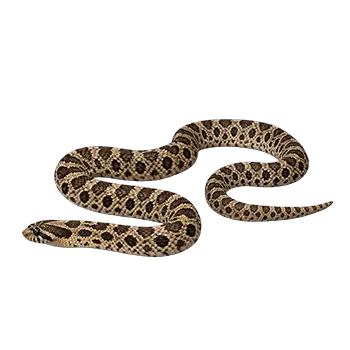
Wildlife photography has been instrumental in documenting the Mexican Hognose Snake's appearance, behavior, and habitat for both scientific and popular audiences. The species' striking color pattern, which features a series of dark brown or reddish-brown dorsal blotches against a lighter tan or cream background, combined with its characteristically upturned snout, makes it a visually distinctive subject that rewards skilled photographic treatment. However, the challenges of locating and photographing a small, cryptic, semi-fossorial snake in the vast desert landscapes it inhabits mean that high-quality images of wild Mexican Hognose Snakes remain relatively uncommon compared to those of more accessible species.

Field herpetologists working in the Chihuahuan Desert and surrounding regions have produced some of the most significant photographic documentation of the Mexican Hognose Snake, often as a byproduct of broader survey work aimed at assessing reptile diversity and population status. These images, published in scientific journals, institutional reports, and online databases such as iNaturalist and HerpMapper, serve as critical reference material for researchers and conservationists. The geospatial data associated with these photographic records has proven particularly valuable for mapping the species' distribution and identifying areas of high habitat quality that merit conservation attention.

The advent of digital photography and the explosion of online image-sharing platforms have democratized wildlife photography and significantly expanded the visual record of the Mexican Hognose Snake. Amateur naturalists, herpers, and outdoor enthusiasts equipped with high-quality digital cameras and smartphones have contributed thousands of reptile photographs to online databases and social media platforms, and among these contributions are images of Mexican Hognose Snakes encountered during field outings in Arizona, New Mexico, Texas, and across northern Mexico. While the quality and scientific utility of these images varies widely, the aggregate effect has been to make the species more visually familiar to a broader audience than at any previous point in its history.

Professional nature photographers specializing in desert ecosystems have produced particularly stunning images of the Mexican Hognose Snake that capture both the beauty of the individual animal and the austere grandeur of its habitat. These photographs, published in books, magazines, and exhibition prints, serve an important role in fostering public appreciation for the biodiversity of arid environments that are often perceived as barren or lifeless. By presenting the Mexican Hognose Snake as a visually compelling and behaviorally fascinating inhabitant of these landscapes, skilled photographers help build the constituency of public support that conservation efforts for desert species ultimately depend upon.

Online Communities & Social Media

The internet has transformed the way information about reptile species is shared and discussed, and the Mexican Hognose Snake has been a direct beneficiary of this transformation. Online forums dedicated to herpetology and reptile keeping, such as those hosted on specialized websites and broader platforms, have provided spaces for the small but passionate community of Mexican Hognose Snake enthusiasts to connect, share observations, and pool their collective knowledge of the species. These digital communities have been particularly important for a species as uncommon in captivity as the Mexican Hognose Snake, where any individual keeper's experience is necessarily limited by the small number of animals they are likely to work with over a career.

Social media platforms have amplified the Mexican Hognose Snake's visibility far beyond the specialist reptile community. The genus Heterodon as a whole has become enormously popular on platforms that favor short-form video content, and clips of hognose snakes performing their death-feigning behavior regularly achieve millions of views. While the majority of this viral content features Western or Eastern Hognose Snakes, the attention generated has created a halo effect that increases interest in all members of the genus, including the less commonly seen Mexican species. Viewers who discover the genus through a viral video of a Western Hognose playing dead often pursue further information and encounter the Mexican Hognose Snake in the process.

The community dynamics of online hognose snake enthusiasm reflect broader trends in digital reptile culture. Species-specific hashtags, breeder showcase accounts, and educational content creators have created a rich ecosystem of Mexican Hognose Snake content that ranges from casual pet updates to detailed husbandry tutorials and field observation reports. The visual nature of platforms built around image and video sharing is particularly well suited to showcasing the hognose snake's photogenic qualities and dramatic behavioral repertoire, and keepers of the rarer Mexican species often find that their animals generate significant interest and engagement from followers accustomed to seeing only the more common Western Hognose in their feeds.

Citizen science platforms have emerged as an important intersection of online community building and scientific contribution for the Mexican Hognose Snake. Platforms that allow users to upload geolocated photographs of wildlife observations and have them verified by community members and professional scientists have generated valuable distributional data for the species, particularly in portions of its range in Mexico where professional survey coverage has been limited. The participatory nature of these platforms engages a broader public in the scientific study of the species while simultaneously building awareness and fostering a sense of personal investment in the Mexican Hognose Snake's conservation.

Educational Media & Outreach

Educational materials featuring the Mexican Hognose Snake serve multiple audiences, from schoolchildren learning about desert ecosystems to university students studying herpetology to the general public visiting natural history museums and nature centers. The species' manageable size, non-dangerous nature, and spectacular defensive behaviors make it an effective subject for educational programming, though its relative rarity compared to the Western Hognose Snake means that live-animal education programs more commonly feature its congeners as representatives of the genus.

Natural history museums and science centers in the American Southwest have incorporated the Mexican Hognose Snake into exhibits and interpretive programs that showcase the biodiversity of desert environments. These institutions use the species to illustrate concepts such as adaptation to arid conditions, predator-prey relationships, defensive mimicry, and the ecological roles that small predators play in maintaining healthy desert ecosystems. The hognose snake's tendency to flatten its neck and mimic the appearance of a much larger, more dangerous serpent provides a particularly accessible example of Batesian mimicry and antipredator behavior that resonates with visitors across age groups and educational backgrounds.

Printed educational materials, including field guides aimed at young readers, activity books, and classroom resource packs, have featured the Mexican Hognose Snake as part of broader treatments of North American reptile diversity. These materials typically emphasize the snake's unusual physical features, particularly its upturned snout, and its remarkable behavioral repertoire, using these distinctive characteristics as hooks to engage young readers and spark curiosity about the natural world. The species' dramatic death-feigning behavior, in particular, is a perennial favorite in children's educational content, where it is often presented alongside other examples of dramatic animal survival strategies.

Zoos and reptile-focused educational facilities in the southwestern United States and Mexico have occasionally maintained Mexican Hognose Snakes as part of their living collections, using these animals as ambassadors for desert conservation and as tools for teaching visitors about the importance of preserving arid habitats and their inhabitants. The challenges of maintaining the species in captivity, including its sensitivity to excessive humidity and its sometimes finicky feeding habits, mean that it is less commonly exhibited than the hardier Western Hognose Snake, but institutions that do display the Mexican species often find that its story of taxonomic distinction, limited range, and conservation vulnerability adds educational depth to their programming.

The development of digital educational resources, including interactive websites, virtual field trips, and multimedia learning modules, has created new opportunities for incorporating the Mexican Hognose Snake into educational contexts. These digital tools can reach audiences far removed from the species' native range, introducing the snake to students and nature enthusiasts in regions where they would never have the opportunity to encounter it in person. The ability to embed high-definition video of the snake's behaviors, interactive range maps, and detailed anatomical illustrations within a single educational platform allows for a depth of engagement with the species that traditional print materials could not achieve.

The Species' Public Image Today

The Mexican Hognose Snake's public image today is shaped by the intersection of several cultural currents: the growing mainstream acceptance of reptiles as fascinating and worthy of appreciation rather than fear, the power of social media to amplify the appeal of charismatic animal behaviors, and the increasing public awareness of biodiversity conservation as a pressing environmental priority. Within this context, the Mexican Hognose Snake occupies an interesting position as a species that benefits from the enormous popularity of its genus while simultaneously remaining obscure enough that encounters with it, whether in the field or in media, carry a sense of discovery and novelty.

The broader trend toward positive public attitudes about snakes, driven in part by the efforts of herpetological educators and the influence of popular reptile-focused media, has created a more receptive environment for the Mexican Hognose Snake than existed in previous decades. While ophidiophobia remains common, the cultural shift toward viewing snakes as ecologically important and behaviorally complex animals rather than as objects of reflexive disgust has been significant, and the hognose snakes have been among the greatest beneficiaries of this attitude change. The genus Heterodon is now widely regarded as one of the most endearing and entertaining groups of snakes, and this positive reputation extends to the Mexican species even among audiences who may not be able to distinguish it from its more familiar relatives.

At the same time, the Mexican Hognose Snake's relative obscurity presents both challenges and opportunities for conservation messaging. The species lacks the instant name recognition of more famous snakes, which can make it difficult to generate public support for conservation initiatives specifically targeting its habitat and populations. However, its novelty value can also be an asset, as audiences who learn about the species for the first time often respond with enthusiasm and curiosity that can be channeled into broader support for desert ecosystem conservation. The narrative of a lesser-known species quietly inhabiting some of North America's most dramatic landscapes, employing an arsenal of behavioral tricks to survive, and facing threats from habitat loss and human misunderstanding, has natural appeal as a conservation story.

The Mexican Hognose Snake's future public profile will likely be shaped by the continued growth of digital media, the expansion of citizen science initiatives, and the ongoing efforts of educators and conservationists to bring attention to understudied species. As more people encounter the species through online content, field observations, and educational programming, the Mexican Hognose Snake has the potential to become a recognized and valued ambassador for the conservation of North America's arid ecosystems and the remarkable diversity of life they support.

Always consult a qualified professional before making any health-related decisions. This content is provided for informational reference only and should not replace professional guidance specific to your animal.