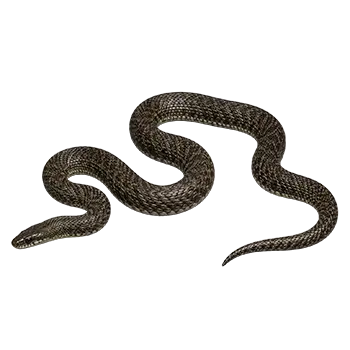

The file snakes of the genus Acrochordus represent one of the most distinctive and ancient lineages within the order Serpentes. Comprising three recognized species, Acrochordus granulatus (the little file snake or marine file snake), Acrochordus javanicus (the Javan file snake or elephant trunk snake), and Acrochordus arafurae (the Arafura file snake), this genus occupies a unique ecological niche as the only group of snakes that are almost entirely aquatic throughout their adult lives. Their distribution spans a broad swath of tropical and subtropical waters from coastal India and Sri Lanka through Southeast Asia, the Indonesian and Philippine archipelagos, New Guinea, and into northern Australia.
The genus was formally described by the English naturalist John Edward Gray in 1849, though individual species within the group had attracted scientific attention earlier. Acrochordus javanicus, the largest member of the genus and the first to be formally named, was described by the Dutch naturalist Laurens Theodorus Gronovius in 1763 from specimens collected in Java. Acrochordus granulatus was described by the German naturalist Johann Gottlob Schneider in 1799, based on specimens from coastal waters of the Indo-Pacific region. The third species, Acrochordus arafurae, was not recognized as distinct from its congeners until 1979, when it was described by the Australian herpetologist Richard Wells and the New Zealand-born herpetologist C. Ross Wellington from material collected in the freshwater billabongs and river systems of northern Australia and southern New Guinea.
Fossil evidence and molecular phylogenetic analyses indicate that the Acrochordidae diverged from other snake lineages deep in evolutionary time, with estimates placing the split at approximately 35 to 50 million years ago during the Eocene epoch. This ancient origin is reflected in a suite of morphological features that set file snakes apart from virtually all other living serpents, including their loose, baggy skin covered in tiny granular scales that feel rough to the touch, their lack of enlarged ventral scales, and their laterally compressed tails adapted for aquatic propulsion. These characteristics suggest a long independent evolutionary trajectory during which the ancestors of modern file snakes became progressively more specialized for life in water.
Despite their wide geographic range and long evolutionary history, file snakes remained relatively obscure to Western science for much of the colonial era. Their nocturnal habits, murky aquatic habitats, and unremarkable coloration of brown, gray, and olive tones meant that they attracted far less attention from European collectors and naturalists than the large, colorful, or venomous species that dominated herpetological research during the eighteenth and nineteenth centuries. Among the indigenous peoples of their native range, however, file snakes had been well known and culturally significant for millennia before any European naturalist set eyes on them.