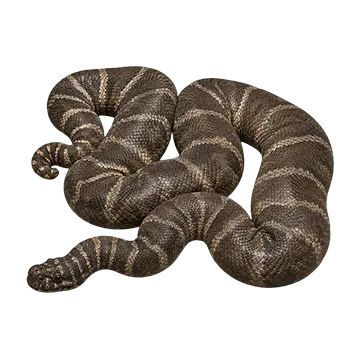

The Elephant Trunk Snake's earliest appearances in Western visual media came through the tradition of natural history illustration, a discipline that served as the primary means of communicating zoological knowledge before the advent of photography. When Lorenz Hornstedt described the species in 1787, the conventions of scientific illustration required detailed renderings of type specimens that captured diagnostic morphological features with precision and clarity. The Elephant Trunk Snake, with its deeply wrinkled, baggy skin and unusual granular scales, presented illustrators with a subject that was at once visually arresting and technically challenging, as the very features that made the species distinctive also defied the smooth, clean lines that characterized most serpent illustration of the period.
Dutch and German natural history publications of the late eighteenth and nineteenth centuries included some of the earliest printed illustrations of the Elephant Trunk Snake, typically rendered as hand-colored engravings or lithographs that accompanied taxonomic descriptions. These images tended to flatten the snake's most distinctive feature, its loose and sagging skin, into a more conventionally serpentine form, partly because the artistic conventions of the era favored idealized representations and partly because illustrators were often working from preserved specimens in which the skin had lost much of its natural drape and texture. As a result, early illustrations frequently failed to convey the quality that most distinguishes the living animal from other snakes.
The tradition of natural history illustration reached its artistic peak in the nineteenth century, and several comprehensive works on the reptiles of the Indo-Australian region included improved depictions of acrochordid snakes. The great multivolume works produced under the auspices of colonial natural history surveys, particularly those sponsored by the Dutch colonial administration for the East Indies, contained plates that showed the Elephant Trunk Snake with greater fidelity to its living appearance. These illustrations were produced by specialist natural history artists who had access to fresh or recently preserved specimens and who were increasingly attentive to depicting animals in postures and conditions that reflected their natural behavior.
The shift from illustration to photography in the late nineteenth and early twentieth centuries did not immediately benefit the Elephant Trunk Snake's visual representation in scientific and popular media. The species' aquatic lifestyle, nocturnal habits, and preference for turbid water made it an exceptionally difficult subject for the photographic technology of the era, which required long exposures, controlled lighting, and cooperative subjects. As a result, quality photographs of living Elephant Trunk Snakes remained rare well into the twentieth century, and the species continued to be underrepresented in the photographic record compared to more accessible terrestrial snake species.