
Origins & Discovery

The Elephant Trunk Snake (Acrochordus javanicus) is a large, fully aquatic, non-venomous snake belonging to the family Acrochordidae, a small and ancient lineage of snakes distinguished by their entirely water-dwelling lifestyle and uniquely textured skin. The species inhabits freshwater rivers, lakes, estuaries, and coastal mangrove systems across a broad swath of Southeast Asia and into northern Australasia, ranging from the Malay Peninsula and the Indonesian archipelago through the Philippines, Indochina, and into Papua New Guinea and the northern coast of Australia. Its preference for murky, slow-moving waterways and its largely nocturnal habits mean that the Elephant Trunk Snake has historically been far less visible to casual observers than many terrestrial snake species, contributing to a relatively low profile in Western natural history until comparatively recent times.

The species was formally described by the Dutch naturalist Lorenz Hornstedt in 1787, based on specimens collected in Java, which gave the snake its specific epithet javanicus. Hornstedt's description came during a period of vigorous European natural history exploration in the Dutch East Indies, when colonial naturalists were cataloging the extraordinary biological diversity of the Indonesian archipelago. However, the Elephant Trunk Snake had been well known to the indigenous peoples of Southeast Asia for centuries or millennia before any European naturalist examined it, and its distinctive appearance and aquatic habits made it a recognizable and culturally significant animal throughout its native range.

The family Acrochordidae represents one of the more unusual lineages within the suborder Serpentes. Unlike the vast majority of snakes, acrochordids are entirely aquatic, spending their entire lives in water and showing dramatic physiological and morphological adaptations to this lifestyle. The family contains only three living species, all in the genus Acrochordus, making it one of the smallest snake families in existence. Molecular phylogenetic studies indicate that the Acrochordidae diverged from other snake lineages deep in evolutionary history, and the group is considered by many herpetologists to occupy a basal position relative to the advanced snakes, or Caenophidia, highlighting its significance for understanding snake evolution.

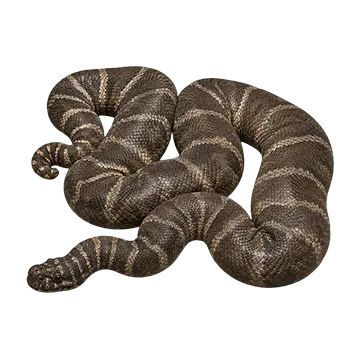
The common name Elephant Trunk Snake derives from the animal's most striking physical feature: its loose, baggy, deeply wrinkled skin, which hangs in folds around the body and gives the snake a superficial resemblance to the trunk of an elephant. This excess skin is not a sign of poor condition but rather a functional adaptation that allows the snake to grip slippery fish prey with remarkable efficiency. The skin is covered in tiny, rough, granular scales rather than the smooth overlapping scales typical of most snakes, earning the species its alternative common names of Javan File Snake and Javan Wart Snake.

Indigenous Knowledge & Historical Roles

Throughout Southeast Asia, communities living along rivers, estuaries, and coastal waterways have maintained intimate knowledge of the Elephant Trunk Snake for generations. Fishing communities in Indonesia, Malaysia, Thailand, Vietnam, Cambodia, and the Philippines regularly encountered the species in the course of their daily work, as the snake shares the same aquatic habitats and targets many of the same fish species that sustain human livelihoods. This proximity ensured that local ecological knowledge of the Elephant Trunk Snake's behavior, seasonal movements, and reproductive habits was extensive and detailed, even where formal scientific study of the species remained sparse.

In many river-dwelling communities across the Indonesian archipelago, the Elephant Trunk Snake was traditionally regarded as a neutral or benign presence rather than a threat. Fishermen who encountered the snake in nets or fish traps generally recognized it as harmless to humans, noting its docile temperament and its lack of venom. In some communities, the presence of Elephant Trunk Snakes in a waterway was interpreted as an indicator of healthy fish populations, since the snakes' abundance was understood to correlate with the availability of their primary prey. This ecological insight, developed through centuries of observation, anticipated by a considerable margin the formal scientific understanding of the species as a bioindicator of aquatic ecosystem health.

The Elephant Trunk Snake's unique skin played a significant role in the material culture of Southeast Asian communities long before the species entered international commerce. The rough, durable hide was used locally for small leather goods, tool grips, and decorative items, with the granular texture providing excellent traction and water resistance. In some regions, the skin was also used in traditional medicine preparations, where it was believed to possess properties related to water and purification. These localized uses were generally sustainable, as harvest levels remained modest and tied to subsistence or small-scale artisanal production rather than industrial demand.

In the cosmological traditions of several Southeast Asian cultures, aquatic snakes including the Elephant Trunk Snake were associated with the naga, a category of powerful serpentine beings drawn from Hindu-Buddhist mythology that permeated the region's spiritual landscape. While the naga concept most often evoked larger, more dramatic serpents such as cobras and pythons, fully aquatic snakes were sometimes regarded as manifestations or servants of these water-dwelling supernatural entities. This association lent the Elephant Trunk Snake a degree of spiritual significance in communities where naga traditions were strong, particularly in riverine and coastal settlements in Thailand, Cambodia, and parts of Indonesia.

Cultural Symbolism & Folklore

The Elephant Trunk Snake occupies a distinctive niche in the folklore and symbolic traditions of Southeast Asian cultures, one shaped primarily by its unusual physical appearance and its completely aquatic lifestyle. Unlike terrestrial snakes, which feature prominently in myths about the boundary between civilization and wilderness, the Elephant Trunk Snake is more commonly associated with the hidden, fluid, and transformative qualities of water itself. In the oral traditions of river-dwelling communities across Indonesia and Malaysia, the snake's ability to move unseen through turbid water and to appear suddenly in fishing nets served as a metaphor for the unpredictability of fortune and the hidden forces that shape human lives.

The species' loose, wrinkled skin has inspired its own body of folk interpretation. In some Javanese and Sumatran traditions, the Elephant Trunk Snake's baggy appearance was explained through origin stories in which the snake was punished or transformed by a supernatural being, condemned to wear ill-fitting skin as a consequence of vanity or deception. These stories served both as entertainment and as moral instruction, using the snake's unusual form to illustrate the consequences of pride or dishonesty. Variants of these tales appear across multiple language groups in the Indonesian archipelago, suggesting deep roots in the region's oral literary tradition.

In the broader symbolic framework of Southeast Asian cultures, aquatic snakes including the Elephant Trunk Snake were often linked to concepts of fertility, renewal, and the life-giving properties of water. Rivers, lakes, and estuaries were understood as sources of sustenance and abundance, and the creatures that inhabited them were frequently incorporated into rituals and observances related to planting, harvest, and the regulation of the agricultural calendar. The Elephant Trunk Snake, as a conspicuous and recognizable inhabitant of these vital waterways, participated in this symbolic economy alongside fish, turtles, and other aquatic animals.

The species has also appeared in the decorative arts of Southeast Asia, though less frequently than more visually striking serpents such as cobras and pythons. Carved and painted representations of aquatic snakes can be found in the ornamentation of traditional boats, fishing implements, and waterside structures in parts of Indonesia and Malaysia, where they served both as aesthetic elements and as protective symbols intended to ensure safe passage and productive fishing. The Elephant Trunk Snake's distinctive texture, with its granular, rough-surfaced skin, made it a recognizable subject for artisans working in wood, metal, and textile media.

Colonial Encounters & Scientific Classification

European engagement with the Elephant Trunk Snake began in earnest during the seventeenth and eighteenth centuries, as Dutch, Portuguese, and British colonial powers established trading posts and administrative centers across Southeast Asia. The Dutch East India Company's extensive presence in the Indonesian archipelago created opportunities for European naturalists to collect and study the region's extraordinary biodiversity, and the Elephant Trunk Snake was among the many species that came to Western scientific attention through these colonial networks. Hornstedt's 1787 description was part of a broader wave of taxonomic work that sought to impose Linnaean order on the vast and largely unfamiliar fauna of the tropical Indo-Pacific.

The species presented early taxonomists with a genuine puzzle. Its fully aquatic lifestyle, vestigial ventral scales, and highly unusual skin texture set it apart from all other snakes known to European science at the time. Naturalists debated its affinities with other snake families, and for decades the Elephant Trunk Snake and its relatives were shuffled between various taxonomic positions as researchers struggled to determine where the Acrochordidae fit within the broader evolutionary tree of serpents. It was not until the application of modern phylogenetic methods in the late twentieth century that the family's position as a relatively basal lineage within the Caenophidia was established with confidence.

Colonial-era natural history collections played a crucial role in building scientific understanding of the Elephant Trunk Snake's morphology and geographic distribution. Preserved specimens accumulated in the major European natural history museums, particularly the Naturalis Biodiversity Center in Leiden, which housed extensive collections from the Dutch East Indies. These specimens allowed comparative anatomists to study the species' skeletal structure, scale morphology, and internal anatomy in detail, revealing the extent of its aquatic adaptations, including reduced lung structure, laterally compressed tail, and dorsally positioned nostrils.

The colonial period also marked the beginning of the Elephant Trunk Snake's integration into international commerce, though initially on a modest scale. European traders noted the skin's unusual texture and durability, and small quantities of Elephant Trunk Snake hides began appearing in the leather markets of Europe during the nineteenth century. This trickle would eventually grow into a significant commercial trade in the twentieth century, with profound consequences for wild populations and for the regulatory frameworks that would eventually be developed to manage the species' exploitation.

The Herpetoculture Movement

The Elephant Trunk Snake entered the international herpetoculture community relatively late compared to many other tropical snake species, largely because its fully aquatic lifestyle and specialized husbandry requirements posed challenges that few hobbyists were equipped to meet during the early decades of the modern reptile-keeping hobby. While terrestrial and semi-aquatic snakes dominated the pet trade through the 1970s and 1980s, the Elephant Trunk Snake remained a curiosity known primarily from zoo collections and the occasional wild-caught import that appeared in specialty reptile shops.

Interest in keeping Elephant Trunk Snakes in private collections grew gradually during the 1990s and early 2000s, driven in part by a broader expansion of the herpetoculture hobby into more unusual and challenging species. Keepers attracted to the species cited its unique appearance, its fascinating feeding behavior, and the intellectual challenge of replicating a fully aquatic tropical environment in a captive setting. Successful maintenance required large, heated aquatic enclosures with carefully managed water quality, a reliable supply of live or freshly killed fish, and attention to the subtle behavioral cues that indicated the animal's health and condition.

Captive breeding of the Elephant Trunk Snake proved to be a significant challenge, and consistent reproductive success remained elusive for most private keepers. The species is viviparous, giving birth to live young after a lengthy gestation period, and females in captivity often proved reluctant to breed without precise environmental triggers that were difficult to replicate outside their natural habitat. A small number of dedicated breeders in Europe, the United States, and Australia achieved sporadic breeding successes, but the Elephant Trunk Snake never became established as a regularly captive-bred species in the way that many terrestrial snakes did.

The herpetoculture community's experience with the Elephant Trunk Snake contributed meaningfully to scientific understanding of the species. Keepers documented feeding rates, growth trajectories, behavioral patterns, and health issues in detail, sharing their observations through online forums, specialty publications, and herpetological society presentations. These firsthand accounts filled significant gaps in the scientific literature, which had historically focused on the species' taxonomy and morphology while offering relatively little information about its behavior and physiology in controlled conditions. The collaborative nature of the herpetoculture community allowed individual observations to be synthesized into a broader understanding of the species' requirements and natural history.

The Species Today

Today the Elephant Trunk Snake occupies a position of growing conservation concern, shaped by the intersection of commercial exploitation, habitat degradation, and the expanding recognition of its ecological importance in the freshwater and estuarine systems it inhabits. Wild populations face significant pressure from the commercial skin trade, which has harvested Elephant Trunk Snakes in large numbers across Indonesia, Malaysia, and other range states for decades. The species' skin, with its distinctive granular texture, is processed into leather goods including handbags, wallets, belts, and shoes for international luxury markets, and the scale of this harvest has raised serious questions about long-term population sustainability.

Habitat loss represents an equally significant threat to the species' long-term viability. The rivers, estuaries, and mangrove systems that the Elephant Trunk Snake depends on are among the most heavily impacted ecosystems in Southeast Asia, facing degradation from agricultural runoff, industrial pollution, dam construction, aquaculture development, and coastal reclamation. The conversion of mangrove forests to shrimp farms has been particularly damaging in several key areas of the species' range, eliminating critical habitat and reducing the prey base on which the snakes depend.

Scientific research on the Elephant Trunk Snake has expanded substantially in recent decades, driven by both conservation imperatives and a growing appreciation of the species' value as a model organism for studying aquatic adaptation in snakes. Field studies in Indonesia, particularly in Kalimantan and Sumatra, have generated new data on population density, reproductive rates, movement patterns, and dietary ecology, providing a more robust empirical foundation for conservation planning. Molecular studies have clarified the species' phylogenetic relationships and revealed previously unrecognized genetic diversity within its broad geographic range, suggesting that what is currently treated as a single species may encompass multiple evolutionarily distinct lineages.

The cultural significance of the Elephant Trunk Snake continues to evolve in the contemporary era. In Indonesia and other range states, the species features in ongoing discussions about the balance between wildlife utilization and conservation, traditional resource rights and modern regulatory frameworks, and the economic value of living wildlife versus harvested products. Conservation organizations working in the region have increasingly sought to engage local communities as partners in monitoring and managing Elephant Trunk Snake populations, recognizing that the indigenous ecological knowledge accumulated over centuries of coexistence with the species represents an irreplaceable resource for effective conservation management.

Always consult a qualified professional before making any health-related decisions. This content is provided for informational reference only and should not replace professional guidance specific to your animal.